Why is Grease Trap Maintenance Important for Restaurants?
Investing in professional grease trap maintenance services is one of the smartest moves a restaurant owner can make to protect their business. In the fast-paced world of food service, the last thing you want to deal with is a backup in the middle of a dinner rush. A grease trap is a silent partner in your kitchen that keeps things running smoothly behind the scenes.
Running a kitchen involves dealing with massive amounts of food waste. Without a functional wastewater management system, your pipes would quickly become a disaster zone. In this guide, we will explore why restaurant grease trap maintenance is essential for your success and how to keep your facility in top shape.
The Role of Grease Traps in Commercial Kitchen Operations
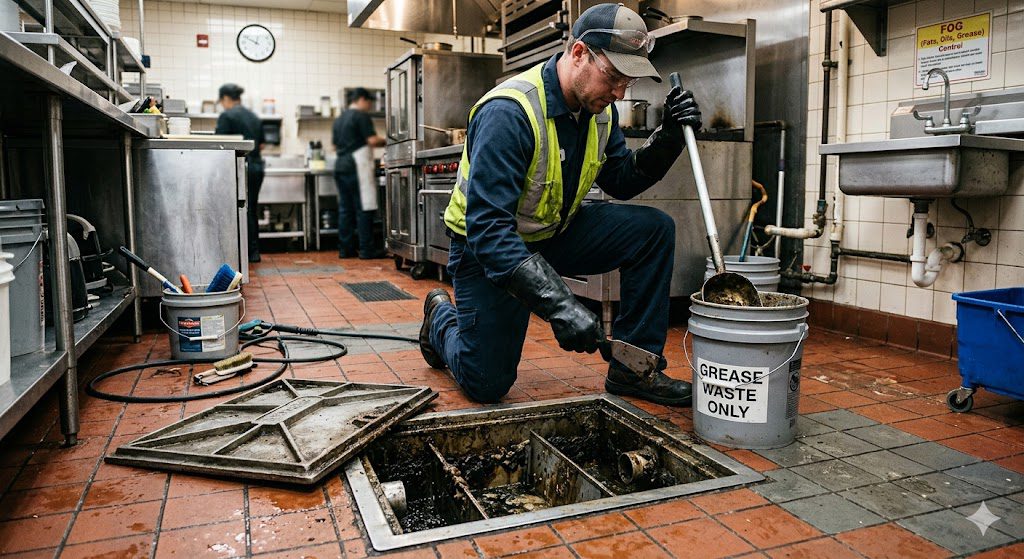
A grease trap is a specialized commercial kitchen plumbing device designed to intercept fats, oils, and grease (FOG) control materials before they enter the main sewer line. Because grease is lighter than water, it floats to the top of the trap while solids sink to the bottom.
The middle layer of clean water is then allowed to exit into the municipal system. This drainage system maintenance step is vital because it prevents grease from cooling and hardening in the city’s pipes. If you are just starting a new venture, you might be wondering how much a restaurant grease trap costs and how it fits into your initial setup.
What Happens When Grease Traps Are Not Maintained
Neglecting your grease trap maintenance can lead to a domino effect of problems that could eventually force you to close your doors.
- Severe Pipe Blockages: When the trap gets too full, grease starts to bypass the system and enter your plumbing. This is the fastest way to cause a grease drain blockage that can stop your entire kitchen from draining.
- Foul Odors and Sanitation Issues: Rotting food particles and old grease create a smell that no amount of air freshener can hide. This violates restaurant sanitation standards and can drive away customers instantly.
- Overflow and Flooding: A neglected trap will eventually overflow. This spills greasy, contaminated water across your kitchen floor, creating a massive slip hazard and a biohazard for your staff.
How Regular Cleaning Helps Avoid Costly Plumbing Issues
The best way to avoid restaurant plumbing issues is to stay ahead of the waste. By hiring a grease trap cleaning service on a regular basis, you ensure the device never reaches its breaking point.
- Saves Money: Emergency plumbing repairs cost much more than a routine plumbing inspection service.
- Protect Equipment: Clean drains mean less stress on your dishwashers and sinks.
- Prevents Business Interruption: You can schedule a professional grease trap cleaning during off-hours so it never interferes with your service.
If you are unsure of your current timing, check out our guide on the grease trap maintenance schedule to see if you are staying on track.
Without regular servicing, restaurants often experience drainage issues, making slow kitchen drains in Aventura due to grease trap problems more likely over time.
Health, Safety, and Compliance Benefits for Restaurants
Every city has strict grease trap compliance requirements. Local health inspectors and utility companies keep records of your cleanings to ensure you are not polluting the city sewers.
Commercial kitchen grease cleaning is not just about keeping the pipes clear. It is about meeting the law. Failing an inspection can lead to heavy fines or the suspension of your operating license. Beyond the law, keeping a clean system is part of basic kitchen plumbing maintenance tips that ensure your food is prepared in a safe and sanitary environment.
Signs Your Grease Trap Needs Immediate Attention
You should not wait for a total backup to call for help. Watch for these red flags that indicate you need grease trap maintenance services right away:
- Slow Drainage: If your sinks take longer than usual to empty, grease is likely narrowing the pipes.
- Unpleasant Smells: A persistent “garbage” smell near the interceptor is a sign of old, trapped waste.
- Visible Grease in Nearby Drains: If you see oil in floor drains, the trap is already overflowing internally.
- Strange Noises: Gurgling sounds from the pipes mean air is struggling to move past a blockage.
Best Practices to Keep Your Grease Trap Working Efficiently
To get the most out of your commercial grease trap maintenance, your staff should follow these simple daily habits:
- Dry Scrape Dishes: Always scrape food scraps into the trash before rinsing plates in the sink.
- No Pouring Oil: Never pour deep fryer oil or heavy cooking fats down the drain.
- Use Strainers: Place mesh strainers on all floors and sink drains to catch solids.
- Avoid Boiling Water: Extremely hot water can melt grease and push it past the trap, where it will harden later in the line.
Frequently Asked Questions
Most busy restaurants require cleaning every 1 to 3 months. A good rule of thumb is the “one-fourth rule.” If one-fourth of the trap is filled with solids or grease, it is time for a pump-out.
The most common problems are sewage backups, expensive emergency plumbing fees, foul smells, and legal penalties from the city.
Yes. Maintaining a consistent grease trap service schedule ensures you meet local environmental and health department codes.
Absolutely. Regular cleaning prevents the buildup of corrosive acids that can eat away at the metal or plastic components of the trap over time.
Professionals use high-powered vacuum trucks to pump out the waste and scrapers to remove hardened grease from the walls of the tank.
Conclusion
Keeping your kitchen compliant and safe is a full-time job. By staying consistent with your grease trap maintenance, you protect your staff, your customers, and your bottom line. Do not wait for a plumbing emergency to take action. Americlean Pumping is here to help you manage your stormwater system maintenance and kitchen grease needs with ease. Our expert team provides reliable, scheduled services so you can focus on what you do best: serving great food. Are you ready to secure your kitchen’s future? Contact Americlean Pumping today to set up your professional grease trap maintenance services and keep your business flowing smoothly.
Whether you run a small café or a large commercial kitchen, our reliable grease trap cleaning and maintenance in Kendall keeps your operations running smoothly.