
Best Gravel Size for French Drains: What You Need to Know
Water pooling around your property can become frustrating quickly. Many homeowners and property managers deal with soggy yards, foundation moisture, and drainage issues after heavy rainfall. Understanding the best gravel size for french drains helps improve drainage performance and prevents long-term water damage problems.
Choosing the right gravel size can improve water flow, extend drainage system lifespan, and reduce clogging risks significantly. In this guide, Ameri-Clean Pumping explains how French drain gravel works, which sizes perform best, and what property owners should know before installing or upgrading a drainage system.
Why Gravel Size Matters in French Drain Systems
French drains depend on proper water movement underground. Gravel creates open spaces that allow water to flow efficiently toward the drainage pipe instead of becoming trapped in the surrounding soil.
Using the wrong gravel size may reduce drainage performance and increase clogging risks over time. Gravel that is too small can compact tightly, while oversized stone may reduce system stability and water filtration effectiveness.
Proper gravel selection helps improve:
- Water Flow: Supports faster drainage movement.
- Pipe Protection: Reduces sediment entering drain pipes.
- Drainage Efficiency: Helps water move consistently underground.
- System Lifespan: Prevents premature drainage failure.
- Clog Prevention: Reduces soil buildup inside the drain system.
A properly designed French drain system depends heavily on the right drainage materials.
What Is the Best Gravel Size for French Drains?
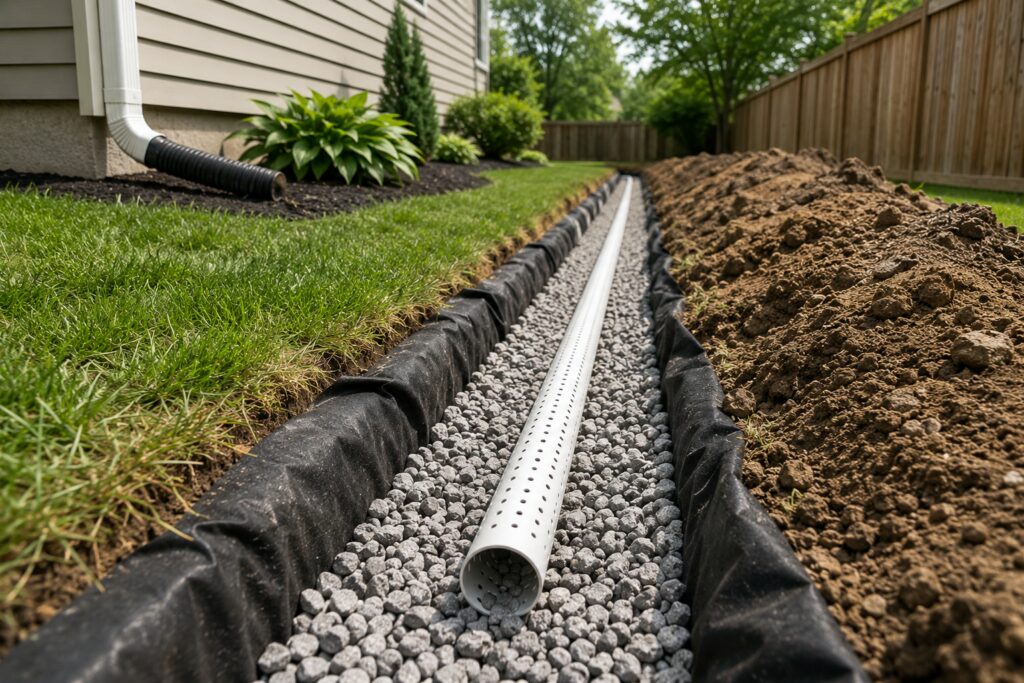
The best gravel size for most French drains is typically between ½ inch and 1½ inches in diameter. Washed gravel is usually recommended because it contains fewer fine particles that may block water flow.
Clean gravel creates better drainage gaps around the perforated pipe while helping prevent sediment buildup. Rounded gravel and crushed stone may both work depending on soil conditions and drainage needs.
Common gravel sizes include:
- ½ Inch Gravel: Works well for residential drainage systems.
- ¾ Inch Gravel: Common choice for balanced drainage flow.
- 1 Inch Gravel: Supports heavier drainage applications.
- 1½ Inch Stone: Often used for larger commercial drainage systems.
Most drainage professionals recommend avoiding gravel mixed with sand or fine dirt because those materials may reduce system performance.
How Gravel Supports Proper Water Drainage
French drains collect excess groundwater and redirect it away from foundations, landscaping, and low-lying areas. Gravel helps water enter the system quickly while preventing surrounding soil from collapsing into the drain pipe.
Without proper gravel support, water may move slowly or remain trapped near the property. Poor drainage often leads to standing water, soil erosion, and structural moisture problems.
Gravel improves drainage systems by:
- Creating Air Gaps: Allows water to move freely underground.
- Reducing Soil Pressure: Protects perforated drain pipes.
- Improving Filtration: Helps separate water from sediment.
- Preventing Blockages: Reduces pipe clogging risks.
- Supporting Stability: Maintains system structure long term.
Properties experiencing recurring drainage problems may need to request a service before water damage worsens.
Why Washed Gravel Is Usually Recommended
Washed gravel is cleaned to remove dirt, clay, and fine sediment before installation. This helps maintain consistent water flow throughout the drainage system.
Unwashed gravel often contains dust and compact materials that may clog drainage pathways over time. Even small sediment buildup can reduce system efficiency gradually.
Washed gravel provides several benefits:
- Cleaner Drainage Flow: Prevents sediment buildup.
- Reduced Clogging Risks: Supports long-term performance.
- Better Water Filtration: Allows water to move freely.
- Improved Drain Efficiency: Maintains consistent drainage capacity.
- Longer System Lifespan: Reduces maintenance problems later.
Professional drainage contractors usually recommend washed gravel for most French drain installations.
How Soil Conditions Affect Gravel Selection
Different properties have different drainage conditions. Soil type plays a major role when choosing gravel size and drainage materials for French drain systems.
Clay-heavy soil retains water longer and may require stronger drainage flow support. Sandy soil drains more naturally but may still require gravel stabilization around pipes.
Common soil considerations include:
- Clay Soil: Requires stronger drainage movement.
- Sandy Soil: Drains faster but may shift over time.
- Rocky Soil: May require additional stabilization support.
- Loose Soil: Needs stronger gravel structure around pipes.
Professional inspections help determine the best drainage setup for specific property conditions.
Common Mistakes That Reduce French Drain Performance
Many drainage failures happen because of poor material selection or incorrect installation methods. Even a well-designed system may struggle if the gravel size is unsuitable for the property.
Using gravel mixed with dirt or installing gravel too tightly around pipes can restrict water movement significantly. Skipping maintenance may also allow debris to block drainage flow over time.
Common drainage mistakes include:
- Using Fine Gravel: Reduces water flow efficiency.
- Skipping Filter Fabric: Allows sediment buildup.
- Poor Pipe Slope: Restricts drainage movement.
- Overpacking Gravel: Limits drainage gaps underground.
- Ignoring Maintenance: Increases clogging risks.
Businesses and homeowners that schedule service regularly often avoid expensive drainage repairs later.
How Proper Installation Improves Long-Term Drainage
Even the best gravel materials require proper installation to perform effectively. Drain depth, pipe placement, slope angle, and surrounding soil conditions all affect overall drainage efficiency.
Professional installation helps ensure the drainage system redirects water away from structures safely and consistently. Correct installation also reduces maintenance needs over time.
Professional French drain installation often includes:
- Site evaluation
- Drainage planning
- Proper gravel layering
- Perforated pipe installation
- Water flow testing
Well-installed systems provide more reliable long-term protection against water accumulation and soil erosion.
Signs Your French Drain May Need Maintenance
French drains can lose efficiency if gravel becomes clogged with sediment or if drainage pipes become blocked over time. Regular inspections help identify small issues before they lead to major drainage failures.
Property owners often notice standing water first, especially after storms or heavy rainfall. Slow drainage usually indicates restricted water flow inside the system.
Warning signs may include:
- Standing water near the property
- Soggy landscaping areas
- Water pooling after rainfall
- Soil erosion near drainage zones
- Basement moisture or dampness
Routine maintenance helps extend system lifespan and maintain consistent drainage performance.
Why Professional Drainage Services Matter
Professional drainage specialists understand how soil conditions, gravel size, water flow, and drainage design work together. Choosing the correct materials without professional guidance may lead to future drainage problems.
Experienced drainage contractors inspect the property carefully before recommending installation or maintenance solutions. This helps property owners avoid costly drainage failures later.
Professional drainage services may include:
- Drainage inspections
- French drain cleaning
- Gravel replacement
- Pipe flushing
- Water flow analysis
Ameri-Clean Pumping helps property owners maintain reliable drainage systems that support long-term property protection.
Conclusion
Understanding the best gravel size for french drains helps property owners improve drainage efficiency, reduce clogging risks, and protect structures from water damage. Proper gravel selection supports better underground water flow and improves overall drainage system performance.
Poor drainage can eventually damage landscaping, foundations, and paved surfaces if ignored for too long. Preventive maintenance and proper installation help French drain systems operate more effectively throughout the year.
If your property experiences recurring drainage issues or standing water after storms, it may be time to schedule service with Ameri-Clean Pumping. Professional drainage solutions help protect your property before water damage becomes more expensive to repair.
Frequently Asked Questions
Most French drains work best with washed gravel between ½ inch and 1½ inches in diameter.
Washed gravel removes dirt and fine sediment that may clog drainage systems and reduce water flow efficiency.
Yes. Gravel that is too small may compact tightly and restrict proper water movement underground.
The gravel layer should fully surround the perforated pipe to support water flow and pipe stability.
French drains should be inspected regularly, especially after heavy rainfall or if drainage performance decreases.