
How Often Should You Maintain Your Catch Basin?
Drainage problems rarely appear overnight. Many property owners first notice small puddles, slow drainage, or overflowing stormwater during heavy rain before realizing the catch basin is already clogged. Understanding how often you should maintain your catch basin helps prevent flooding, drainage failures, and expensive property damage.
Routine maintenance keeps drainage systems operating properly throughout the year. In this guide, Ameri-Clean Pumping explains how catch basins work, how often they should be cleaned, warning signs of blockage, and why preventive maintenance helps protect both residential and commercial properties.
What Does a Catch Basin Do?
A catch basin collects stormwater runoff and directs it into the underground drainage system. It also captures debris, sediment, leaves, and trash before those materials enter drainage pipes.
Without a functioning catch basin, stormwater may begin pooling around parking lots, driveways, sidewalks, and foundations. Over time, excess water can damage pavement, landscaping, and structural areas surrounding the property.
Catch basins help improve:
- Stormwater Collection: Captures excess rainwater efficiently.
- Drainage Protection: Prevents debris from entering pipes.
- Flood Prevention: Reduces standing water accumulation.
- Pipe Performance: Supports smoother underground drainage flow.
- Property Safety: Helps minimize slippery water buildup.
Proper maintenance helps catch basins continue performing effectively during heavy rainfall.
How Often Should You Maintain Your Catch Basin?
Most catch basins should be inspected and cleaned at least once or twice each year. However, properties with heavy rainfall, large trees, construction debris, or commercial traffic may require more frequent maintenance.
Catch basin cleaning frequency often depends on how much debris enters the drainage system regularly. Commercial properties usually experience faster sediment buildup because of larger paved surfaces and heavier stormwater runoff.
Properties may require more frequent service if they have:
- Heavy Rainfall Areas: Increased stormwater flow.
- Nearby Trees: Leaves and branches clog drains faster.
- Construction Zones: Dirt and sediment accumulate quickly.
- Large Parking Lots: Higher debris accumulation levels.
- Frequent Flooding: Drainage systems require closer monitoring.
Businesses that request a service on time often avoid larger drainage problems through preventive maintenance.
Why Delaying Catch Basin Maintenance Creates Problems
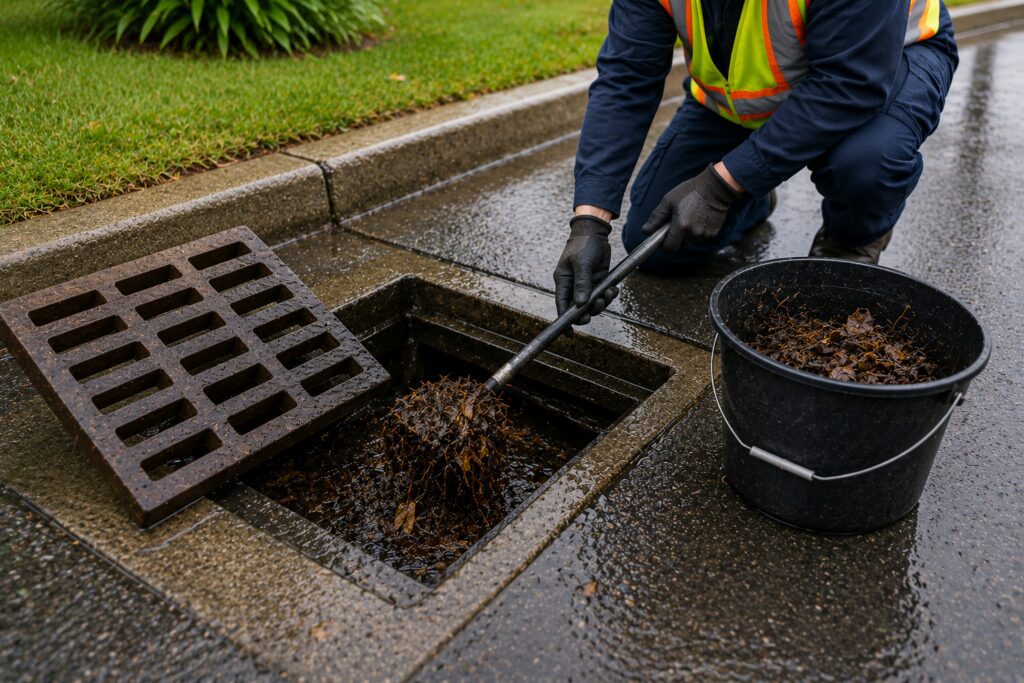
Many property owners delay maintenance until standing water becomes visible. Unfortunately, drainage issues usually begin long before water starts pooling near the property.
Sediment buildup slowly reduces drainage capacity inside the basin. Once debris blocks water flow completely, stormwater may overflow and create flooding around surrounding surfaces.
Poor maintenance may lead to:
- Standing Water: Stormwater drains slowly after rainfall.
- Flooding Risks: Water overflows during heavy storms.
- Drainage Blockages: Debris restricts underground pipes.
- Property Damage: Excess moisture affects nearby surfaces.
- Pavement Deterioration: Water weakens asphalt and concrete.
Routine inspections help identify these problems before major drainage failures occur.
Warning Signs Your Catch Basin Needs Cleaning
Catch basins usually show clear warning signs when maintenance becomes necessary. Recognizing these early symptoms helps property owners avoid expensive drainage repairs later.
One common sign is standing water near the drain opening after rainfall. This often indicates sediment buildup inside the basin or restricted pipe flow underground.
Additional warning signs may include:
- Slow Drainage: Water drains more slowly than normal.
- Overflowing Grates: Water bypasses the basin during storms.
- Visible Debris: Trash and sediment collect near drains.
- Foul Odors: Organic buildup creates unpleasant smells.
- Sinkholes Nearby: Soil erosion develops near drainage areas.
Routine maintenance helps restore proper drainage performance before these issues worsen.
How Catch Basin Cleaning Protects Your Property
Catch basin cleaning removes accumulated debris and sediment before they interfere with stormwater flow. Preventive maintenance helps the entire drainage system function more efficiently during storms.
Proper cleaning also helps reduce pressure on underground drainage pipes and surrounding infrastructure. This lowers the risk of long-term drainage damage and flooding.
Routine maintenance helps improve:
- Drainage Efficiency: Water flows more consistently.
- Flood Prevention: Reduces overflow during storms.
- Pipe Protection: Prevents underground blockages.
- Surface Safety: Limits standing water hazards.
- Infrastructure Lifespan: Protects drainage system components.
Properties that schedule service regularly often experience fewer emergency drainage problems overall.
Why Commercial Properties Need Frequent Maintenance
Commercial properties usually require more consistent catch basin maintenance because they generate larger amounts of debris and stormwater runoff daily.
Parking lots, loading docks, shopping centers, and industrial areas collect dirt, trash, leaves, and oil residue much faster than smaller residential properties. This increases the likelihood of drainage blockages.
Commercial maintenance is especially important for:
- Retail centers
- Restaurants
- Warehouses
- Industrial facilities
- Apartment complexes
Ameri-Clean Pumping helps commercial properties maintain reliable drainage systems that support safer day-to-day operations.
What Happens During Professional Catch Basin Cleaning
Professional catch basin cleaning involves more than simply removing visible debris near the drain opening. Technicians inspect the entire basin structure and drainage flow conditions carefully.
Specialized vacuum and pumping equipment removes sediment, standing water, and debris completely from inside the basin chamber. This helps restore full drainage capacity safely and efficiently.
Professional service may include:
- Sediment Removal: Clears dirt and debris buildup.
- Water Pumping: Removes standing stormwater safely.
- Drainage Inspection: Identifies hidden drainage concerns.
- Pipe Evaluation: Checks underground water flow.
- Preventive Recommendations: Helps determine maintenance schedules.
Professional cleaning helps ensure the drainage system operates properly during future storms.
Seasonal Maintenance Helps Prevent Flooding
Seasonal weather changes often affect drainage performance significantly. Heavy rainfall, falling leaves, and storm debris may clog catch basins faster during certain times of the year.
Many properties benefit from maintenance before hurricane season or periods of increased rainfall. Preventive cleaning helps reduce emergency flooding risks during severe weather conditions.
Seasonal maintenance helps with:
- Preparing for storm season
- Removing leaf accumulation
- Preventing winter drainage issues
- Improving runoff management
- Reducing emergency drainage calls
Preventive service usually costs far less than repairing water damage caused by flooding.
Why Preventive Drainage Maintenance Saves Money
Some property owners postpone catch basin maintenance to reduce short-term expenses. However, neglected drainage systems often create much larger repair costs later.
Flooded parking lots, pavement damage, and underground pipe repairs can become expensive quickly. Preventive maintenance helps reduce emergency service calls and property repair expenses long term.
Routine maintenance helps lower:
- Emergency drainage repair costs
- Flood cleanup expenses
- Pavement replacement costs
- Pipe repair expenses
- Long-term water damage risks
Consistent drainage maintenance supports safer and more reliable property conditions year-round.
Conclusion
Understanding how often you should maintain your catch basin helps property owners prevent flooding, drainage blockages, and expensive stormwater damage. Regular maintenance keeps drainage systems operating efficiently while protecting surrounding infrastructure.
Ignoring drainage maintenance often leads to standing water, underground blockages, and property damage that becomes more expensive over time. Preventive service helps identify minor issues before they affect the entire drainage system.
If your property experiences slow drainage, recurring flooding, or standing water after storms, it may be time to schedule service with Ameri-Clean Pumping. Professional catch basin maintenance helps protect your property before drainage problems become major repair issues.
Frequently Asked Questions
Most catch basins should be cleaned at least once or twice per year, depending on debris buildup and stormwater conditions.
Neglected catch basins may clog, overflow, and cause flooding, standing water, and drainage system damage.
Standing water, slow drainage, foul odors, overflowing grates, and visible debris are common warning signs.
Commercial properties generate larger amounts of debris and runoff, which increases sediment buildup inside catch basins.
Yes. Regular cleaning improves stormwater flow and helps reduce flooding risks during heavy rainfall.