
How Anaerobic Digestion Can Help Manage Grease Trap Waste
Anaerobic digestion is rapidly becoming one of the most effective solutions for managing grease trap waste across the USA. What was once a costly and environmentally challenging disposal issue can now be transformed into a sustainable waste to energy opportunity.
For restaurants, commercial kitchens, and food service facilities, grease trap waste creates persistent problems such as clogged plumbing, unpleasant odors, failed inspections, and rising disposal costs. These issues highlight the consequences of not cleaning grease traps, especially as environmental regulations tighten and sustainability goals expand. Traditional disposal methods are no longer enough. Anaerobic digestion offers a smarter approach by breaking down organic waste, supporting wastewater treatment solutions, and converting grease into usable energy while improving operational efficiency.
How Anaerobic Digestion Works
The anaerobic digestion process breaks down organic materials in an oxygen-free environment using naturally occurring microorganisms. Inside sealed anaerobic digesters, these microbes consume organic waste and convert it into valuable byproducts over several controlled stages, making it an effective downstream solution for waste collected from sources such as grease trap setup for food trucks and mobile food operations.
Key Outputs of the Anaerobic Digestion Process
This process produces two important outputs:
- Biogas, a methane rich renewable energy source
- Digestate, a stabilized material that can be reused or further processed
Industrial anaerobic digestion systems are commonly used at wastewater treatment plants and waste-to-energy facilities, where large volumes of organic waste are safely processed. Because fats, oils, and grease contain high energy potential, grease trap waste is an excellent feedstock for increasing biogas production and improving digestion efficiency, particularly when facilities understand infrastructure factors like the storm drain vs sewer difference in overall wastewater management.
Why Grease Trap Waste Is Hard to Manage
Grease trap waste is a complex mixture of fats, oils, grease, food solids, and wastewater. This combination makes it one of the most difficult waste streams for food service businesses to manage consistently.
Common Problems Caused by Grease Trap Waste
- Blocked sewer lines
- Strong, persistent odors
- Plumbing system failures
- Strict municipal waste services regulations
Without proper grease interceptor waste handling, grease hardens inside pipes, leading to backups, fines, emergency repairs, and failed inspections. Routine services such as Commercial grease trap maintenance and addressing Critical grease trap cleaning needs help businesses remain compliant and avoid costly disruptions.
Traditional Grease Trap Disposal vs Anaerobic Digestion
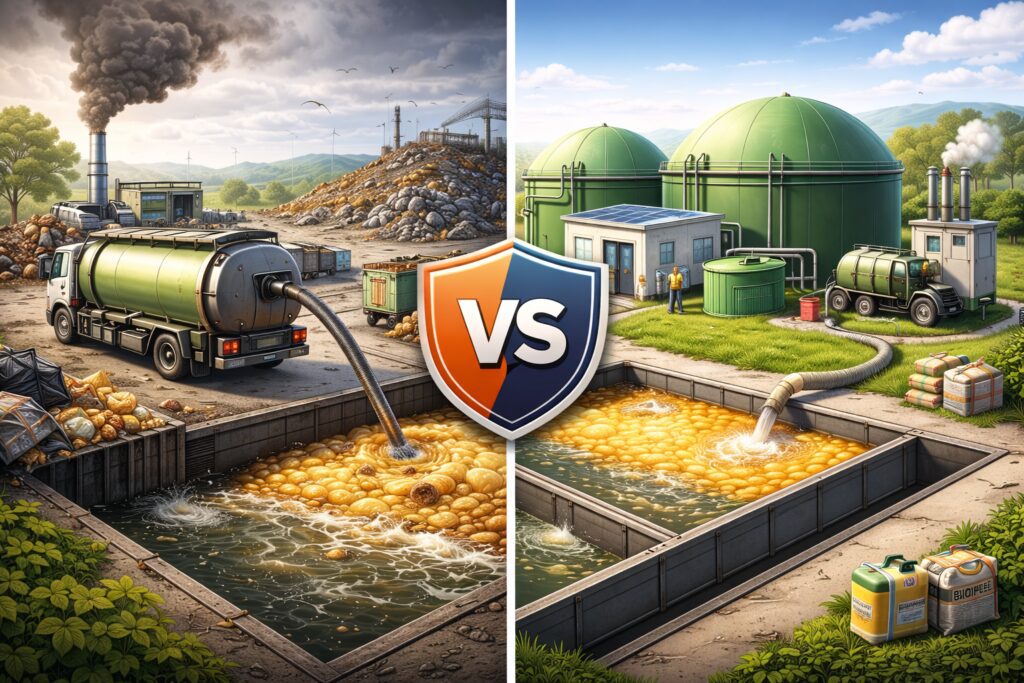
Traditional grease trap waste treatment usually involves hauling waste to landfills or limited processing facilities. While this removes waste from the site, it provides little long term value and creates ongoing operational expenses.
Drawbacks of Traditional Disposal
- Ongoing hauling and landfill fees
- No energy or resource recovery
- Higher environmental impact
- Increased regulatory pressure
In contrast, anaerobic digestion supports green waste technology by converting waste into renewable energy. It strengthens environmental sustainability, reduces landfill dependency, and aligns with modern organic waste management practices, while complementary solutions such as filter socks for stormwater management help facilities control runoff and protect surrounding drainage systems.
How Grease Trap Waste Is Prepared for Digestion
Before entering anaerobic digesters, grease trap waste must be properly prepared to protect equipment and optimize system performance.
Preparation Steps
- Screening to remove debris and contaminants
- Blending with other organic materials to balance nutrients
- Temperature and flow control to support microbial activity
Professional services such as Critical grease trap cleaning needs and Ensure health code compliance ensure safe removal, transport, and delivery to digestion facilities. Proper preparation stabilizes digestion systems, prevents mechanical damage, and improves biogas production efficiency across industrial anaerobic digestion operations.
Challenges in Anaerobic Digestion of FOG Waste
While highly effective, anaerobic digestion requires careful management when processing fats, oils, and grease due to their high energy density.
Common Digestion Challenges
- Overloading digesters with high fat waste
- Foaming inside tanks
- Inconsistent waste composition
Operators at wastewater treatment plants closely monitor feed rates and loading ratios to prevent system imbalance. With professional oversight and controlled input, industrial anaerobic digestion remains one of the most reliable grease trap waste treatment and organic waste recycling solutions available today, especially when supported by services like catch basin cleaning in Kendall to maintain upstream drainage efficiency.
Turning Grease Trap Waste Into Energy
One of the greatest benefits of anaerobic digestion is its ability to transform waste into renewable energy. As microorganisms break down grease trap waste, methane rich biogas is captured and reused.
Uses of Biogas
- Generating electricity
- Powering facility operations
- Producing renewable heat
- Reducing reliance on fossil fuels
This waste-to-energy approach boosts biogas production, lowers greenhouse gas emissions, and supports nationwide sustainability goals. Across the USA, municipal waste services continue expanding anaerobic digestion programs through partnerships with private providers offering commercial catch basin services Pembroke Pines and related infrastructure support.
Even with digestion systems, proper commercial liquid waste disposal is still necessary.
Frequently Asked Questions
What is anaerobic digestion and how does it work
It breaks down organic waste without oxygen, producing biogas and digestate.
How does anaerobic digestion help manage grease trap waste
It converts grease trap waste into energy while reducing disposal volume.
Is grease trap waste suitable for anaerobic digestion
Yes. When properly prepared, it is a high energy feedstock.
What happens to grease trap waste in an anaerobic digester
Microorganisms break it down into biogas and stabilized digestate.
Can anaerobic digestion reduce grease disposal costs
Yes, it lowers hauling, landfill, and long term disposal expenses.
Is anaerobic digestion environmentally friendly
Yes, it supports environmental sustainability and reduces emissions.
How is biogas produced from grease trap waste
Microbial activity converts organic matter into methane rich gas.
Do restaurants benefit from anaerobic digestion programs
Yes, through cost savings, compliance support, and sustainability gains.
What are the challenges of digesting grease trap waste
Overloading, foaming, and inconsistent waste composition.
Who should manage grease trap waste for anaerobic digestion
Licensed professionals whoEnsure health code complianceand reduce regulatory risk.
Conclusion
Managing grease trap waste no longer has to be a burden. With anaerobic digestion, businesses can reduce costs, improve compliance, and contribute to cleaner energy production. Americlean Pumping provides reliable grease trap services that support anaerobic digestion programs nationwide. From routine maintenance to compliant transport, their team helps protect infrastructure, meet regulations, and enhance wastewater treatment outcomes. Contact Americlean Pumping today to move toward smarter, cleaner grease management powered by anaerobic digestion.