
What Liquid Waste Services Do Commercial Kitchens Really Need?
Liquid waste services are essential for every commercial kitchen operating in the USA. Liquid waste services help restaurants manage grease, wastewater, and food byproducts before they cause plumbing failures or compliance violations. Without proper liquid waste services, kitchens risk shutdowns, fines, and serious sanitation issues.
Many food service facility owners focus on cooking operations and customer service but overlook liquid waste management until a problem occurs. Backed up drains, grease overflow, and unpleasant odors are signs that systems are not being maintained properly. By understanding which liquid waste services are truly necessary, businesses can prevent emergencies and maintain smooth daily operations.
This guide explains why liquid waste services matter, what essential services every kitchen should have, warning signs to watch for, and how to choose the right provider.
Why Proper Liquid Waste Management Is Critical for Commercial Kitchens
Liquid waste management is more than just removing wastewater. It protects plumbing systems, supports food service facility sanitation, and ensures compliance with local regulations.
Commercial kitchen wastewater contains grease, food particles, cleaning chemicals, and organic waste. Without structured liquid waste services, these materials build up inside drainage systems and cause blockages.
Key risks of poor liquid waste management include:
- Grease buildup in pipes
- Increased risk of sewer backups
- Foul odors in prep and dining areas
- Health inspection violations
- Environmental compliance penalties
Routine waste pumping services and drainage system maintenance reduce these risks. Professional oversight ensures that industrial waste disposal standards are met and that systems operate efficiently.
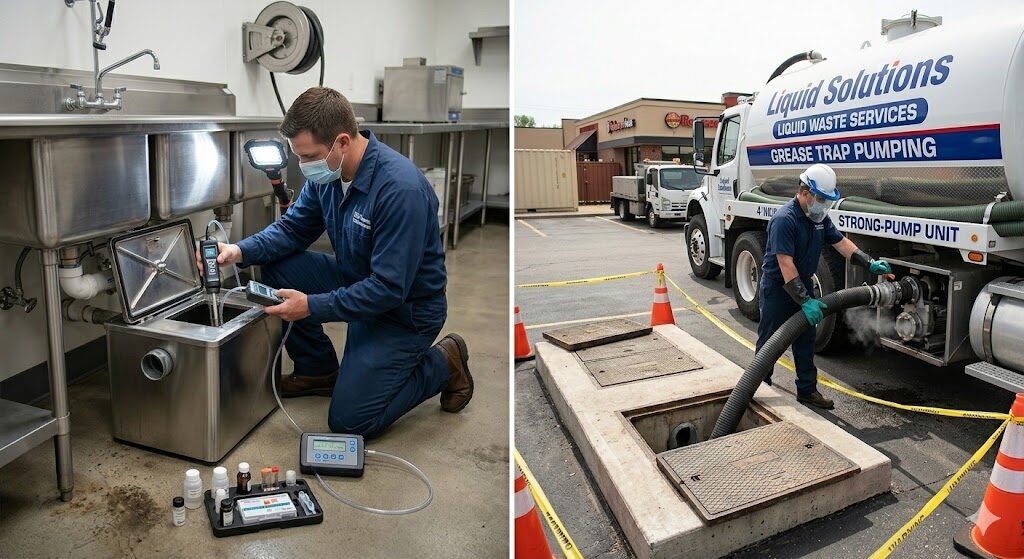
Essential Liquid Waste Services Every Kitchen Should Have
Not all liquid waste services are the same. Commercial kitchens require a combination of targeted services to maintain efficiency and compliance.
Core liquid waste services include:
- Grease Trap and Interceptor Cleaning
Regular grease waste disposal solutions prevent buildup and protect plumbing systems. Businesses in South Florida often rely on grease interceptor cleaning miami professionals to ensure compliance and proper operation. - Routine Pumping Schedule
Establishing a routine pumping schedule ensures that tanks and interceptors are cleared before reaching capacity. Waste pumping services should be scheduled based on kitchen output and usage. - Commercial Drain Cleaning Services
Grease and debris accumulate in drain lines over time. Commercial drain cleaning services remove buildup and prevent emergency blockages. - Wastewater System Cleaning
Comprehensive wastewater system cleaning keeps commercial kitchen wastewater flowing efficiently and reduces the risk of overflow. - Kitchen Waste Removal Services
Proper kitchen waste removal services address both liquid and semi liquid waste before it impacts operations.
Liquid waste services must be tailored to each facility’s size and production volume. A small café may require less frequent service than a high volume restaurant, but both need structured maintenance.
Warning Signs Your Kitchen Waste System Needs Professional Service
Ignoring warning signs often leads to costly repairs. Commercial kitchens should watch for early indicators that liquid waste services are overdue.
Common warning signs include:
- Slow draining sinks and floor drains
- Grease odors near prep areas
- Gurgling sounds from drains
- Standing water around floor drains
- Repeated plumbing clogs
These issues indicate that grease waste disposal solutions or wastewater system cleaning may be required. Delaying service increases the risk of a full system backup.
In some cases, drainage issues extend beyond the kitchen. Exterior drainage systems may require storm drain cleaning aventura or storm drain cleaning Miami Beach to prevent overflow during heavy rainfall.
How Scheduled Pumping Prevents Costly Shutdowns
Scheduled liquid waste services are a proactive strategy. Instead of reacting to problems, businesses prevent them.
Benefits of a routine pumping schedule include:
- Reduced emergency service calls
- Lower repair expenses
- Improved system lifespan
- Consistent compliance with local regulations
Waste pumping services remove accumulated grease and solids before they cause damage. Restaurants that invest in restaurant liquid waste maintenance avoid sudden closures and maintain predictable operating costs.
Scheduled liquid waste services also support drainage system maintenance across the property. For example, maintaining a gutter catch basin ensures exterior runoff does not overwhelm plumbing systems during storms.
Choosing the Right Liquid Waste Service Provider for Your Facility
Selecting a provider for liquid waste services should involve more than comparing prices. Experience, compliance knowledge, and reliability matter.
When evaluating providers, consider:
- Experience with commercial kitchen wastewater systems
- Knowledge of industrial waste disposal regulations
- Availability of emergency response
- Clear maintenance schedules
- Transparent pricing
Searching for a reliable waste management service near me often leads to multiple options, but not all providers offer comprehensive solutions. Choose a team that understands grease, wastewater flow, and local compliance standards.
Professional waste cleaning services should include inspection, documentation, and disposal tracking to support environmental compliance.
Compliance, Safety, and Environmental Benefits of Professional Waste Removal
Commercial kitchen compliance services are not optional. Local and federal regulations require proper handling of grease and wastewater.
Professional liquid waste services provide:
- Documentation for regulatory inspections
- Proper disposal in accordance with environmental laws
- Reduced risk of contamination
- Improved workplace safety
Food service facility sanitation improves when grease and wastewater are managed consistently. Clean systems protect employees, customers, and the surrounding environment.
Proper liquid waste management also reduces strain on municipal sewer systems. Businesses that invest in liquid waste services demonstrate responsibility and commitment to operational excellence.
The Long Term Value of Consistent Liquid Waste Services
Some business owners question whether liquid waste services are worth the cost. The reality is that neglecting maintenance leads to higher expenses.
Consistent liquid waste services help prevent:
- Major plumbing repairs
- Structural damage from backups
- Emergency closures
- Regulatory fines
Over time, regular service reduces the grease trap cleaning cost associated with neglected systems. Preventive maintenance is more affordable than emergency intervention.
Investing in professional waste cleaning today protects long term profitability.
Conclusion: Liquid Waste Services Are Not Optional
Liquid waste services are a critical component of commercial kitchen operations. From grease trap maintenance to wastewater system cleaning, these services protect plumbing systems, ensure compliance, and prevent costly shutdowns.
By establishing a routine pumping schedule and partnering with experienced professionals, restaurants across the USA maintain safe, efficient operations. Consistent liquid waste services reduce risk, support compliance, and protect your investment.
Knowing the benefits of grease traps in commercial kitchens helps improve overall efficiency and compliance.
Frequently Asked Questions
Commercial kitchens produce grease, food particles, wastewater, cleaning chemicals, and organic byproducts.
Service frequency depends on kitchen size and output, but most require a routine pumping schedule every one to three months.
Yes. Many municipalities require proper liquid waste management and documentation for compliance.
Neglected systems can cause backups, odors, plumbing damage, and regulatory fines.
Yes. Preventive liquid waste services reduce emergency repairs and extend the lifespan of plumbing systems.