
Slow Drains in Your Restaurant? Your Grease Interceptor May Be Full?
If you run a busy commercial kitchen, you know that speed is everything. From the line cooks to the dish pit, every second counts. However, nothing brings a service to a grinding halt quite like standing water in the floor drains or sinks that refuse to empty. While many managers reach for a plunger or chemical cleaners, the reality is often much deeper in your plumbing system.
Slow drains are the primary warning sign that your grease interceptor has reached its capacity. This critical piece of equipment is designed to protect your pipes and the local sewer system from the buildup of fats, oils, and grease, commonly referred to as FOG. When the tank is full, the system backs up, leading to costly downtime and potential health code violations.
In this guide, we will explore why interceptors fail, the risks of ignoring a full tank, and how to maintain a seamless flow in your establishment.
Understanding the Role of Your Grease Interceptor
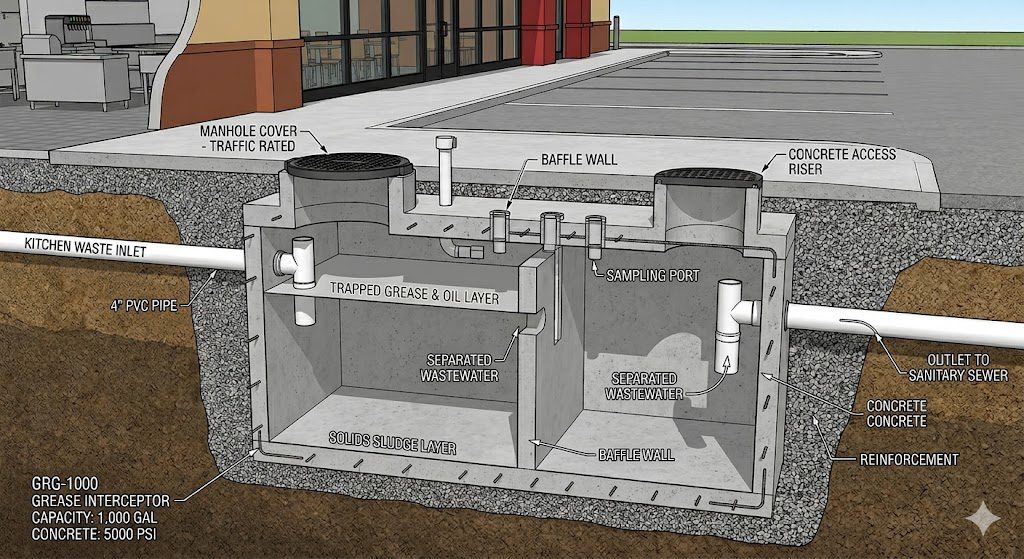
A grease interceptor acts as a filtration vault located between your kitchen drains and the main sewer lines. Its job is to slow down incoming wastewater, allowing it to cool. As the water cools, the grease particles float to the top, while heavier solids sink to the bottom. The clean water in the middle then exits into the municipal line.
When you ignore regular Interceptor maintenance, the layer of trapped grease becomes too thick. Eventually, there is no more room for separation. At this point, the grease begins to escape into your interior plumbing or, worse, it hardens inside the tank and causes a total blockage. This is why effluent quality matters; if the water leaving your kitchen is too oily, you are looking at a plumbing disaster.
Common Signs Your Interceptor is Reaching Capacity
- Slow Drainage Across Multiple Fixtures: If only one sink is slow, it might be a local clog. If every drain in the kitchen is sluggish, the bottleneck is at the interceptor.
- Pungent Odors: A full tank allows organic waste to sit and decompose. This creates a distinct, foul smell that can drift into the dining area.
- Gurgling Noises: When air is trapped by a grease wall, your pipes will make strange sounds as water tries to fight its way through.
- Grease in Unexpected Places: If you see oily residue in your floor drains, the separation process has failed completely.
Slow drainage often signals the need for Miramar grease interceptor cleaning services.
The Consequences of Neglecting Grease Pumping
Operating a restaurant with a compromised grease management system is a gamble that rarely pays off. Beyond the immediate frustration of slow drains, there are significant financial and legal risks involved.
Health Department and Environmental Fines
Local municipalities have strict FOG regulations to prevent sanitary sewer overflows. If an inspector finds that your interceptor is over the 25 percent rule, meaning more than a quarter of the tank is filled with solids and grease, you could face heavy fines. In some jurisdictions, repeated violations can lead to a temporary suspension of your operating license.
Emergency Plumbing Costs
An emergency pumping visit on a Saturday night is significantly more expensive than a scheduled maintenance call. Furthermore, if the grease makes it past the interceptor and into the main lines, it can cause a hydro jetting requirement, which involves high-pressure water to clear hardened blockages.
Structural Damage to Pipes
Over time, the acids found in decomposing food waste and oils can corrode metal pipes. This leads to leaks under your foundation that are incredibly difficult and expensive to repair. Maintaining a clean grease trap ensures that these corrosive elements are removed from your property regularly.
The Science of Grease Management
To truly understand why your drains are failing, you have to look at the waste stream of a modern restaurant. Every time a staff member scrapes a plate or washes a sauté pan, a mixture of animal fats, vegetable oils, and food particles enters the system.
Without a functional baffle plate inside the interceptor to direct the flow, the water moves too quickly for the grease layer to rise. Professional grease management experts check these internal components during every pump out to ensure the physics of the tank are still working in your favor. If a baffle is broken or a seal has perished, your interceptor is just a pass-through box that offers zero protection.
Best Practices for Commercial Kitchen Staff
While professional pumping is a necessity, your daily operations dictate how fast that tank fills up. Implementing a Best Management Practices or BMP program can extend the time between service visits and keep your drains clear.
- Dry Scraping: Ensure all staff members scrape food waste into the trash before rinsing plates. This reduces the solid waste buildup at the bottom of the tank.
- No Boiling Water Dumps: Pouring boiling water down the drain might seem like it clears grease, but it actually melts it and carries it further into the pipes where it cools and hardens.
- Strainers in Every Sink: Use fine mesh strainers to catch small debris. This prevents the sludge layer from growing too quickly.
- Log Book Maintenance: Keep a detailed service log of every time your interceptor is cleaned. This is your best defense during an official compliance inspection.
Why Professional Pumping is the Only Solution
Some restaurant owners attempt to use bio-additives or enzymes to eat the grease. While these products can help with odors, they do not replace the need for physical removal. In fact, many cities prohibit certain enzymes because they simply push the grease further down into the public sewer, creating fatbergs in the city infrastructure.
A professional environmental service provider like Americlean Pumping uses high-volume vacuum trucks to completely empty the tank. This includes scraping the side walls and ensuring the inlet and outlet pipes are clear of obstructions. We provide a manifest of disposal, which proves that your waste was handled according to Environmental Protection Agency standards.
The Americlean Pumping Advantage
When your business is on the line, you need a partner who understands the urgency of commercial plumbing needs. We do not just pump your tank; we provide a full system assessment to identify potential issues before they become catastrophes.
Our team focuses on topical authority in the pumping industry by staying updated on the latest local codes and disposal technologies. We ensure that your waste management strategy is both cost-effective and fully compliant with all state and local laws.
Conclusion
Slow drains are more than a nuisance; they are a distress signal from your plumbing. A full grease interceptor threatens hygiene, customer experience, and your bottom line. By prioritizing regular professional grease interceptor maintenance, you avoid the chaos of a kitchen backup and keep your focus on your guests.
Do not wait for a total blockage. If you notice pooling water or foul smells, it is time for intervention. Contact Americlean Pumping today to schedule your grease interceptor service. We ensure your facility stays compliant and clog-free, protecting your infrastructure from costly repairs and unexpected downtime.