
How Do You Maintain a Catch Basin? A Complete Maintenance Guide
Knowing how to maintain catch basin structures is essential for any property owner who wants to avoid costly water damage. A catch basin is the part of your storm drain that traps debris before it enters the main sewer lines. If you neglect this system, you risk massive clogs and property flooding.
In this guide, we will walk you through the entire catch basin cleaning process. You will learn about the tools required, the signs of trouble, and how to keep your stormwater drainage system flowing perfectly year-round. Taking care of your drainage now saves you thousands of dollars in repairs later.
Why Regular Catch Basin Maintenance Is So Important
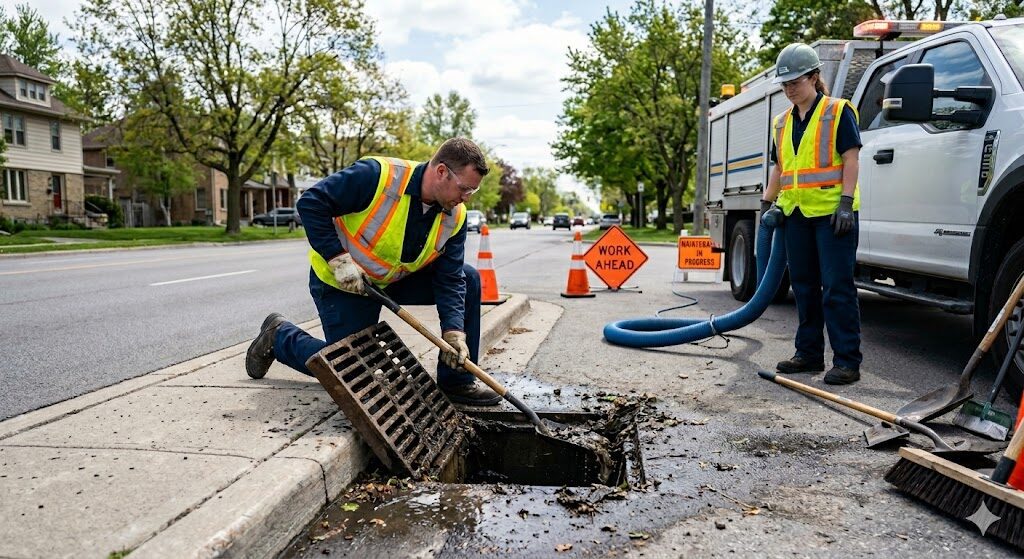
The main goal of catch basin maintenance is to protect your drainage infrastructure. These basins are designed to catch sand, silt, and trash. If they are not emptied, that material flows into the pipes and causes a total system failure.
Routine drainage maintenance ensures that heavy rain has a place to go. Without it, water pools on the surface, which can crack your asphalt and weaken the foundation of your buildings. A concrete catch basin can further improve drainage and runoff control. Proper stormwater system maintenance also keeps local waterways clean by stopping pollutants from reaching the ocean or local rivers.
Regular maintenance helps, but persistent issues may require professional catch basin cleaning for drainage issues to restore proper flow.
Common Issues Caused by Poor Catch Basin Upkeep
When you fail to maintain catch basin units, several problems begin to surface. The most common issue is a backup. When the basin is full of muck, the water has nowhere to go but back up onto your parking lot or driveway.
Other frequent problems include:
- Structural Decay: Standing water and rotting debris can eat away at concrete walls.
- Foul Odors: Trapped organic matter like leaves and grass begins to smell like rotten eggs over time.
- Pest Infestations: Stagnant water is a breeding ground for mosquitoes and rats.
- Sinkholes: Water leaking through a cracked basin washes away the surrounding soil.
If the damage becomes too severe, you might even need to learn how to build a concrete catch basin to replace the old one entirely.
Step-by-Step Process to Clean and Maintain a Catch Basin
A professional catch basin inspection service follows a specific set of steps to ensure the job is done right. Here is the typical workflow for debris removal from drain system units:
1. Initial Inspection
First, the technician removes the grate and checks the water level. They look for cracks in the walls and check if the outlet pipe is clear.
2. Debris Extraction
Using a vacuum truck service, the heavy sludge at the bottom of the basin is sucked out. This is much more effective than trying to scoop it out by hand.
3. High-Pressure Rinsing
A hydro jetting system is often used to blast away stubborn grime from the walls and pipes. This ensures the sediment removal is 100% complete.
4. Final Testing
The team pours water into the basin to confirm it exits through the pipe at the correct speed. This is a crucial part of storm drain upkeep tips to ensure the system is functional.
Tools and Equipment Used for Effective Maintenance
Using the right catch basin cleaning equipment is the difference between a temporary fix and a long-term solution.
- Vacuum Trucks: These are the gold standard for commercial drainage cleaning. They provide the suction power needed to lift heavy wet sand and rocks.
- Hydro Jetters: These tools use high-pressure water to clear out drainage cleaning equipment lines that are blocked by roots or grease.
- Grate Lifters: These specialized hooks allow workers to move heavy iron grates safely without injury.
- Safety Gear: Because basins are confined spaces, technicians use gas monitors and specialized harnesses.
How Often You Should Service a Catch Basin
To effectively prevent drainage blockages, you should have a schedule. Most experts recommend a professional cleaning at least once a year. However, certain factors might require you to service them more often.
If your property has many trees, the leaves will fill the basin quickly in the fall. If your parking lot sees heavy truck traffic, more sand and gravel will wash into the drains. For these high-traffic areas, a bi-annual storm drain inspection is the best way to stay ahead of problems. Learn how often you should maintain your catch basin for optimal performance.
When to Call Professionals for Catch Basin Cleaning
While property owners can clear leaves off the top grate, deep cleaning requires a pro. You should call a professional drainage maintenance service if you notice the following:
- Water stays in the basin for more than 24 hours after a rain.
- You see sinkholes or dips in the pavement near the drain.
- The grate is sunken or crooked.
- There is a strong, unpleasant smell coming from the drain.
Professionals have the heavy-duty machinery required for deep sediment removal that manual tools simply cannot reach.
Frequently Asked Questions
Proper maintenance involves regular inspections, removing surface trash from the grate, and hiring a vacuum service to remove the sludge from the bottom sump every year.
Most basins need cleaning once a year. If your area experiences heavy storms or has a lot of trees, you should check them every six months.
The basin will eventually fill with dirt. Once full, it can no longer catch debris, leading to clogged underground pipes, property flooding, and expensive pavement repairs.
You can clean the surface grate, but you cannot easily reach the bottom sediment. Deep cleaning requires professional vacuum equipment to remove all the heavy waste safely.
The primary tools are vacuum trucks, hydro jetting machines, industrial-strength hooks for grates, and waterproof cameras for pipe inspections.
Conclusion
Keeping your drainage system healthy is a simple way to protect your real estate investment. When you maintain catch basin structures properly, you ensure that your property remains safe, dry, and professional-looking. Regular care prevents the nightmare of a flooded parking lot and the massive bills that come with pipe replacements. Americlean Pumping provides top-tier commercial drainage cleaning and maintenance services. Our team uses the latest technology to keep your systems running at peak performance. Do not wait for a flood to tell you that your drains are full.