
How Frequently Should a Large Outdoor Grease Interceptor Be Maintained
Operating a commercial kitchen? A grease interceptor is more than just helpful, it’s often required.
It traps fats, oils, and food waste before they clog your plumbing and cause expensive problems.
This guide explains when you need one, the rules to follow, and how it keeps your kitchen running smoothly.
How frequently should a large outdoor grease interceptor be maintained?
A large outdoor grease interceptor should be maintained every 3 to 6 months. However, high-volume establishments may require more frequent cleanings to ensure optimal performance.
Large systems still depend on professional grease interceptor service to stay efficient.
Key Takeaways
- Regular maintenance of a grease interceptor is necessary to prevent clogs, odors, and backups.
- The cleaning frequency largely depends on the size of the interceptor, the volume of grease produced, and local regulations.
- Failure to maintain the interceptor regularly can lead to costly repairs and environmental issues.
What Is a Grease Interceptor and Why Is It Important?

A grease interceptor, often referred to as a grease trap, is a plumbing device used in commercial kitchens to separate grease, oils, and fats from wastewater before it enters the main sewage system.
These substances, if not properly removed, can cause blockages and damage to plumbing systems.
By capturing and storing these materials, a grease interceptor ensures that grease does not clog municipal sewer lines and cause costly and environmentally harmful backups. Regular Pompano Beach grease trap maintenance is essential to keep these systems functioning efficiently and in compliance with local regulations.
In large outdoor grease interceptors, the system typically consists of a large tank where grease, oil, and other waste materials are separated from the wastewater.
The solid waste settles at the bottom, while grease floats to the top, allowing cleaner water to flow out of the system.
How Often Should You Maintain a Large Outdoor Grease Interceptor?
The frequency of maintenance and cleaning for your grease interceptor depends on several factors, including the size of the interceptor, the volume of grease waste generated, and local regulations.
However, as a general guideline, the following factors should be considered when determining the maintenance schedule:
Regulations and Local Codes
In many areas, local codes and regulations dictate how often grease interceptors should be cleaned.
These regulations often consider the capacity of the system and the type of foodservice operation. For instance:
Local regulations
Many municipalities require grease interceptors to be cleaned at least once every 90 days.
However, some areas may have stricter requirements, especially for high-volume food establishments.
Permits and inspections
Regular inspections may also be required, and failure to comply with local laws can result in fines or penalties.
Size of the Grease Interceptor
The size of the grease interceptor plays a significant role in determining how often it needs to be cleaned.
A larger interceptor can handle a higher volume of grease and may not require as frequent cleaning as a smaller unit.
Small to medium-sized interceptors
These typically need to be cleaned every 60 to 90 days, depending on the volume of grease produced.
Large interceptors
Large outdoor grease interceptors that handle a significant amount of waste may be cleaned every 90 to 180 days, but again, this depends on usage and local regulations.
Volume of Grease Produced
The frequency of cleaning can also depend on the amount of grease generated by your kitchen.
A high-volume kitchen that serves a large number of meals per day will produce more grease and require more frequent cleaning of the interceptor.
High-volume establishments
If you run a busy restaurant or a food processing facility that generates a large amount of grease, your grease interceptor may need to be cleaned every 30 to 60 days.
Low-volume operations
Small cafés, coffee shops, or catering services may produce less grease and can clean their grease interceptor every 90 to 180 days.
Large outdoor interceptors still require professional grease interceptor service to avoid clogs.
Signs You Need to Clean the Grease Interceptor
Even if you follow the recommended cleaning schedule, it’s essential to monitor the condition of your grease interceptor regularly.
If you notice any of the following signs, it may be time for maintenance:
Slow drainage: If the sink or drain in your kitchen is draining slowly, it may indicate a blockage in the interceptor.
Foul odors: Strong, unpleasant smells coming from the kitchen or drain could be a sign of a buildup of grease in the interceptor.
Visible grease buildup: If you notice grease collecting around the edges of the tank or in the water flow, it’s time for a cleaning.
Steps to Maintain Your Grease Interceptor
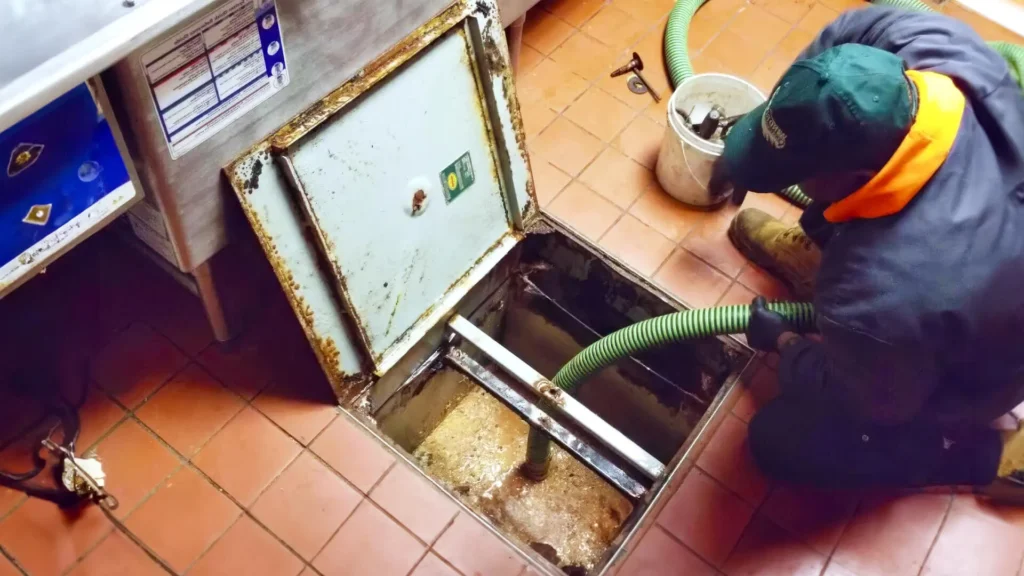
Proper maintenance of your grease interceptor ensures its longevity and prevents plumbing issues. Here are the basic steps to keep it in good working condition:
1. Regular Inspections
At least once a month, inspect the grease interceptor to check for visible signs of grease buildup.
Look for any cracks, leaks, or other signs of wear and tear. Regular inspections help catch issues early before they become costly problems.
2. Cleaning the Interceptor
Cleaning the grease interceptor involves removing the accumulated grease and waste from the tank.
This should be done by a professional waste disposal company that has the necessary equipment to safely remove the grease and dispose of it properly.
3. Skimming the grease
The first step is to skim the grease from the top of the water in the interceptor.
4. Removing solids
After the grease is removed, the remaining solids at the bottom of the tank need to be cleaned out.
5. Flushing and washing
Finally, the tank should be flushed and washed with water to ensure all remaining waste is removed.
Frequently Asked Questions
1. How often should I clean my large outdoor grease interceptor?
Typically, a large outdoor grease interceptor should be cleaned every 90 to 180 days, depending on the size of the system and the volume of grease produced. Some high-volume kitchens may need more frequent cleaning.
2. Can I clean my grease interceptor myself?
While basic maintenance can be done by kitchen staff, it’s recommended to hire a professional to clean the grease interceptor. They have the necessary tools and expertise to handle the job safely and effectively.
3. What happens if I don’t maintain my grease interceptor regularly?
Failure to maintain your grease interceptor can result in blockages, foul odors, slow drainage, and potential fines for non-compliance with local regulations. Neglecting maintenance can also lead to more costly repairs or replacements down the line.
Conclusion
Regular maintenance of a large outdoor grease interceptor is crucial for keeping your kitchen running smoothly and preventing costly plumbing issues.
By following the recommended cleaning schedule and taking preventive measures, you can extend the life of your system and ensure it continues to operate efficiently.
If you’re unsure about the cleaning requirements for your grease interceptor, consult with a professional to determine the best maintenance plan for your needs. Learning about grease interceptor cleaning benefits can also help you understand why regular service is essential for smooth operation.