
Why Your Sink Keeps Backing Up and How a Grease Trap Helps
A sink backing up is one of the most frustrating problems in any commercial kitchen. When your sink keeps backing up, it usually points to a deeper issue within the plumbing system rather than a surface level blockage. Many businesses deal with recurring slow drains or sudden backups without realizing that grease buildup is often the root cause. Over time, fats, oils, and grease accumulate inside pipes, restricting water flow and creating stubborn clogs that simple cleaning cannot fix. Understanding how systems like grease trap collection support proper waste removal can help you prevent these issues before they disrupt your operations.
If left unresolved, a sink backing up can affect hygiene, workflow, and even compliance with local regulations. The problem often worsens gradually, which is why early intervention is essential. Knowing how a grease trap works and why it is important can help you maintain a smooth and reliable kitchen environment.
Why Your Sink Keeps Backing Up in the First Place
A sink backing up does not happen randomly. It is usually the result of ongoing buildup inside your plumbing system. In commercial kitchens, large volumes of food waste, grease, and residue are washed down the drain every day. While water flows through easily, grease behaves differently. It sticks to pipe walls and hardens over time, creating a narrowing passage that restricts drainage.
As this buildup increases, water flow slows down and pressure begins to build inside the pipes. Eventually, this leads to water reversing direction and coming back up through the sink. This is why many kitchens experience repeated backups even after clearing visible blockages. Without addressing the underlying grease accumulation, the issue continues to return.
How Grease Buildup Affects Your Plumbing System
Grease is one of the most damaging substances for any drainage system. Unlike other types of waste, it does not dissolve easily in water. Instead, it cools and solidifies inside pipes, creating a sticky layer that traps additional debris.
Over time, this buildup leads to serious plumbing problems such as reduced pipe diameter, increased pressure within the system, and frequent blockages. As the situation worsens, it can also affect connected drainage components, putting additional strain on the entire system. Businesses that delay maintenance often end up dealing with more complex issues that require extensive repairs.
A sink backing up repeatedly is often a clear indication that grease buildup has reached a critical level and needs immediate attention. A dirty grease trap can also contribute to drain backups by allowing excessive grease buildup to affect your plumbing system.
How a Grease Trap Helps Prevent Sink Backups
A grease trap is designed to intercept fats, oils, and grease before they enter the main drainage system. It acts as a barrier that separates grease from wastewater, allowing only clean water to pass through the pipes.
By capturing grease at the source, a grease trap prevents it from accumulating inside the plumbing system. This significantly reduces the risk of clogs and ensures that water flows smoothly through the pipes. When properly maintained, a grease trap helps eliminate the primary cause of a sink backing up.
In addition to preventing blockages, grease traps also improve overall kitchen efficiency. Staff can work without interruptions caused by drainage issues, and the system remains reliable even during peak hours.
Sink backups are often a sign that expert grease trap maintenance for restaurants and food businesses are needed.
Signs Your Kitchen Needs a Grease Trap or Maintenance
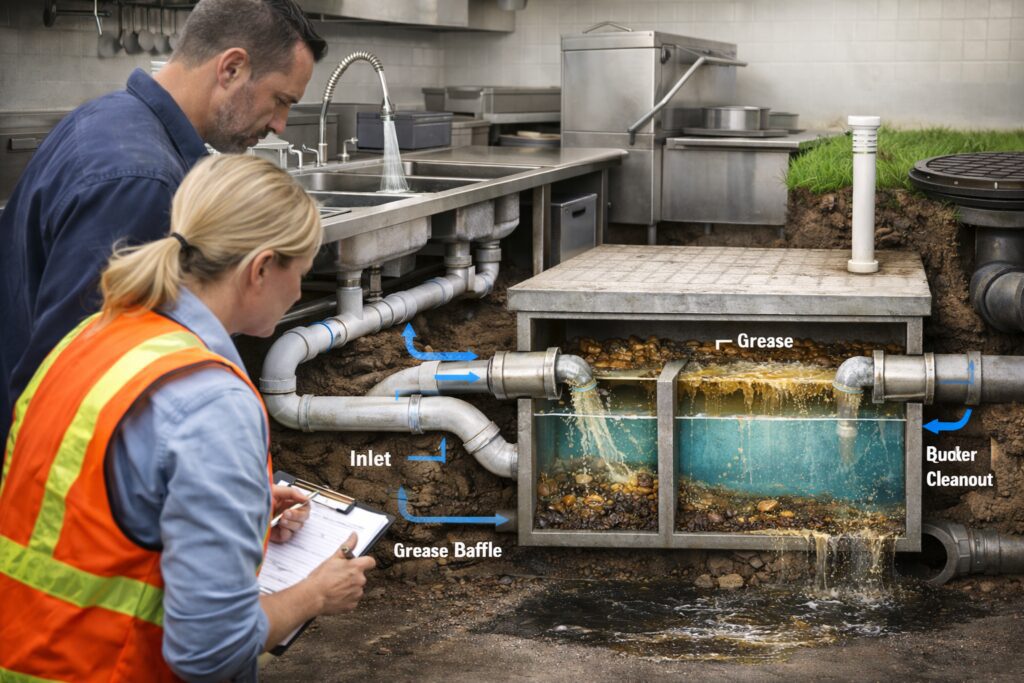
Many businesses do not realize they need a grease trap until problems become frequent. However, there are early signs that indicate your system requires attention.
Common warning signs include slow draining sinks, recurring clogs, unpleasant odors from drains, and water pooling in sink areas. These issues often develop gradually, making them easy to ignore at first. Over time, they become more severe and harder to manage.
If your kitchen already has a grease trap but still experiences issues, it may be time to evaluate your grease trap plumbing layout to ensure it is designed correctly for your operations. A poorly configured system can reduce efficiency and lead to repeated problems.
The Cost of Ignoring a Backing Up Sink
Ignoring a sink backing up can lead to serious consequences for both residential and commercial properties. What starts as a minor inconvenience can quickly turn into a major operational issue.
Continued backups can damage pipes, increase repair costs, and create unsanitary conditions in food preparation areas. For businesses, this can result in failed inspections, temporary closures, and loss of customer trust. The financial impact of repeated repairs and downtime can be significant.
Investing in proper grease management is far more cost effective than dealing with ongoing plumbing failures. Understanding how much a 1000 gallon grease trap costs can help you plan for a long term solution that protects your business.
How Regular Maintenance Keeps Your System Running Smoothly
Installing a grease trap is only part of the solution. Regular maintenance is essential to keep it functioning effectively. Over time, grease traps fill up and need to be cleaned to maintain their performance.
Routine maintenance includes removing accumulated grease, inspecting the system for damage, and ensuring proper flow through connected pipes. Without regular cleaning, the trap itself can become a source of blockage.
Professional services ensure that the system is cleaned thoroughly and operates at full capacity. This reduces the risk of unexpected backups and extends the lifespan of your plumbing system.
Choosing the Right Grease Management Approach
Every kitchen has different requirements based on its size, usage, and type of operations. Choosing the right grease management approach ensures that your system can handle the volume of waste generated daily.
This includes selecting the appropriate grease trap size, ensuring proper installation, and scheduling regular maintenance. Businesses that take a proactive approach experience fewer disruptions and better overall performance.
Working with experienced professionals helps ensure that your system is designed and maintained according to industry standards. This not only improves efficiency but also supports compliance with local regulations.
Stop Recurring Sink Backups at the Source
A sink backing up is a clear sign that your plumbing system needs attention. While temporary fixes may provide short term relief, they do not address the underlying issue of grease buildup. Installing and maintaining a grease trap offers a long term solution that prevents clogs, improves efficiency, and protects your plumbing system.
By taking action early and investing in proper grease management, you can avoid repeated disruptions and maintain a clean, functional kitchen environment. A well maintained system ensures smooth operations and helps you focus on running your business without unexpected setbacks.
Frequently Asked Questions:
This usually happens due to grease buildup inside pipes, which is not removed by basic cleaning methods.
A grease trap captures fats, oils, and grease before they enter the drainage system, preventing blockages.
Cleaning frequency depends on usage, but regular maintenance is essential to ensure proper performance.
Yes, by preventing grease buildup, it reduces the source of unpleasant odors in the plumbing system.
Most commercial kitchens require grease traps to maintain proper drainage and comply with regulations.