
Clogged French Drain? Signs It’s Time for Professional Cleaning
A clogged French drain can quietly turn into a serious drainage issue if it is not addressed early. A clogged French drain prevents water from flowing away from your property as intended, which leads to standing water, soil damage, and potential structural concerns. Many property owners initially overlook the problem because the system is hidden underground, but the effects become visible over time through pooling water and persistent moisture.
In many cases, drainage systems work together, and when one component fails, the entire setup is affected. This is why maintaining connected systems using proper methods such as catch basin cleaning equipment helps improve overall efficiency and reduce pressure on your French drain. Understanding the early warning signs can help you take action before the damage becomes expensive and difficult to manage.
Why a Clogged French Drain Is a Serious Issue
A French drain is designed to redirect water away from your property through a perforated pipe system surrounded by gravel, but it must have a proper outlet for a French drain system to function effectively. Choosing the right gravel size helps maintain proper drainage performance. When functioning correctly, it prevents water from accumulating near foundations, landscaping, and paved surfaces. However, when a clogged French drain develops, this flow is disrupted, causing water to remain in areas where it should not.
Over time, this trapped moisture begins to affect the structural integrity of the property. Soil becomes unstable, surfaces weaken, and the risk of water damage increases significantly. What may seem like a minor drainage issue can gradually turn into a serious concern that impacts both safety and long term property value.
Common Causes of a Clogged French Drain
A clogged French drain usually develops due to gradual buildup rather than a sudden blockage. Sediment such as dirt, sand, and debris slowly enters the system and accumulates within the pipe or gravel layer. As this buildup increases, it restricts water flow and reduces the effectiveness of the drainage system.
Tree roots are another major cause of blockages. They can grow into the perforated pipes, creating obstructions that are difficult to remove without professional tools. In addition, improper installation or lack of filtration layers can allow debris to enter the system more easily, accelerating the clogging process and reducing system lifespan.
Warning Signs Your French Drain Needs Professional Cleaning
One of the most common signs of a clogged French drain is standing water that remains long after rainfall has stopped. This indicates that water is not being redirected properly. You may also notice areas of your yard that stay consistently damp or soggy, even during dry periods.
Another important warning sign is water collecting near your foundation or along the edges of your property. This suggests that the drainage system is no longer functioning efficiently. In some cases, slow drainage across larger areas may point to deeper issues, and it may be necessary to evaluate whether you need catch basin replacement services to support the entire drainage system.
How a Clogged French Drain Affects Property Value and Safety
A clogged French drain can have a direct impact on both the safety and value of your property. When water accumulates, it weakens the soil and creates uneven surfaces that can become hazardous over time. This is especially concerning in areas with frequent foot traffic or vehicle movement.
In addition to safety concerns, prolonged moisture exposure can damage foundations, landscaping, and paved areas. For commercial properties, this can lead to operational disruptions and a negative impression on customers. Addressing drainage issues early helps maintain a safe environment and preserves the overall value of the property.
Why Professional Cleaning Is the Right Solution
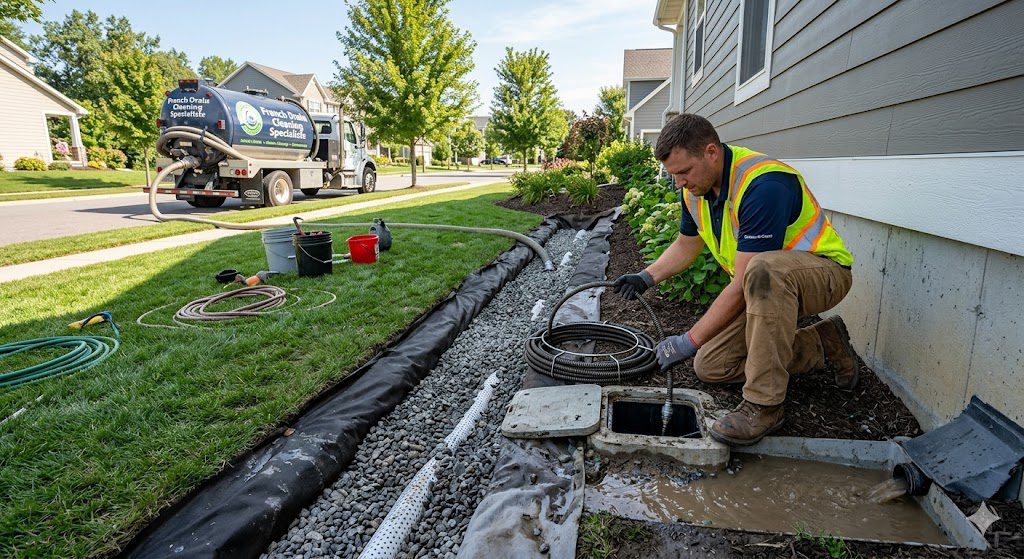
Professional French drain cleaning requires more than basic surface maintenance. The blockage often exists deep within the system, making it difficult to remove without specialized equipment. Professional cleaning services use advanced tools to flush out debris, remove sediment, and restore proper water flow.
In addition to cleaning, professionals inspect the system for potential issues such as pipe damage, root intrusion, or improper installation. This ensures that the problem is fully resolved and reduces the chances of recurring blockages. A professional approach provides a more reliable and long term solution compared to temporary fixes.
How Routine Maintenance Prevents Future Blockages
Routine maintenance plays a critical role in preventing a clogged French drain. Regular inspections help identify early buildup before it turns into a major blockage. Cleaning surrounding drainage systems also reduces the amount of debris entering the French drain.
By maintaining consistent care, property owners can improve drainage efficiency and extend the lifespan of the system. Preventive maintenance also reduces long term costs by avoiding emergency repairs and system replacements. A well maintained drainage system performs more reliably and handles heavy rainfall more effectively.
When Should You Schedule a Drain Inspection
It is important to schedule a drain inspection as soon as you notice changes in water flow or drainage patterns. Early intervention can prevent minor issues from turning into major problems. Seasonal changes, especially heavy rainfall, often reveal hidden drainage issues that need attention.
Even if there are no visible signs of damage, periodic inspections help ensure that your French drain continues to function properly. Being proactive allows you to maintain system performance and avoid unexpected failures that can disrupt your property.
Take Action Before the Problem Gets Worse
A clogged French drain is a problem that should not be ignored. What starts as slow drainage can quickly lead to standing water, property damage, and increased repair costs. Addressing the issue early helps protect your property and maintain a safe environment.
Investing in professional cleaning and routine maintenance ensures that your drainage system remains effective over time. By taking action now, you can avoid larger complications and keep your property functioning as it should.
Frequently Asked Questions:
A clogged French drain is typically caused by sediment buildup, debris accumulation, or root intrusion within the system.
Common signs include standing water, soggy soil, slow drainage, and water pooling near your foundation
Basic maintenance is possible, but professional cleaning is recommended for complete removal of deep blockages.
Cleaning frequency depends on environmental conditions and usage, but regular inspections help prevent major issues.
Yes, it can lead to structural damage, landscape issues, and increased repair costs if not addressed promptly.