
How to Lay French Drain – Here’s the Right Way to Do It
Tired of soggy patches or water pooling around your yard? A French drain could be your fix. It’s a simple, smart way to redirect water and protect your property.
In this guide, we’ll break down how to lay one step by step—no fluff, just real help.
How to lay a French drain?
Dig a gravel-filled trench with a perforated pipe to move water from wet areas to a safe drainage point using gravity.
Key Takeaway
- Identify where water collects and where it should drain.
- Mark a clear trench path with a consistent slope (1 inch drop per 10 feet).
- Dig a trench 6 inches wide, 18–24 inches deep.
- Line it with landscape fabric to block dirt, not water.
- Add 2–3 inches of gravel before placing the perforated pipe (holes down).
- Cover the pipe with more gravel, and fold the fabric over.
- Backfill with soil and blend it into your yard.
- Test the system with water before covering it completely.
- Use quality materials and stick to the slope—no shortcuts.
What Is a French Drain?
A French drain is a simple trench that helps get rid of excess water. Think of it like a hidden water slide for your yard.
It’s filled with gravel and has a pipe at the bottom. Water flows in, skips the drama, and drains out somewhere safe.
If you’ve got soggy patches on your lawn or water near your foundation, this is your cheat code. No fancy gear needed, just smart placement and gravity doing its thing.
Bottom line? It’s low-key genius for keeping your yard dry without turning it into a mud pit.
What You’ll Need: Tools & Materials Checklist
You’re not building the Eiffel Tower, but you do need the right gear. Here’s your cheat sheet:
- Shovel or trenching spade – For digging the trench without wrecking your back
- Pickaxe or mattock – If your soil’s tougher than your gym routine
- Wheelbarrow – To haul dirt like a boss
- Landscape fabric – Keeps dirt out, lets water through
- Gravel (¾ inch) – The real MVP for drainage flow
- Perforated drain pipe – The pipe with holes (yes, on purpose)
- Saw or utility knife – To cut pipe or fabric cleanly
- Level – So water moves, not just vibes
- Work gloves – Unless you like calluses as a flex
Step-by-Step Guide: How to Lay a French Drain
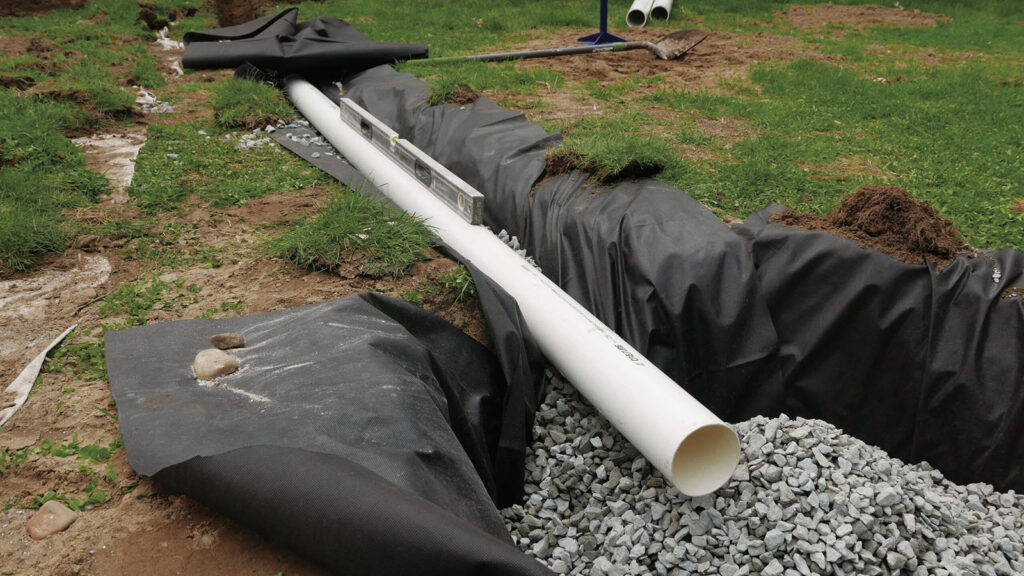
So your yard’s turning into a swamp? Time to give that water somewhere to go. Here’s how to lay a French drain without losing your weekend (or your cool).
1. Map the Water Flow
First, figure out where the water’s coming from and where you want it to go. Look for soggy spots or mini lakes after rain. Pick a spot that slopes slightly away from your home, ideally toward the street, a ditch, or a dry well.
2. Mark the Drain Line
Grab some spray paint or garden string. Mark the path for your drain trench. Keep it straight if possible, but slight curves are fine if you need to flex around roots or patios.
3. Dig the Trench
Now the real work starts. Dig a trench that’s about 6 inches wide and 18 to 24 inches deep. Keep a consistent slope—aim for 1 inch drop per 10 feet. Use a level and a 2×4 to check your slope as you go.
4. Add Landscaping Fabric
Line the trench with heavy-duty landscape fabric. Let it hang over the edges—you’ll fold it over later. This keeps dirt out of your drain while still letting water in. Think of it like a coffee filter for runoff.
5. Pour in the Gravel Base
Toss in 2 to 3 inches of gravel at the bottom. Use washed drainage gravel, not the cheap rocky mix from the corner store. Pat it down a bit, just enough so your pipe doesn’t bounce around.
6. Lay the Pipe
Use a perforated drain pipe, holes down. Yup, holes down—water seeps in from the bottom. Point the open end downhill so gravity does the work. Add a pop-up emitter or drain box if needed.
7. Cover with More Gravel
Bury the pipe with another 6–8 inches of gravel. The more, the better—but leave a few inches at the top for soil. Still got that fabric flapping over the edge? Fold it over the gravel burrito-style.
8. Backfill and Blend
Top it off with soil and sod—or mulch if you’re feeling fancy. You want it to disappear into the yard like it was never there. That’s the flex.
And that’s it. You just built a secret underground escape route for your yard’s drama. Water off, chill on.
Pro Tips for Long-Lasting Results
Skip the shortcuts. Use landscape fabric under your gravel to block weeds and keep things flowing. Slope matters—stick to that 1% grade or water’s not going anywhere.
Go heavy on the gravel, not just around the pipe but underneath too. It’s not just filler, it’s a function.
And don’t cheap out on the pipe—perforated with a sock is the real cheat code for keeping dirt out.
Last tip? Test before you cover. Run water through the line and watch it move. Better now than digging it all back up.
When to Call a Professional
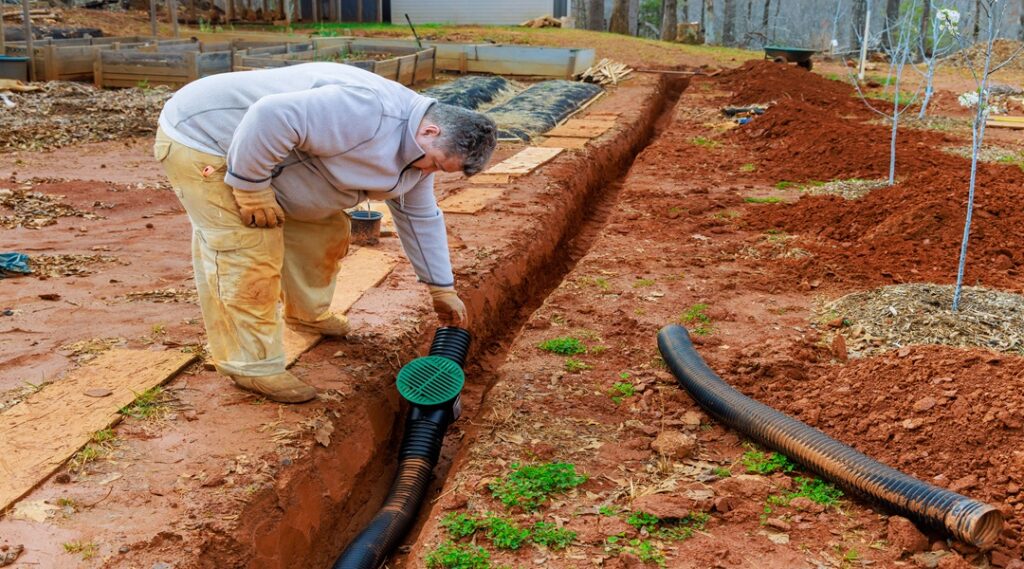
If your yard’s starting to feel like a swamp or the slope’s all wrong, call in the pros. Some jobs are just too messy (or too precise) for a weekend warrior.
Got clay-heavy soil, buried utilities, or water pooling near your foundation? Time to tag in someone with serious tools and a solid track record.
DIY pride is cool, but water damage? Not so much. If it looks risky or confusing, skip the guesswork and bring in backup.
Frequently Asked Questions
1. How deep should a French drain be?
Usually about 18 to 24 inches. Deep enough to catch water, but not so deep you’re digging into China.
2. Can I install it myself?
Yep. If you can handle a shovel and a level, you’re golden. Just follow the steps.
3. Does it really work?
Like a charm—if done right. It redirects water before it floods your yard.
Conclusion
Laying a French drain isn’t rocket science, but it does take a bit of sweat and a solid plan. Once it’s in, though? Your lawn gets its chill back, and those soggy spots stop stealing the show.
Just keep the slope steady, don’t cheap out on gravel, and make sure water has somewhere to go. Done right, this is a low-key flex that keeps your yard dry and drama-free.