
What Causes Grease Traps to Overflow? Key Reasons You Should Know
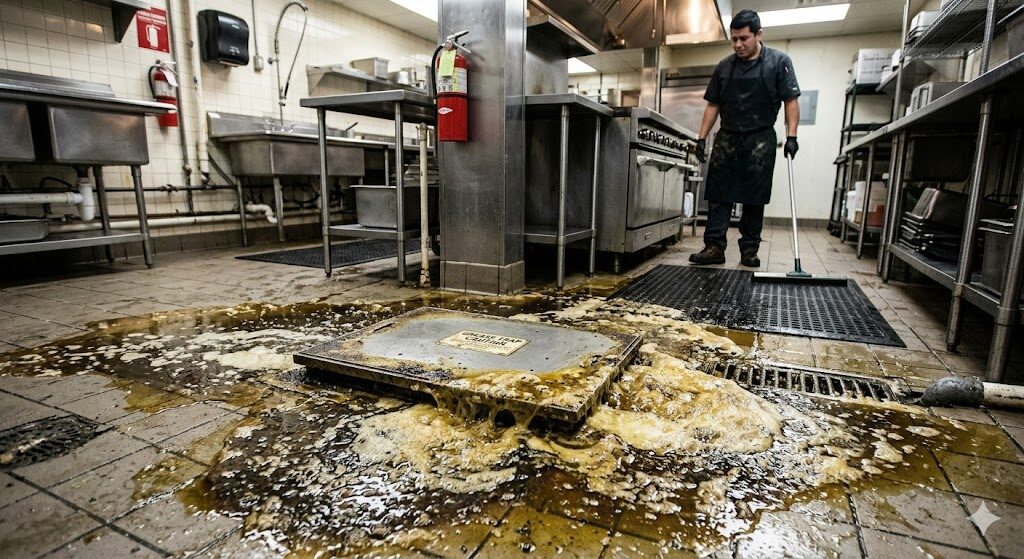
Maintaining a 1,000-gallon grease trap is a major part of running a smooth commercial kitchen. When these systems work correctly, you never have to think about them. However, when things go wrong, you might face a messy overflow, foul smells, or even a temporary business shutdown. Understanding the common grease trap overflow causes is the first step in protecting your facility from expensive repairs.
An overflow is more than just a nuisance. It can lead to health code violations and damage your property. In this guide, we will explore why these systems fail and how you can keep your wastewater drainage system flowing freely. From cleaning schedules to pipe issues, we have covered everything you need to know to stay compliant and clog-free.
Understanding How Grease Traps Function in Kitchens
Before diving into the problems, it helps to understand the basics. You might be asking, “What is a grease trap in a restaurant, and why is it so big?” A grease trap acts as a filtration system that separates fats, oils, and grease (FOG) from the water used in your sinks and dishwashers.
Because grease is lighter than water, it floats to the top of the tank while solids sink to the bottom. The clear water in the middle is then allowed to exit into the city sewer lines. If you want to dive deeper into the mechanics, you can read more about how a grease trap works to see the internal baffles in action. This process is essential for keeping the local environment clean and your pipes clear.
Excessive Grease Buildup and Lack of Cleaning
The most frequent restaurant grease buildup issue comes down to simple neglect. Every grease interceptor unit has a specific capacity. Once the layer of floating grease or the layer of bottom solids takes up more than 25 percent of the tank, the unit stops working efficiently.
When you skip your grease trap cleaning schedule, the grease has nowhere else to go. It begins to spill over the baffles and exit through the outlet pipe. This leads to a massive drain line blockage that can be very difficult to clear. Regular pumping is the only way to remove this waste and ensure the system has room to catch new grease from today’s shift.
Blocked Outlet Pipes and Drain Line Issues
Sometimes the trap itself is not the only problem. Commercial kitchen plumbing is a complex network of pipes. If the line leading away from your trap to the city sewer becomes clogged, the water will back up into the tank and eventually spill out of the lid.
This type of drainage system blockage usually happens because small amounts of grease have escaped over time and solidified in the pipes. It creates a hard, waxy substance that acts like a dam. In these cases, a standard pump out won’t fix the issue. You will need a professional plumbing maintenance service to clear the lines downstream to ensure the water has a clear path out of the building.
Incorrect Grease Trap Size for Kitchen Demand
Size matters when it comes to kitchen waste management. If your business has grown or you have changed your menu to include more fried foods, your original equipment might not be enough. If you are using a small indoor unit when your volume actually requires a 1,000-gallon grease trap, you will experience constant overflows.
An undersized trap fills up too quickly, leading to frequent backups. If you are looking to upgrade, it is important to research how much a 1000-gallon grease trap costs so you can budget for an appropriately sized system. Having the right capacity is a long-term clogged grease trap solution that prevents daily headaches.
Poor Maintenance Habits That Lead to Overflow
Technology can only do so much if the kitchen staff is not following best practices. Many commercial kitchen plumbing problems start at the sink. If employees are pouring used fryer oil directly down the drain or scraping large food scraps into the sink, the grease trap will be overwhelmed instantly.
Bad Habits to Avoid:
- Pouring liquid grease or oil down the drain
- Using boiling water to “melt” grease away
- Using heavy chemicals that only move the clog further down the line
- Removing the internal baffles to make water flow faster
Instead, practice “dry scraping,” where all food waste goes into the trash before the plates reach the dishwasher. These simple grease trap maintenance tips can drastically reduce the strain on your system and prolong the time between professional cleanings.
How to Prevent Grease Trap Overflow Problems
The best way to prevent grease trap backup issues is to be proactive. Waiting for an emergency means paying for premium after-hours service and potentially losing a day of sales. Establishing a relationship with a reliable service provider ensures your system is always under a watchful eye.
To truly fix grease trap overflow risks, follow these steps:
- Stick to a strict cleaning schedule based on your kitchen volume.
- Conduct a regular stormwater system inspection if your trap is located outside.
- Train all staff on proper FOG disposal.
- Keep a logbook of every cleaning to stay compliant with local inspectors.
By treating your grease trap system as a vital part of your business infrastructure, you ensure it stays out of sight and out of mind.
Overflow issues can often be prevented with regular grease trap maintenance in Miramar.
Frequent Ask Questions:
The most common cause is failing to pump the tank out regularly. When the grease layer becomes too thick, it blocks the flow of water and forces it out of the top of the tank.
Yes. If the outlet pipe leading to the sewer is blocked by solidified grease or debris, the water will have nowhere to go and will back up into the grease trap and your kitchen floor drains.
Absolutely. If a trap is too small for the amount of grease a kitchen produces, it will reach capacity within days or weeks, leading to frequent and unexpected overflows.
Most commercial kitchens need cleaning every 30 to 90 days. The “1/4 Rule” states that a trap should be cleaned once it is 25 percent full of solids and grease.
Conclusion
Understanding the grease trap overflow causes mentioned above is the best defense for any restaurant owner. Don’t let a 1,000-gallon grease trap issue ruin your reputation or your bottom line. Regular maintenance and professional care are the keys to a clean, safe, and efficient workspace. Americlean Pumping is here to help you manage your commercial kitchen plumbing needs with ease. Our expert team provides reliable pumping, cleaning, and inspection services to ensure you never have to deal with a messy backup.
Ready to set up a worry-free maintenance plan? Contact Americlean Pumping today to schedule your next service or learn more about maintaining your 1000-gallon grease trap!