
Top Signs Your Storm Drain Needs Immediate Cleaning
Professional storm drain cleaning is one of those maintenance tasks that property owners often forget until a massive rainstorm hits. If you wait until your parking lot looks like a lake to check your pipes, you are already facing a major headache. Keeping your drainage system in top shape ensures that rainwater flows away from your foundation and into the proper channels without causing chaos.
In this guide, we will walk you through the clear indicators that your system is struggling. From foul smells to slow drainage, knowing these clogged drain warning signs can save you thousands of dollars in repairs. Whether you manage a retail center or own a home, staying ahead of these issues is the best way to ensure long-term property health.
Why Keeping Storm Drains Clear Is Critical for Your Property
A functional catch basin system is the first line of defense against water damage. When these systems are clear, they facilitate efficient stormwater runoff control, moving water safely into the local sewer or treatment areas. However, when debris builds up, that water has nowhere to go but up and out onto your landscape or into your basement.
Regular commercial drainage infrastructure care prevents the soil around your building from becoming oversaturated. This protects your foundation and prevents the pavement from cracking. Investing in drainage system maintenance now is much cheaper than dealing with a collapsed pipe or a mold infestation later, which is why regular storm drain cleaning is essential for protecting your property.
If you are a homeowner, you might wonder why is residential storm drain cleaning is important for your specific lot. Simply put, it keeps your yard dry and your neighbors happy by preventing runoff from spilling into adjacent properties.
Slow Water Drainage After Rainfall: A Warning Sign
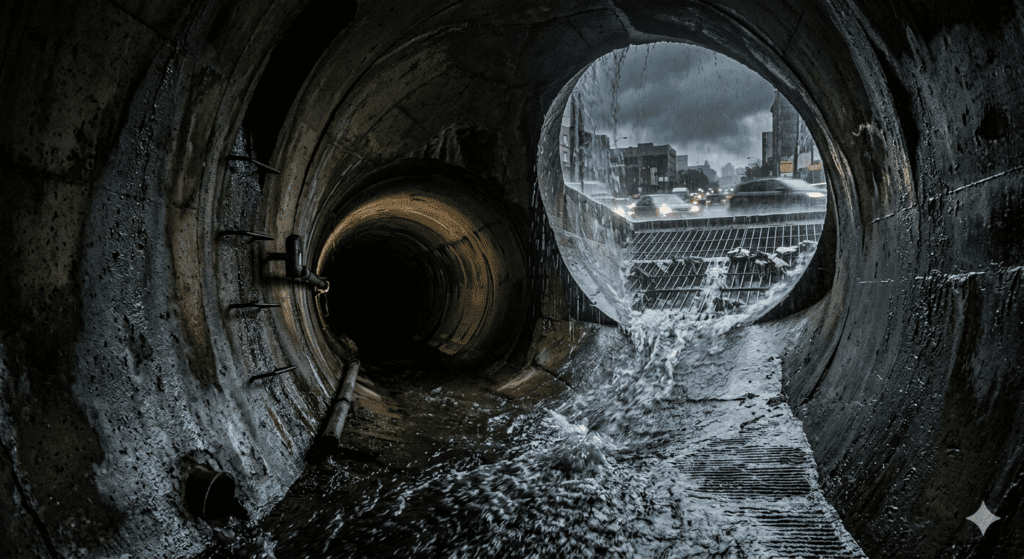
One of the most common drainage system blockage symptoms is water that lingers long after the clouds have cleared. If you notice that puddles take hours or even days to disappear from around your grates, you likely have a significant blockage deep within the pipes.
This slowness is often caused by a buildup of sediment, leaves, and trash. Over time, these materials compress into a thick sludge that narrows the passage for water. Professional drain blockage removal is usually required to clear these stubborn obstructions and restore full flow capacity to your system.
If you notice any of these issues, it’s time to schedule emergency storm drain cleaning services in Pembroke Pines before the problem worsens.
Standing Water Around Drains and Parking Areas
A standing water drainage issue is more than just an eyesore. It is a major safety hazard for pedestrians and a liability for business owners. When water pools in parking lots, it can hide potholes or create slippery surfaces that lead to accidents.
When you see large pools of water gathering specifically around your drain grates, it means the catch basin system is full. At this point, the system can no longer accept any more liquid. This is a clear signal that you need an urgent stormwater system inspection to find out exactly where the bottleneck is located.
Unpleasant Odors Coming from Storm Drains
You should never smell your storm drains. If a pungent, rotting, or “sewer-like” scent is wafting from the grates, it is a sign of trapped organic matter. Leaves, grass clippings, and even small animals can get stuck in the line and begin to decompose.
These odors often indicate that stagnant water is sitting in the pipes because it cannot flow out. This stagnant environment is a breeding ground for mosquitoes and bacteria. If the smell persists, it is time to call for an emergency storm drain cleaning to flush out the decaying material and refresh the air around your property.
Visible Debris, Dirt, and Blockages at the Drain Opening
Sometimes, the problem is staring you right in the face. If you look down at your drain and see piles of trash, thick layers of mud, or plastic bags tangled in the grate, your system is at risk. This visible debris acts like a lid, preventing water from entering the commercial drainage infrastructure.
Common Items That Block Drains:
- Accumulated autumn leaves and twigs
- Plastic bottles and snack wrappers
- Silt and sand from construction runoff
- Heavy layers of road salt and gravel
While you can pick up the surface trash, the real problem is often what has already slipped through the bars. Using a vacuum truck cleaning method is the most effective way to suck out the heavy silt that settles at the bottom of the basin.
Frequent Flooding or Water Backup Issues
If every moderate rainstorm leads to a “mini-flood” on your property, your system is failing to provide adequate stormwater runoff control. Frequent flooding suggests that your pipes are either too small for the current demand or, more likely, they are heavily restricted by years of neglect.
To prevent stormwater flooding, you must ensure the entire path is clear. Professionals often use a hydro jetting service to blast through mineral deposits and roots that have invaded the lines. This high-pressure water cleaning restores the pipe to its original diameter, allowing it to handle heavy tropical downpours without backing up.
You might also consider why installing barriers is a game changer for long-term storm drain protection to keep large debris from entering the system in the first place.
Frequent Ask Questions:
The most frequent indicators include standing water around the grate, slow-moving runoff, foul odors, and visible piles of trash or silt blocking the entrance.
Most experts recommend a professional stormwater system inspection and cleaning at least once a year. However, if your property has many trees or heavy traffic, you may need it twice a year.
Yes. Clogged drains lead to localized flooding, which can erode landscaping, crack asphalt, and even seep into building foundations or basements, causing structural issues.
Absolutely, storm drain cleaning is necessary. While you can clear the surface, specialized equipment like a vacuum truck cleaning unit is needed to remove heavy sediment from deep underground pipes that a garden hose cannot reach.
Ignoring your drains can lead to total system failure, costly emergency repairs, potential fines from local environmental agencies, and significant water damage to your property.
Conclusion
Recognizing these storm drain cleaning signs early can save you from an expensive disaster and demonstrate how storm drain cleaning prevents flooding. Whether it is a simple standing water drainage issue or a major drainage system blockage, the team at Americlean Pumping has the tools and expertise to fix it. We utilize advanced hydro jetting service and vacuum technology to ensure your commercial drain maintenance is handled quickly and effectively. If you are worried about the budget, you can check our guide on how much it costs to clean a storm drain to get a better idea of what to expect.
Don’t wait for the water to start rising. Contact Americlean Pumping today to schedule your professional storm drain cleaning and protect your property for the season ahead!
Ignoring early signs can lead to severe flooding, so consider professional cleaning for standing water drainage problems as a preventive step.