
How Does a Catch Basin Work? Understanding Stormwater Drainage Systems
Have you ever wondered exactly how catch basins work to keep your parking lot or driveway from turning into a lake during a heavy rainstorm? Most people walk right over these metal grates without a second thought, but they are actually the unsung heroes of any modern stormwater drainage structure.
A catch basin is a specialized box-like structure buried underground with a grate on top. Its primary job is to act as a gateway for surface water while trapping trash and dirt before they can clog up the rest of the city’s plumbing. In this guide, we will break down the mechanics of these systems and why they are vital for your property’s health.
What a Catch Basin Does in a Drainage System
The main stormwater drainage system function is to manage surface water runoff control. When rain hits a hard surface like asphalt or concrete, it can’t soak into the ground. Instead, it flows toward the lowest point. Without a catch basin, this water would pool, causing hydroplaning hazards or foundation damage.
A catch basin serves as the first line of defense in stormwater management infrastructure. It provides an entry point for water to move from the surface into underground drainage pipes. By acting as a “pretreatment” step, it ensures that the larger pipes downstream don’t get filled with heavy rocks or floating litter. Understanding what is the purpose of a catch basin helps property owners appreciate why these units need to be strategically placed.
How Water and Debris Flow Through a Catch Basin
How drainage basins operate is actually quite simple, relying on gravity and a clever design feature called a “sump.”
- Entry: Water flows over the drainage grate cover.
- The Sump: The water falls into a sediment collection chamber. This chamber is deeper than the exit pipe.
- Settling: Heavy items like sand, gravel, and trash sink to the bottom of this “sump” area.
- Exit: As the water level rises above the height of the outlet pipe, the clean water flows out and into the main sewer lines.
This catch basin working process ensures that only the liquid moves forward while the “junk” stays trapped at the bottom of the basin.
Key Components That Make a Catch Basin Effective
A high-quality catch basin system isn’t just a hole in the ground. It consists of several specific parts that must work together:
- The grate: Usually made of heavy-duty steel or cast iron, it prevents large objects (and people!) from falling into the hole.
- The Basin/Structure: This is the concrete or plastic “box” that holds the water.
- The Sump: The area below the outlet pipe where sediment collects.
- Inlet and Outlet Pipes: These connect the basin to the wider outdoor drainage water control network.
Where Catch Basins Are Commonly Installed
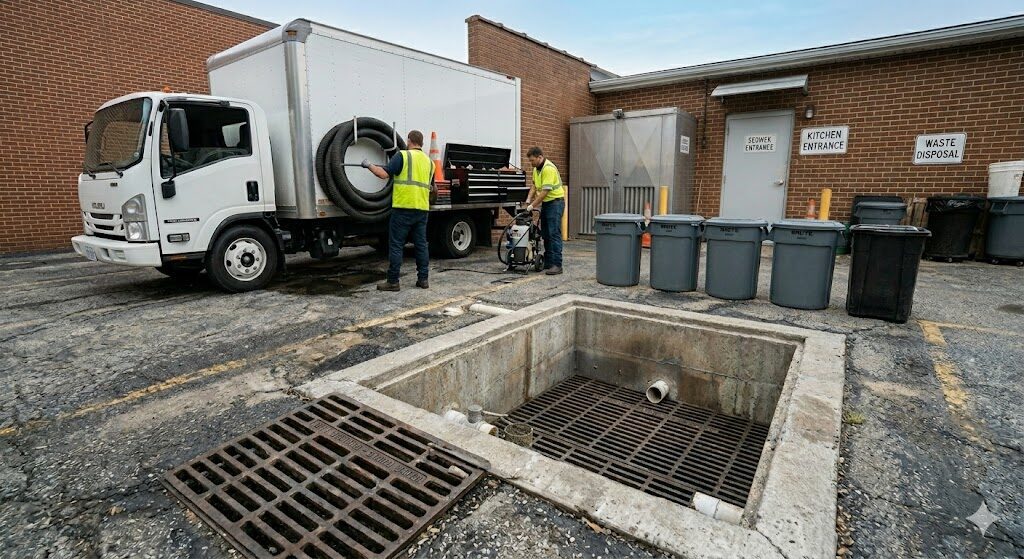
You will find these structures anywhere that water tends to accumulate. Proper placement is essential to prevent flooding with catch basins. Common locations include:
Commercial Parking Lots
Large flat surfaces generate massive amounts of runoff. Catch basins are placed at low points to keep the area safe for drivers.
Residential Curb Lines
Cities install them along street gutters to move rainwater away from homes and into the municipal treatment system.
Low-Lying Landscape Areas
On large estates or golf courses, basins are used to prevent soggy “swamp” spots in the grass.
Problems That Occur When Catch Basins Get Clogged
When the drainage debris collection system fills up completely, the system fails. If the sediment reaches the level of the outlet pipe, it begins to flow into the underground drainage pipes, which can lead to massive blockages that are incredibly expensive to fix.
Common issues include:
- Standing Water: If the grate is covered in leaves or the basin is full, water will back up.
- Sinkholes: If the structure of the basin cracks, water can leak out and wash away the soil supporting your pavement.
- Foul Odors: Trapped organic matter like leaves and grass can rot, creating a “sewer smell” near the basin.
In severe cases of structural failure, you may need to look into catch basin replacement services to restore safety to your property.
Maintenance Practices to Keep Catch Basins Working Properly
To keep your system running, storm drain basin maintenance is non-negotiable. You shouldn’t wait for a flood to check on your drains.
- Regular Inspections: A professional catch basin cleaning and inspection should happen at least once a year. We recommend checking them after the leaves fall in autumn and after the heavy rains of spring.
- Professional Cleaning: Because the debris sits in a “sump” below the pipes, you can’t just flush it out with a garden hose. A professional drainage maintenance service uses high-powered vacuum trucks to suck out the sludge and grit. Knowing how to clean a catch basin properly requires the right equipment to ensure all sediment is removed without damaging the pipes.
When a system isn’t working efficiently, it may be due to blocked catch basin warning signs that indicate cleaning is needed to restore proper drainage.
Frequent Ask Questions
Its main purpose is to provide an entry point for stormwater while trapping sediment and debris so they don’t clog the main sewer lines.
By providing a clear path for surface water to enter the underground drainage system, it prevents water from pooling on parking lots and streets.
Most industrial basins are made of pre-cast concrete, while smaller residential versions might be made of durable, high-density plastics.
Yes. If the “sump” area fills with dirt, the basin can no longer trap debris, leading to clogs and flooding.
They are typically installed at low points in parking lots, along street curbs, and in areas of a landscape where water naturally collects.
Conclusion
Understanding how a catch basin works is the first step in protecting your investment. These systems are vital for moving water safely away from your buildings and preventing costly flood damage. However, a catch basin is only as good as its last cleaning. Without regular care, your stormwater drainage structure can quickly become a liability. At Americlean Pumping, we specialize in professional maintenance to ensure your drainage stays clear year-round. Don’t wait for the next big storm to find out your drains are clogged.
When debris builds up and restricts flow, investing in effective cleaning for catch basin drainage problems can prevent flooding and damage.