
How Does Proper Food Safety and Sanitation Reduce Plumbing and Drainage Issues?
Running a clean and compliant kitchen involves more than meeting standard health codes. It also means protecting your plumbing system from the avoidable impact of improper waste handling. At Ameri Clean Pumping, we see every day how strong food safety and sanitation practices directly prevent plumbing clogs, wastewater backups, and grease-related blockages. When commercial kitchens adopt efficient hygiene habits, they reduce contamination risks, minimize downtime, and extend the life of their drainage systems.
In this blog, we break down how sanitation influences your plumbing, what common mistakes lead to clogged drains, and how proper waste handling supports long-term operational efficiency. For professional help with grease traps, pumping services, or wastewater management, call us at (833) 416-4430 today!
How Food Safety and Sanitation Practices Protect Your Plumbing System
Proper food safety and sanitation go beyond preventing bacterial contamination they directly affect the performance of drain lines, wastewater systems, and grease management equipment. When sanitation procedures are followed consistently, kitchens reduce blockages, protect floor drains, and limit the need for emergency pumping or storm drain debris removal services.
Good sanitation creates cleaner environments, improves sanitary kitchen operations, and supports compliance with health inspectors and sanitation standards. At Ameri Clean Pumping, we help businesses maintain operational efficiency by keeping drain systems functional and free of unnecessary contamination.
How Food Waste Disposal Best Practices Reduce Drain Problems
Improper food disposal is one of the leading causes of clogged kitchen drains. When food scraps, peels, seeds, packaging fragments, and small solids enter the system, they build up inside drain lines. This accumulation restricts water flow, traps grease, and often requires catch basin cleaning for commercial properties to prevent major blockages.
By following food waste disposal best practices, kitchens reduce the amount of solid material entering the plumbing system. This includes separating trash, scraping plates thoroughly, and keeping solids out of sinks and prep areas. Consistent habits like these support proper grease trap servicing frequency, helping avoid backups, foul odors, and costly repairs.
Our team regularly sees clogs that could have been prevented if basic waste handling rules had been followed. Proper sanitation is your first line of defense.
Why FOG Waste Management Is Critical for Plumbing Clog Prevention
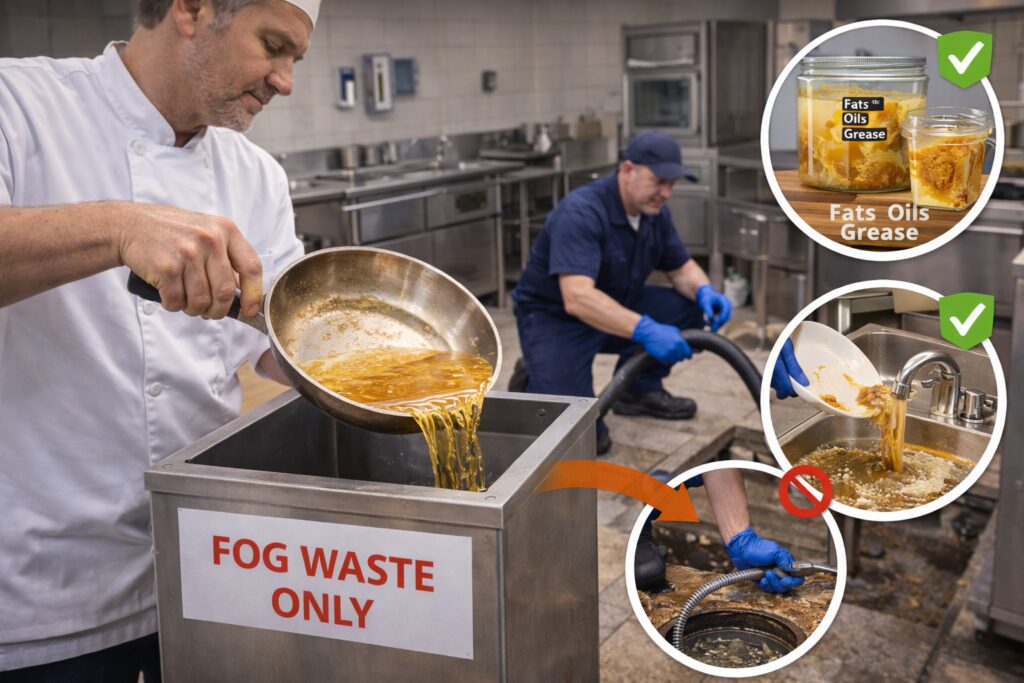
FOG (fats, oils, and grease) is one of the biggest threats to any commercial kitchen’s plumbing. Even small amounts build up over time. When kitchens fail to control FOG, they face clogged grease interceptors, restricted drain lines, and unexpected wastewater backups—clear signs of when to use drain snaking service.
Effective FOG waste management means:
- Keeping hot oil and grease out of sinks
- Using appropriate containers for grease collection
- Ensuring regular pump-outs and inspections
- Using equipment such as the big dipper grease trap
- Maintaining compliance with sanitation standards
This reduces the risk of blockages and ensures the drainage systems operate smoothly. In areas like Key Biscayne, our team also supports businesses with grease trap maintenance in Key Biscayne to strengthen long-term performance.
Kitchen Hygiene Guidelines That Support Drainage Performance
Strong kitchen hygiene not only improves food safety but also protects plumbing equipment. When surfaces are cleaned correctly and waste is handled responsibly, drains experience fewer disruptions while supporting managing stormwater with catch basins throughout the facility.
Essential kitchen hygiene guidelines include:
- Keeping prep and cooking areas free of loose debris
- Monitoring the floor drains for buildup
- Avoiding sweeping food into drain openings
- Preventing cross-contamination of raw foods and wastewater
- Adhering to sanitation training protocols
Following these habits helps reduce bacterial contamination risks while supporting effective preventative plumbing practices.
How Poor Sanitation Causes Wastewater Handling Problems
Inaccurate or inconsistent sanitation practices often lead to harmful wastewater conditions. When food particles, chemicals, or grease flow into the drains, they disrupt wastewater handling practices and place added stress on your plumbing system, often requiring commercial main line cleaning.
Poor sanitation may cause:
- Grease solidification inside pipes
- Excess FOG entering the municipal wastewater system
- Slow-moving drains
- Overflowing sinks and floor drains
- Wastewater backups that halt kitchen operations
Improper sanitation can also lead to violations of local health codes. Maintaining strong sanitation is essential for meeting the expectations of health inspectors and protecting your business’s reputation.
Pairing sanitation efforts with preventative plumbing maintenance services keeps commercial systems running efficiently.
Sanitary Kitchen Operations Reduce Long-Term Plumbing Risks
A sanitary kitchen isn’t only visually appealing; it directly reduces stress on the plumbing infrastructure. By minimizing contaminants and controlling how waste is managed, your team helps preserve the integrity of drain pipes and grease equipment while supporting proper backflow prevention service.
Key benefits include:
- Reduced corrosion inside plumbing systems
- Fewer emergency calls for blockages
- Better performance of grease traps and interceptors
- Improved lifespan of wastewater and drainage components
When kitchens prioritize hygiene, they also lower the likelihood of sudden closures due to plumbing disruptions.
How Proper Food Safety and Sanitation Reduce the Need for Plumbing Repairs
Strong sanitation habits protect your business from frequent and costly plumbing issues. When you have consistent cleaning routines and follow correct food handling procedures, your plumbing clog prevention efforts become more effective, reinforcing proven grease trap pumping reduction methods.
Problems you avoid include:
- Grease-related blockages
- Food debris accumulation
- Solid waste jams
- Sewer line restrictions
- Foul odors in drains
- Clogged kitchen drains that interrupt workflow
This is why proper sanitation is essential not only for food safety but also for long-term plumbing performance.
Role of Regular Grease Trap Maintenance in Enhancing Sanitation
A well-maintained grease trap plays a critical role in sanitation by preventing fats, oils, and grease from entering main sewer lines. Without routine service, traps become overloaded and restrict flow, increasing backup risks especially in systems supported by storm drain cleaning in Key Biscayne.
Regular professional servicing is necessary to keep grease traps working effectively. Our Ameri Clean Pumping team supports proper grease handling through reliable pumping and cleaning services, including preventive grease interceptor maintenance, designed to keep your kitchen compliant and efficient.
Floor Drain Hygiene and Plumbing Protection
Floor drains are easy to overlook, but they collect grease, solids, and wastewater. Without strict hygiene practices, they can quickly become one of the biggest sources of blockages.
Maintaining floor drain hygiene includes:
- Ensuring drains are not used for food disposal
- Preventing soap, grease, and debris buildup
- Keeping them clear during peak operations
Caring for these drains prevents unwanted odors and protects your plumbing system from long-term damage.
Beyond sanitation practices, understanding why grit trap service matters for commercial drainage is essential for long-term system health.
Preventative Plumbing Practices That Depend on Good Sanitation
Strong sanitation helps support preventative maintenance strategies. When your kitchen reduces the amount of contaminants entering the system, you experience fewer drain emergencies.
Sanitation supports preventative plumbing by:
- Limiting buildup in drain lines
- Maintaining proper wastewater flow
- Reducing stress on grease traps
- Preventing corrosion and blockages
- Helping your plumbing contractors identify issues early
Good habits reduce disruptions and maintain the smooth operation of your kitchen.
Conclusion
Strong food safety and sanitation practices are essential for protecting your plumbing, drainage systems, and overall kitchen operations. When your team follows clear hygiene guidelines, manages food waste responsibly, and stays consistent with grease trap care through trusted commercial grease trap services, you significantly reduce the risk of clogs, backups, and costly interruptions while maintaining long-term compliance.
If you need professional support with grease traps, pumping, or wastewater management, reach out to Ameri Clean Pumping today. Our team is dedicated to helping you maintain a cleaner, safer, and more efficient kitchen through reliable commercial catch basin services Key Biscayne. To get started, call us at (833) 416-4430.
Frequently Asked Questions
1. How does proper food safety and sanitation reduce plumbing issues?
Proper food safety and sanitation limit grease, solids, and waste from entering the drains, which helps reduce blockages and keeps plumbing systems operating smoothly. Contact us for support.
2. What sanitation mistakes commonly lead to clogged kitchen drains?
Common issues include improper food disposal, poor FOG handling, and debris entering floor drains. Addressing these concerns early with Miramar catch basin maintenance services allows our team to assess system needs and prevent costly drainage failures.
3. Can better hygiene practices lower grease trap pumping needs?
Improved hygiene reduces unnecessary buildup, which can help your grease trap operate more efficiently. Contact us for guidance on maintenance schedules.
4. How often should commercial kitchens deep clean to avoid drainage problems?
Deep cleaning should be performed consistently to prevent debris and grease buildup. For specific recommendations, contact our team directly.
5. Does improper food disposal affect long-term plumbing performance?
Yes, allowing solids and grease to enter the drains leads to recurring clogs and system strain. Our professionals can help protect your plumbing system.
6. What training should staff receive to prevent sanitation-related drain issues?
Staff should understand proper food disposal, FOG control, and hygiene practices. We can offer insight into sanitation habits that protect your plumbing.