Why Is Preventative Plumbing Maintenance Essential for Commercial Properties?
Every commercial property depends on a reliable plumbing system. Restaurants, office buildings, warehouses, retail stores, healthcare facilities, and apartment complexes all rely on consistent water flow and proper drainage. When something fails, operations slow down or stop completely.
A single leak, sewer backup, or burst pipe can damage equipment, interrupt business, create safety hazards, and lead to expensive repairs. Many property owners only react after a problem appears. That approach often leads to emergency calls, downtime, and unexpected costs.
This is where preventative plumbing maintenance becomes essential. Instead of waiting for failure, routine care keeps systems working efficiently, protects property value, and supports business continuity. For commercial properties across the USA, proactive maintenance is not optional. It is a long term strategy that protects both operations and revenue.
What Is Preventative Plumbing Maintenance and Why It Matters
Preventative plumbing maintenance refers to scheduled inspections, testing, cleaning, and repairs designed to keep a commercial plumbing system functioning properly. Rather than responding to breakdowns, property managers invest in regular oversight to prevent issues before they escalate.
A proper maintenance approach typically includes:
- Routine plumbing inspection of pipes, drains, fixtures, and water lines
- Pipe inspection using professional tools to detect corrosion or buildup
- Preventative pipe maintenance to reduce blockages
- Checking drainage infrastructure for slow flow or structural damage
- Monitoring water pressure and flow rates
- Ensuring plumbing compliance standards are met
Commercial properties operate under higher demand than residential buildings. Restrooms serve dozens or hundreds of people daily. Kitchens discharge grease and food waste. Industrial sites manage heavy water usage. Without commercial plumbing upkeep, small problems grow quickly.
A structured preventative maintenance plan helps avoid plumbing emergencies that can shut down operations. It also supports plumbing system protection by identifying weaknesses early. In the United States, where building regulations and safety codes are strict, ongoing maintenance is also critical for compliance.
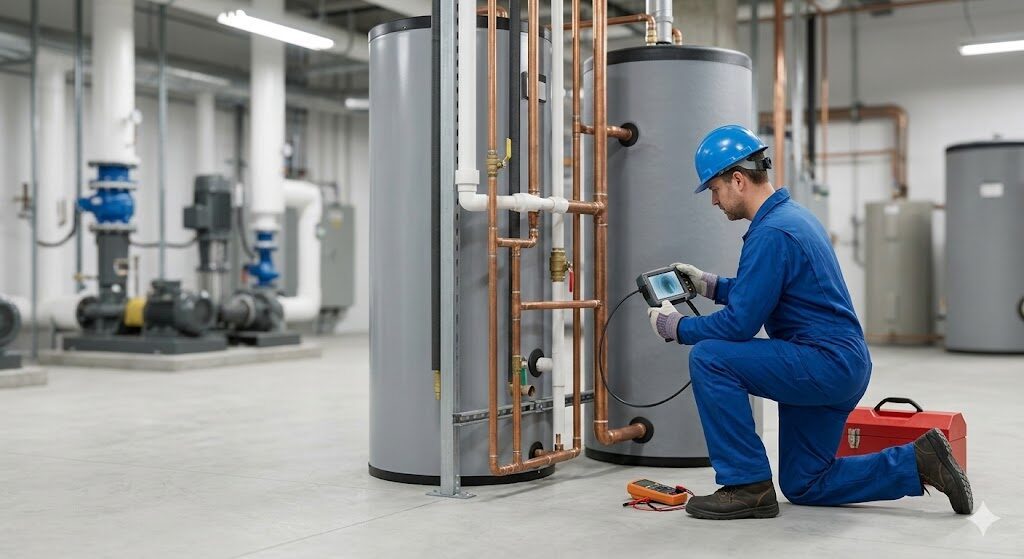
Costly Plumbing Failures Prevented by Routine Maintenance
When plumbing systems fail, the consequences are rarely minor. Preventative plumbing maintenance directly reduces the risk of major breakdowns that disrupt business operations.
Common failures that can be prevented include:
Burst Pipes
Corrosion, freezing, or excessive pressure can cause pipes to rupture. Early pipe inspection helps detect thinning walls and joint stress before failure occurs.
Sewer Line Backups
Blocked or damaged drainage infrastructure can result in wastewater backing into the building. Routine cleaning and inspection prevent buildup and tree root intrusion.
Water Heater Failure
Commercial water heaters work hard. Sediment buildup and worn components can shorten lifespan. Preventative service helps identify issues early. Property owners considering upgrades should also review plumbing conditions before scheduling water heater installation to avoid compatibility issues.
Hidden Leaks
Small leaks behind walls or under flooring can lead to mold growth, structural damage, and high water bills. Scheduled plumbing service identifies these issues before they spread.
Clogged Drains
Restaurants and healthcare facilities are especially vulnerable to drain blockages. Preventative pipe maintenance reduces buildup and keeps lines flowing properly.
The financial impact of emergency repairs often includes more than the repair itself. Business interruption, property damage, insurance claims, and reputation damage all increase total cost. Long-term plumbing savings are achieved by stopping failures before they start.
Key Systems Every Commercial Property Should Inspect Regularly
A commercial plumbing system contains multiple interconnected components. Each plays a role in performance and safety. Effective preventative plumbing maintenance focuses on inspecting these key areas consistently.
Water Supply Lines
High demand creates pressure on supply lines. Routine plumbing inspection checks for corrosion, leaks, and pressure irregularities.
Drainage Infrastructure
Storm drains, sewer connections, and interior waste lines must be free from obstruction. Blocked drainage infrastructure increases flood risk and contamination concerns.
Restroom Fixtures
Toilets, sinks, flush valves, and faucets should be tested for proper operation. Malfunctioning fixtures increase water waste and customer complaints.
Water Heaters
Commercial water heaters require flushing and inspection to maintain efficiency. If upgrades are planned, ensure plumbing systems are evaluated before water heater installation to prevent future issues.
Backflow Prevention Devices
These devices protect potable water from contamination. Regular testing ensures compliance with plumbing compliance standards.
Grease Traps and Interceptors
Food service businesses depend on regular cleaning and monitoring to prevent blockages and fines.
Professional plumbing maintenance providers understand how these components interact. Integrated inspections ensure no weak link is overlooked.
Warning Signs Your Plumbing System Needs Immediate Attention
Even with preventative plumbing maintenance in place, property managers must stay alert to warning signs that require immediate action.
Watch for:
- Sudden drops in water pressure
- Unusual noises in pipes
- Slow draining sinks or floor drains
- Persistent foul odors
- Water stains on ceilings or walls
- Unexplained spikes in water bills
Ignoring these signals increases the likelihood of plumbing emergencies. When warning signs appear, prompt evaluation supports plumbing system protection and prevents further damage.
Commercial properties in the USA must also consider liability. Water damage can create slip hazards and structural concerns. Fast response is not just about cost. It is about safety and compliance.
How Scheduled Maintenance Protects Property Value and Operations
Property value depends on condition and reliability. Investors and tenants expect facilities to operate without interruption. Preventative plumbing maintenance supports long term asset protection in several ways.
Operational Continuity
Scheduled plumbing service reduces unplanned downtime. Businesses remain open and productive.
Budget Predictability
Emergency repairs create financial uncertainty. Planned commercial plumbing upkeep allows for controlled budgeting.
Regulatory Compliance
Adhering to plumbing compliance standards reduces the risk of fines and legal issues.
Insurance Benefits
Some insurers favor properties with documented preventative maintenance plans, which may influence claims and coverage discussions.
Extended System Lifespan
Routine maintenance reduces wear and tear, leading to long-term plumbing savings by extending equipment life.
Commercial property owners who prioritize preventative plumbing maintenance demonstrate responsible facility management. This proactive mindset strengthens tenant trust and long term investment value.
Building a Preventative Plumbing Maintenance Plan That Works
An effective preventative maintenance plan should be structured, documented, and customized to the property’s needs.
Key steps include:
- Conduct a comprehensive pipe inspection and system evaluation.
- Identify high risk areas based on usage and age.
- Establish a scheduled plumbing service calendar.
- Document findings and repairs.
- Review compliance with local and federal plumbing compliance standards.
- Partner with experienced facility maintenance services professionals.
Frequency depends on building size and usage. High traffic properties may require quarterly routine plumbing inspection, while lower demand facilities may schedule semi annual service.
Professional plumbing maintenance providers understand commercial infrastructure complexity. They use specialized tools and industry knowledge to detect issues early.
Across the USA, businesses that invest in preventative plumbing maintenance reduce stress, lower long term costs, and protect daily operations.
Frequently Asked Questions
Preventative plumbing maintenance is a proactive approach that involves scheduled inspections, cleaning, testing, and minor repairs to keep a commercial plumbing system functioning properly and to prevent major failures.
Inspection frequency depends on usage and property type. Most commercial properties benefit from quarterly or semi annual routine plumbing inspection, while high demand facilities may require more frequent service.
It can prevent burst pipes, sewer backups, clogged drains, hidden leaks, water heater failure, and other plumbing emergencies that disrupt operations and increase costs.
Yes. Long-term plumbing savings result from reduced emergency repairs, lower water waste, extended equipment lifespan, and fewer business interruptions.
Restaurants, healthcare facilities, office complexes, retail centers, industrial buildings, and property management companies all benefit from professional plumbing maintenance and structured commercial plumbing upkeep.
Preventative plumbing maintenance is not just about fixing pipes. It is about protecting business continuity, maintaining compliance, and preserving property value. For commercial properties across the United States, proactive plumbing care is a strategic investment that supports long term operational success.