
What Food Businesses Need to Know About Grease Trap Compliance?
Running a restaurant, cafe, or food service business in South Florida means juggling a long list of regulations. Among the most overlooked is grease trap compliance, yet it is one of the areas that can cause the most trouble if it slips through the cracks.
We work with food businesses across Miami and the surrounding areas, and compliance questions come up constantly. Owners want to know what is required, how often service is needed, and what happens if something gets missed along the way.
Compliance is not just about avoiding fines. A well-maintained grease trap keeps kitchens running smoothly, protects plumbing from unexpected backups, and gives owners one less thing to worry about during a busy shift.
Why Grease Trap Rules Exist for Food Businesses
Every commercial kitchen produces fats, oils, and grease from cooking, washing dishes, and food prep. Without a properly functioning trap, that grease flows straight into the public sewer system, where it hardens and causes major blockages.
Local health departments and utility authorities require grease traps for this reason. The rules protect the broader sewer infrastructure and keep neighborhoods from dealing with backups and overflows caused by one business’s kitchen.
Many owners search for do restaurants need a grease trap by law or what happens if my restaurant fails a grease trap inspection, and the answer usually comes down to how consistently the trap has been maintained.
Core Elements of a Compliant Grease Trap Program
Proper Sizing for Your Kitchen
Grease traps and interceptors need to match the volume of food your kitchen produces. A unit that is too small for a high-volume kitchen will fill up faster than expected and fail to catch grease effectively, even with regular cleaning.
Documented Cleaning Schedules
Most municipalities require kitchens to clean and pump their grease trap on a set schedule. Keeping written records of every service visit is a core part of staying compliant, since inspectors often ask for proof during routine reviews.
Manifest and Disposal Records
Grease removed from your trap has to be disposed of properly, and licensed service providers issue manifests confirming where that waste went. These records protect your business if questions ever come up about how your waste was handled.
Regular Inspections
Scheduled inspections catch problems before they become violations. A trap that looks fine on the surface can still be near capacity underneath, and only a proper inspection reveals the system’s true condition.
What Happens When a Business Falls Out of Compliance
Falling behind on grease trap compliance rarely happens all at once. It usually starts with a missed cleaning, then another, until the system can no longer keep up with daily kitchen output.
The consequences build from there. Health inspectors can issue violations or fines, and repeat issues sometimes lead to a suspended operating permit until the problem is corrected. Beyond the paperwork, a neglected trap raises the risk of backups that can shut down a kitchen during a busy shift.
There is also a reputational cost. A kitchen closure or a visible sewer backup outside a restaurant is the kind of thing customers notice and remember.
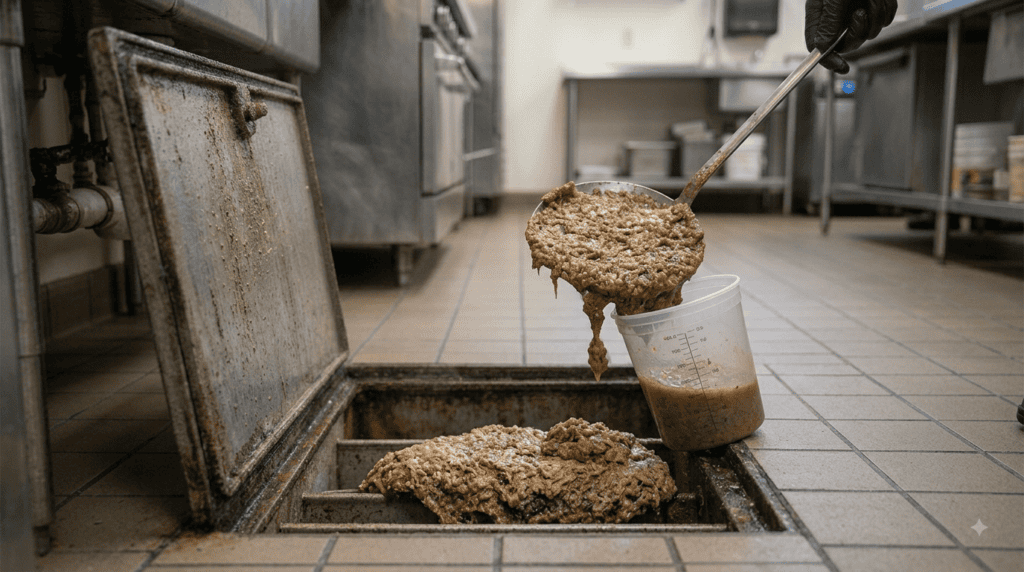
Signs Your Kitchen Needs a Closer Look
A few warning signs tell us a kitchen should schedule service sooner rather than later.
- Slow draining sinks or floor drains near the kitchen
- A strong sewer odor near the trap or dish area
- Grease visibly rising near the lid or access point.
- Records that are missing or out of date
- No documented cleaning within the last few months
If any of these sound familiar at your business, it is worth having a professional take a look before an inspector does.
How Often Should Grease Traps Be Serviced
Most food businesses need cleaning and inspection every one to three months, though the right frequency depends on kitchen size and cooking volume. Fast food locations and busy diners typically need more frequent service than a small cafe with limited frying.
We help each client build a schedule around their actual output rather than a generic timeline. That approach keeps kitchens compliant without paying for service that is not needed.
How We Support Your Business
Our team handles cleaning, inspection, and documentation so food businesses can stay focused on running their kitchen instead of tracking regulations. Every visit includes a full service record, giving you the paperwork needed if a health inspector ever asks.
We also help new restaurants determine the right size and setup for their grease trap before opening day, which prevents compliance issues before they start.
For businesses managing multiple locations, we coordinate schedules across every site so no kitchen falls behind while another stays on track. That consistency makes recordkeeping simpler when regulators request documentation across an entire portfolio.
You can learn more about our full process on our grease trap cleaning page, where we walk through exactly how each service visit works.
Stay Ahead of Compliance Issues Before They Start
Grease trap compliance is not something to figure out after an inspector flags a problem. Staying proactive protects your permit, your kitchen, and your reputation with customers who expect a clean, well-run business.
Our team has years of experience helping South Florida restaurants stay compliant with dependable, documented service. Whether you need a one-time inspection or an ongoing maintenance plan, we are ready to help.
Browse our grease trap cleaning FAQs for more answers, or contact us to schedule your next service visit. Your kitchen, your customers, and your compliance record will thank you.
Frequently Asked Questions
It means meeting local rules for grease trap size, cleaning frequency, and documentation to prevent sewer blockages and health violations.
Most food businesses need service every one to three months, depending on kitchen size and how much grease is produced daily.
You may face fines, required corrective action, or, in serious cases, a temporary suspension of your operating permit until it is resolved.
Yes, documented service history is often required during health inspections and protects your business if questions ever arise.
Yes, we help new food businesses select and install a properly sized system before opening to avoid future compliance issues.