
Can Restaurants Be Fined for Poor Grease Trap Maintenance?
If you run a restaurant in South Florida, grease trap upkeep is one of those tasks that is easy to push aside on a busy day. Unfortunately, letting it slide can get expensive fast. The truth is that restaurants can absolutely face grease trap fines for poor maintenance, failed inspections, or missing records. Many owners do not realize the risk until an inspector shows up. In this guide, we explain when and why these penalties happen, how much they can cost, and how you can protect your business from them for good.
Can Restaurants Really Be Fined for Grease Trap Problems?
Yes, and it happens more often than most owners expect. Local authorities in Miami-Dade and Broward take grease management seriously because it protects the public sewer system.
When a trap overflows or grease reaches the sewer, your business is held responsible. That is when grease trap fines start to add up, sometimes quickly. These rules are not there to punish you. They exist to keep our shared waterways and sewer lines clear of costly blockages. A single overflowing trap can affect an entire block. That is why cities enforce these standards closely and expect every kitchen to do its part.
What Causes Grease Trap Fines?
Understanding the triggers helps you avoid them. Here are the most common reasons restaurants face penalties.
Skipping Regular Cleaning
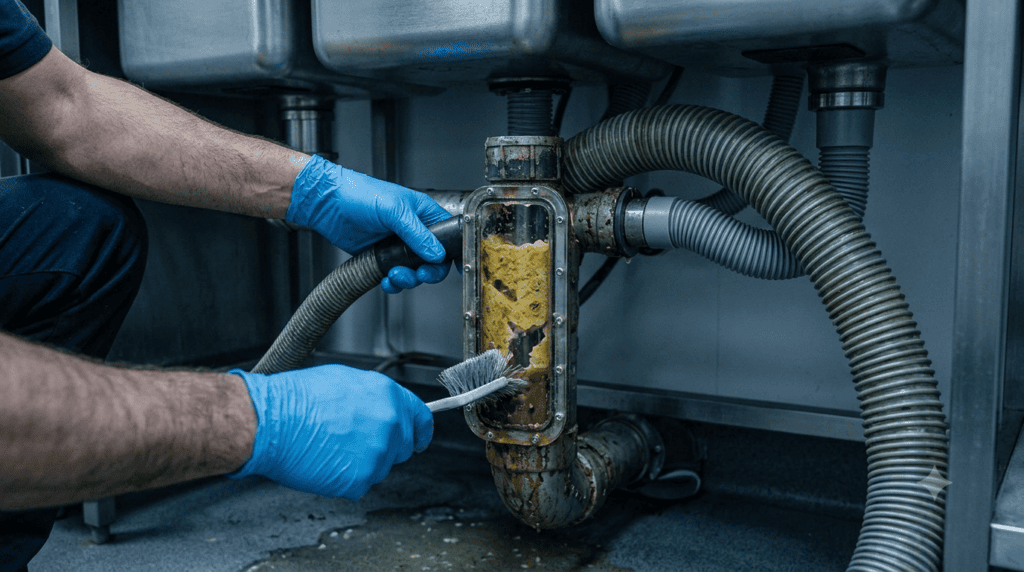
A neglected grease trap fills up and overflows into the sewer. Most local rules require a set cleaning schedule based on your kitchen’s volume. Falling behind is one of the fastest ways to fail an inspection. Consistent grease trap cleaning is the simplest way to stay off an inspector’s list. The tricky part is that a trap can look fine on the surface while it is nearly full below. By the time you notice a problem, you may already be past due.
Missing or Incomplete Records
Inspectors do not just check your trap; they check your paperwork. Missing pump-out manifests or service logs count as a violation on their own. You need dated proof of every service to show you follow the rules. Poor documentation is a common reason owners receive grease trap fines even when the trap is clean.
Grease Reaching the Sewer
When fats, oils, and grease flow into the public system, they harden and cause backups. If your kitchen is the source, you are liable for the damage. This is one of the most serious violations. It can lead to steep penalties on top of expensive cleanup costs and, in some cases, trigger a formal investigation into your kitchen’s practices.
Using an Unlicensed Hauler
Your grease must go to an approved disposal site through a licensed hauler. Hiring an unpermitted operator can leave you exposed, even unknowingly. Always confirm your provider is licensed and gives you compliant paperwork. The right partner keeps your records clean and your business protected.
How Much Can Grease Trap Fines Cost?
The exact amount depends on your city, county, and the severity of the violation. Penalties can range from a few hundred dollars to much larger sums for repeat offences. First-time issues often come with a warning or a smaller fine. Repeat violations, however, tend to climb fast and can threaten your permit.
The real cost goes beyond the fine itself. Grease trap fines often come alongside emergency cleanup bills, lost business, and a dented reputation. Some jurisdictions also charge daily penalties until the issue is fixed. That means a small oversight can quietly grow into a much larger bill the longer it goes unaddressed.
The Hidden Costs Beyond the Fine
A penalty on paper is only part of the story. The ripple effects can hurt your bottom line even more. A sewer backup during service can force you to close your doors. Cleaning up hardened grease is far more expensive than routine maintenance ever would be. There is also your reputation to consider. Word spreads fast when a kitchen closes for a health issue, and regulars may not return.
How to Avoid Grease Trap Fines Completely
The good news is that these penalties are almost always preventable. It comes down to a consistent routine and a service partner you can trust.
Stick to a Cleaning Schedule
We help restaurants set a schedule that matches their real usage. Most South Florida kitchens need service every one to three months to stay compliant. Staying on time keeps your trash from ever reaching overflow. It is the single best way to avoid grease trap fines year-round.
Keep Detailed Records
Good documentation protects you even when your system is spotless. We provide dated service records after every visit so you are always inspection-ready. Keep these files organized and easy to reach. When an inspector asks, a complete record shows you take compliance seriously and speeds up the whole visit.
Work With a Licensed Team
A trusted, licensed provider handles the schedule, the service, and the paperwork. That removes the guesswork and the risk from your plate entirely. With the right team behind you, compliance becomes something you barely think about. Inspections turn into a quick formality instead of a stressful event. We also stay current on local requirements, so you never have to guess. That means you always know exactly what your city and county expect from your kitchen.
Protect Your Restaurant From Costly Penalties
Grease trap fines are easy to avoid with the right team in your corner. Do not wait for an inspector to find a problem you could have prevented. Call us today to schedule dependable grease trap cleaning across Miami and South Florida, and let us handle the schedule and paperwork so you can focus on your customers.
Frequently Asked Questions
Yes, restaurants can be fined for overflowing traps, missing records, or grease reaching the sewer, depending on local regulations and the severity of the violation.
Fines vary by city and county, ranging from a few hundred dollars to much larger amounts for serious or repeated violations.
Yes, inspectors require dated service records and manifests, so keeping proof of every pump-out helps you avoid violations and penalties.
Most restaurants need cleaning every one to three months, though heavy grease producers may require more frequent service to stay compliant.
The restaurant owner holds final responsibility, though a licensed service partner should provide compliant cleaning and complete documentation after every visit.