
How Often Should a Grease Interceptor Be Cleaned?
Commercial kitchen owners already deal with enough daily pressure. Slow drains, foul odors, and plumbing backups are the last problems anyone wants during busy service hours. That is why understanding how often a grease interceptor should be cleaned is important for maintaining smooth kitchen operations and avoiding costly interruptions.
Regular interceptor cleaning helps prevent emergency repairs, wastewater overflow, and health code concerns before they become serious.
In this guide, Ameri-Clean Pumping explains how cleaning schedules work, what affects service frequency, and how businesses can avoid major drainage problems with preventive maintenance.
Why Regular Grease Interceptor Cleaning Matters
Grease interceptors collect fats, oils, and grease before they enter the plumbing system. Without routine cleaning, grease slowly hardens inside the interceptor and restricts wastewater flow throughout the kitchen drainage system.
Once buildup becomes excessive, kitchens may experience slow drains, foul odors, overflowing wastewater, and unexpected plumbing shutdowns. These problems often disrupt restaurant operations and increase maintenance costs significantly over time.
Routine cleaning helps businesses maintain proper grease control and support wastewater compliance standards. Working with experienced providers like Ameri-Clean Pumping also helps restaurants stay prepared for inspections and avoid compliance issues that may disrupt daily operations.
How Often Should a Grease Interceptor Be Cleaned in Commercial Kitchens
Most commercial kitchens should clean grease interceptors every one to three months. However, the correct schedule depends on kitchen size, food production volume, grease output, and local wastewater regulations.
High-volume restaurants usually require more frequent service because grease accumulates faster during daily operations. Smaller kitchens may need less frequent maintenance, but delaying service too long still increases the risk of backups and drainage problems.
Several factors influence grease interceptor cleaning frequency:
- Kitchen Volume: Higher food production creates faster grease buildup.
- Menu Type: Fried foods and heavy oils increase grease accumulation.
- Interceptor Size: Smaller units fill faster and require more maintenance.
- Local Regulations: Some municipalities require scheduled service intervals.
- Drainage Usage: Constant sink usage increases grease collection levels.
Following a proper cleaning schedule helps businesses avoid expensive plumbing emergencies and maintain healthier kitchen operations.
Signs Your Grease Interceptor Needs Immediate Cleaning
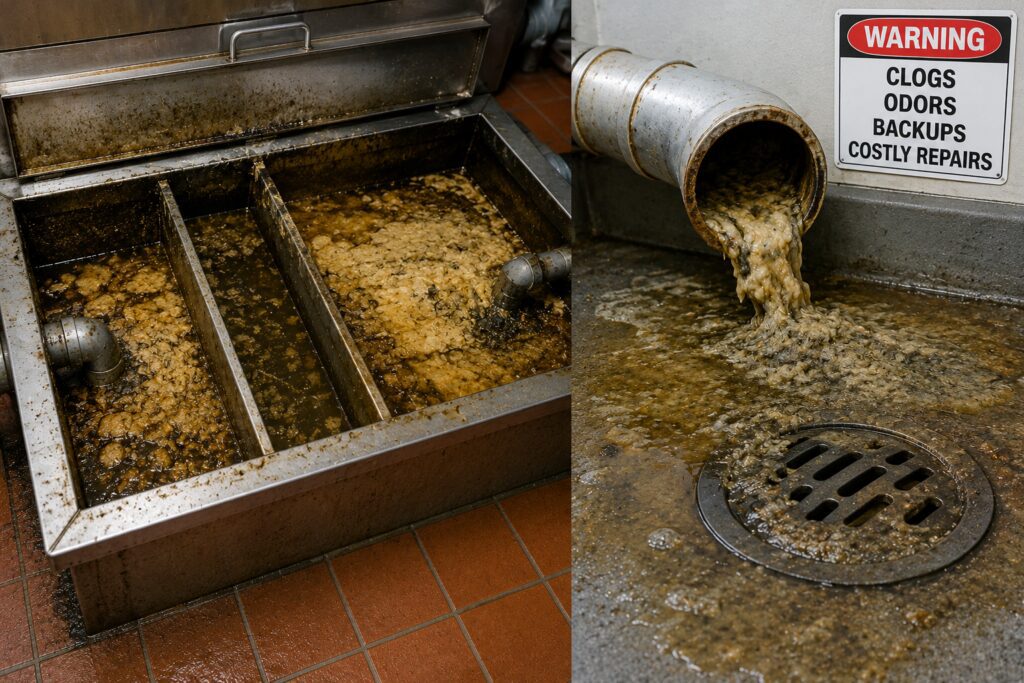
Grease interceptors usually show warning signs before complete failure occurs. Ignoring these symptoms often leads to emergency plumbing problems that interrupt business operations unexpectedly.
One of the most common warning signs is slow drainage near sinks or floor drains. As grease accumulates, wastewater flow becomes restricted and creates pressure throughout the plumbing system.
Strong odors near drains or interceptor units also indicate excessive grease buildup inside the system. These smells often spread quickly through food preparation areas and create unpleasant working conditions for employees and customers.
Businesses should watch for these signs carefully:
- Slow Drains: Water drains slower than normal during kitchen use.
- Foul Odors: Grease buildup creates strong sewer-like smells.
- Overflow Issues: Wastewater backs up near sinks or floor drains.
- Frequent Clogs: Grease restricts pipe flow repeatedly.
- Standing Water: Water accumulates near drainage areas unexpectedly.
Restaurants experiencing these issues should request a service now before the problem causes operational downtime or health code concerns.
What Happens If Grease Interceptors Are Not Cleaned Regularly
Neglected grease interceptors create much larger problems than most businesses expect. Grease buildup continues growing until wastewater can no longer move properly through the plumbing system.
Once that happens, kitchens may face overflowing drains, pipe blockages, sanitation concerns, and temporary closures. Emergency plumbing repairs also become much more expensive compared to preventive maintenance services.
Poor maintenance may also damage long-term plumbing performance. Hardened grease buildup places excessive strain on drainage systems and shortens the lifespan of pipes, pumps, and wastewater infrastructure.
Ignoring interceptor cleaning may lead to:
- Emergency Plumbing Repairs: Severe blockages require urgent service.
- Health Code Violations: Unsanitary conditions may fail inspections.
- Business Interruptions: Kitchen shutdowns affect daily operations.
- Higher Maintenance Costs: Emergency repairs cost more than routine service.
- Drainage Damage: Excess grease weakens plumbing performance over time.
Businesses that follow preventive cleaning schedules often avoid these expensive disruptions completely.
How Professional Cleaning Services Handle Grease Interceptors
Professional interceptor cleaning removes grease buildup safely and restores proper wastewater flow throughout commercial kitchens. Technicians use specialized pumping equipment to remove accumulated grease, solids, and wastewater from the interceptor system.
The cleaning process also includes inspection of internal components to identify buildup levels, flow restrictions, and possible drainage issues. Regular inspections help businesses detect small plumbing problems before they become major operational concerns.
Professional service visits typically include:
- Grease Removal: Pumping out accumulated fats, oils, and solids.
- System Inspection: Checking for damage or excessive buildup.
- Wastewater Removal: Clearing wastewater from the interceptor unit.
- Drainage Evaluation: Monitoring overall plumbing performance.
- Maintenance Recommendations: Suggesting ideal cleaning schedules.
Businesses that schedule service consistently often experience fewer plumbing emergencies and improved kitchen efficiency throughout the year.
How Cleaning Frequency Changes by Business Type
Not every commercial kitchen requires the same cleaning schedule. Restaurants with heavy grease production usually need more frequent maintenance compared to facilities with lower cooking volumes.
Fast food restaurants, cafeterias, hotels, and large food production facilities often generate large amounts of grease daily. These businesses typically require monthly interceptor cleaning to maintain proper drainage performance.
Smaller kitchens or limited-service facilities may operate effectively with quarterly maintenance. However, businesses should still monitor drainage performance carefully to avoid excessive grease buildup.
Typical service frequency by business type includes:
| Business Type | Recommended Cleaning Frequency |
| Fast Food Restaurants | Every 1 Month |
| Full-Service Restaurants | Every 1-2 Months |
| Hotels and Cafeterias | Every 1-2 Months |
| Small Cafes | Every 2-3 Months |
| Low-Volume Kitchens | Quarterly |
Choosing the right cleaning interval helps businesses maintain better wastewater management without overspending on unnecessary service visits.
Why Preventive Cleaning Saves Businesses Money
Many restaurant owners delay interceptor cleaning to reduce short-term costs. Unfortunately, this often leads to larger plumbing expenses and unexpected operational disruptions later.
Preventive cleaning helps businesses avoid emergency drain blockages, pipe repairs, wastewater overflows, and costly business interruptions. Routine maintenance also supports longer plumbing system lifespan and more stable kitchen performance.
Regular cleaning improves operational efficiency by:
- Reducing Emergency Repairs: Preventive maintenance avoids major failures.
- Improving Drainage Flow: Wastewater moves properly through pipes.
- Protecting Plumbing Systems: Less grease reduces long-term damage.
- Supporting Compliance: Cleaner systems reduce inspection concerns.
- Lowering Downtime Risks: Kitchens continue operating smoothly.
Businesses that schedule service consistently usually spend far less on plumbing repairs over time.
How to Build the Right Grease Interceptor Cleaning Schedule
The best cleaning schedule depends on actual kitchen usage rather than guesswork. Restaurants should monitor grease output levels, drainage performance, and maintenance history regularly.
Working with experienced providers like Ameri-Clean Pumping helps businesses create realistic maintenance schedules based on operational demands. Scheduled inspections and routine pumping help maintain stable plumbing performance throughout the year.
A strong maintenance plan should include:
- Routine inspections
- Scheduled interceptor pumping
- Drainage performance monitoring
- Wastewater flow evaluations
- Compliance documentation
Restaurants that stay proactive with maintenance often experience fewer plumbing emergencies and better overall kitchen efficiency.
Conclusion
Understanding how often a grease interceptor should be cleaned helps commercial kitchens avoid expensive plumbing problems, unpleasant odors, and operational downtime. Regular interceptor maintenance protects drainage systems, supports compliance standards, and improves overall kitchen performance.
Ignoring grease buildup usually creates larger issues that cost significantly more to repair later. Preventive maintenance remains one of the smartest ways to protect commercial kitchen operations long term.
If your restaurant is experiencing slow drains, foul odors, or recurring plumbing problems, it may be time to schedule service with Ameri-Clean Pumping. Professional interceptor cleaning helps businesses maintain smoother operations while reducing the risk of emergency repairs and wastewater backups.
Frequently Asked Questions
Most commercial kitchens should clean grease interceptors every one to three months depending on grease output and kitchen volume.
Neglected interceptors may cause slow drains, foul odors, wastewater backups, plumbing damage, and health code violations.
Common signs include slow drainage, strong odors, standing water, recurring clogs, and wastewater overflow near drains.
Yes. Routine interceptor cleaning removes grease buildup before it blocks wastewater flow and damages plumbing systems.
Professional cleaning ensures complete grease removal, proper wastewater disposal, system inspections, and more reliable drainage performance.