What Restaurants Need to Know About FOG Regulations?
Every commercial kitchen produces fats, oils, and grease, and every local government has rules about where that waste is allowed to go. Understanding FOG regulations helps restaurant owners avoid fines, protect their permit, and keep their kitchen running without interruption.
We work with food service businesses across Miami and the surrounding areas, and FOG questions come up almost daily. Owners want to know what the rules actually require, how strictly they are enforced, and what happens if a kitchen falls behind.
New restaurant owners in particular tend to underestimate how much attention this area needs. Between permits, equipment sizing, and ongoing maintenance, FOG compliance touches nearly every part of running a commercial kitchen.
What These Rules Actually Require
FOG stands for fats, oils, and grease, the byproducts of cooking, frying, and dishwashing in any commercial kitchen. Local health departments and utility authorities regulate FOG because untreated grease hardens inside sewer pipes and causes major blockages across an entire system, not just one property.
Most municipalities require food service establishments to install a properly sized grease trap or interceptor, obtain the correct discharge permit, and maintain documented cleaning records. These requirements exist to keep public sewer infrastructure functioning and to prevent costly overflows that affect the whole community.
Many owners ask, “Do I need a permit for my grease trap?” or “What happens if my restaurant violates FOG rules?” and the answer almost always comes back to consistent maintenance and accurate recordkeeping.
Why FOG Regulations Exist in the First Place
Protecting Public Sewer Systems
Grease that enters the sewer system cools and hardens, forming blockages that restrict flow for entire neighborhoods. A single noncompliant kitchen can contribute to a sewer backup that affects dozens of nearby properties.
Preventing Environmental Contamination
When sewer systems overflow due to grease blockages, untreated wastewater can reach local waterways. FOG regulations exist partly to keep South Florida’s canals and coastal waters protected from this kind of contamination.
Reducing Costly Municipal Repairs
Clearing grease blockages from public sewer lines is expensive, and those costs often get passed along to businesses and residents through fees or rate increases. Consistent compliance from food service businesses keeps that burden lower for everyone.
Core Requirements Restaurants Should Know
Proper Grease Trap Sizing and Installation
A grease trap or interceptor needs to match the volume of food your kitchen produces. Undersized equipment fills up faster than expected and struggles to keep pace, even with regular cleaning.
Discharge Permits and Documentation
Many municipalities require a grease discharge permit before a food business can legally operate. Keeping that permit current, along with signed cleaning manifests, is a central part of staying compliant with local rules.
Scheduled Cleaning and Maintenance
Grease traps need regular pumping to stay effective. Waiting too long between cleanings allows buildup to reach capacity, which increases the risk of backups and permit violations.
Staff Training on Proper Disposal
Pouring oil, food scraps, or grease down the drain accelerates buildup and puts unnecessary strain on your system. Training kitchen staff on correct disposal habits supports every other part of a compliance plan.
Simple changes make a real difference. Scraping plates before washing, collecting used cooking oil separately, and avoiding drain disposal entirely all reduce the load your grease trap has to manage each day.
Signs Your Kitchen May Be Out of Compliance
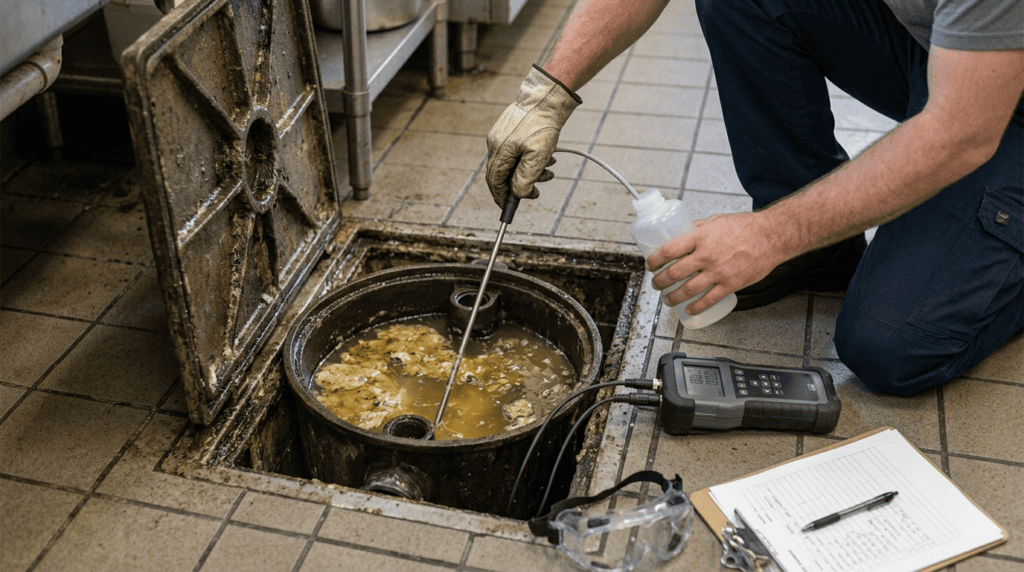
A few warning signs suggest a kitchen should review its FOG practices before an inspector does.
- Slow draining sinks or floor drains near the kitchen
- Missing or outdated grease trap cleaning records
- A strong sewer odor near the trap or dish area
- No current discharge permit on file
- Grease visibly rising near the trap lid.
If any of these sound familiar at your restaurant, it is worth having a professional evaluate your system soon.
What Happens When a Kitchen Falls Out of Compliance
Noncompliance rarely happens all at once. It usually starts with one missed cleaning, then another, until the system can no longer handle daily kitchen output. Health inspectors can issue citations, assess fines, and in serious cases suspend a business’s operating permit until the issue is corrected.
Beyond the official consequences, a neglected system raises the risk of a sudden backup that shuts down a kitchen during a busy shift. Customers notice kitchen closures and unpleasant odors, and that kind of reputational damage can linger long after the plumbing issue itself is resolved.
How We Help Restaurants Stay Compliant
Our team handles cleaning, inspection, and documentation so restaurant owners can focus on running their kitchen instead of tracking regulations. Every service visit includes a full record, giving you the paperwork needed if a health inspector ever requests it.
We also help new restaurants choose the right size and setup for their grease trap before opening day, which prevents compliance issues from ever taking root. You can read more about local requirements here: grease trap regulations.
Our technicians stay current on Miami-Dade County requirements and update our maintenance recommendations whenever local rules change, so your kitchen never falls behind without warning.
Stay Ahead of FOG Compliance Issues
FOG regulations are not something to figure out after a citation shows up. Staying proactive protects your permit, your kitchen, and the trust customers place in your business every time they walk through the door.
Our team has years of experience helping South Florida restaurants stay compliant with dependable, documented service. Whether you need a one-time inspection or an ongoing maintenance plan, we are ready to help.
Browse our grease trap cleaning FAQs for more answers, or contact us to schedule your next service visit. Your kitchen, your customers, and your compliance record will thank you.
Frequently Asked Questions
FOG stands for fats, oils, and grease, the cooking byproducts that regulations require restaurants to trap and dispose of properly.
Most municipalities require a discharge permit for any food service establishment producing fats, oils, and grease waste.
Most kitchens need cleaning every one to three months, depending on cooking volume and how much grease is produced daily.
Restaurants may face fines, required corrective action, or in serious cases, a temporary suspension of their operating permit.
Yes, teaching staff proper disposal habits reduces grease buildup and supports the rest of a compliance plan.