
7 Common Parking Lot Drainage Problems and Their Causes
A flooded parking lot after every storm is not bad luck; it is a sign that something underneath the pavement needs attention. Most parking lot drainage issues develop slowly, and by the time water is visibly pooling, the underlying system has usually been struggling for a while.
We inspect and service parking lot drainage systems across Miami and the surrounding areas, and the same handful of problems show up again and again. Knowing what causes them makes it much easier to catch trouble early and protect your property.
Why Parking Lot Drainage Fails Over Time
Every parking lot relies on a mix of grading, catch basins, and underground piping to move rainwater away quickly. When any one part of that system falls behind, water has nowhere to go but across the surface.
South Florida’s heavy rainfall puts extra pressure on these systems compared to drier regions. What performed fine five years ago may struggle today if maintenance has not kept pace with wear and changing weather patterns.
Many property owners search for why my parking lot floods after rain or how to fix standing water in my parking lot, and the answer almost always comes down to one of the causes below.
7 Common Parking Lot Drainage Problems
1. Clogged Catch Basins
Leaves, sand, trash, and sediment collect inside catch basins every time it rains. Once that debris builds up past a certain point, the basin can no longer collect water fast enough to keep the surface dry.
This is one of the most frequent parking lot drainage issues we encounter, and it is almost always fixable with routine cleaning before it becomes a bigger problem.
2. Blocked or Damaged Grates
A grate covered in mulch, litter, or organic debris prevents water from entering the catch basin at all, even if the structure underneath is working perfectly—cracked or bent grates cause similar problems by restricting flow.
3. Poor Original Grading
Some parking lots were graded incorrectly when they were built, leaving low spots where water naturally collects instead of flowing toward a drain. Even a well-maintained drainage system cannot fully compensate for ground that slopes the wrong way.
4. Undersized Drainage Infrastructure
A drainage system designed for a smaller lot or lighter rainfall struggles once traffic increases or storm intensity rises. Properties that have expanded parking areas without upgrading drainage often run into this issue.
5. Sediment Buildup in Underground Pipes
Sediment that makes it past a catch basin can still settle inside the pipes further down the line. Over time, this narrows the pipe and slows water flow even when the visible parts of the system look fine.
6. Cracked or Collapsed Pipes
Age, ground shifting, and heavy vehicle traffic can crack or collapse underground drainage pipes. Once a pipe is compromised, water cannot move through the system properly, no matter how clean the catch basins are.
7. Lack of Routine Maintenance
Many drainage problems on this list start small and stay manageable if caught early. Skipping regular inspections allows minor issues to compound into full blockages, cracked components, and repeated flooding during every significant storm.
Warning Signs You Should Not Ignore
A few signs tend to show up before drainage problems become serious.
- Standing water in the same low spot after every rain
- Water pooling near entrances, loading docks, or walkways.
- A musty or stagnant smell near catch basins
- Cracking or sinking pavement near drain locations
- Slower drainage compared to how the lot used to perform
If any of these sound familiar at your property, it is worth having a professional evaluate the system before the next heavy storm.
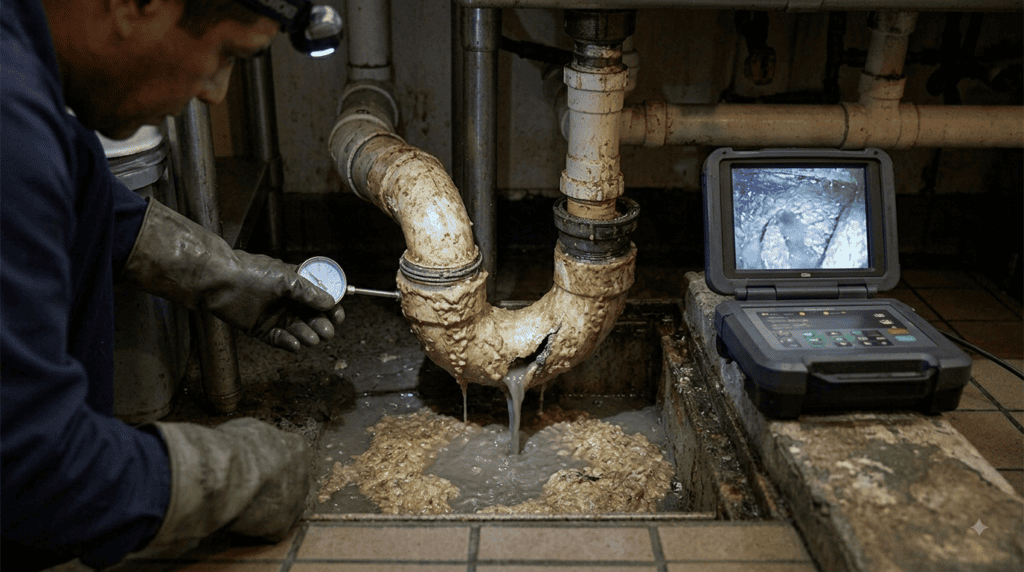
How Parking Lot Drainage Issues Affect Your Property
Standing water does more than create an inconvenience for customers and employees. It erodes the base layer beneath pavement, leading to cracking, potholes, and premature repaving costs that could have been avoided with routine care.
Prolonged pooling near a building can also affect the foundation, and stagnant water creates a breeding ground for mosquitoes. These risks tend to grow quietly until a property owner is facing a much larger repair project than expected.
How Often Should Parking Lot Drainage Be Inspected
Most commercial properties benefit from at least one inspection per year, ideally scheduled before hurricane season begins. Properties with heavy tree coverage, older infrastructure, or a history of flooding often need more frequent checks.
We help property owners build a maintenance schedule based on their specific site conditions, not a generic calendar. That approach catches small issues long before they turn into a major flooding event.
How Our Team Helps Keep Your Lot Dry
Our technicians clear debris and sediment from catch basins, inspect underground piping, and confirm the entire drainage path is functioning the way it should. We look beyond the visible surface, since many drainage problems start well below ground.
Every visit is documented so property owners have a clear record for maintenance planning. You can learn more about our full process on our catch basin cleaning page.
Keep Water Moving Where It Belongs
Parking lot drainage issues rarely appear overnight, and catching the early signs is the easiest way to avoid flooding, pavement damage, and expensive repairs later. A little routine attention protects your property for years to come.
Our team brings the local experience and hands-on knowledge that comes from servicing South Florida drainage systems through every rainy season, so you get a lot that stays dry when the next storm hits.
Visit our storm drain cleaning page to see how we keep water flowing properly, or contact us to schedule an inspection before the next storm arrives.
Frequently Asked Questions
Clogged catch basins, poor grading, sediment buildup, and undersized infrastructure are the most common causes we encounter locally.
Standing water after rain, cracking pavement near drains, and musty odors near catch basins are common warning signs.
Yes, standing water erodes the base layer beneath pavement, which leads to cracking, potholes, and costly premature repaving.
Most properties benefit from at least one professional cleaning per year, ideally before hurricane season begins.
It can be, especially if the same spot floods repeatedly, since that pattern usually points to an underlying blockage.