
What Role Do Catch Basins Play in Stormwater Management?
South Florida often sees heavy rain, and every property needs a way to handle that water without flooding. Catch basins are one of the most important pieces of stormwater management, quietly moving water away from buildings, parking lots, and streets before it becomes a problem.
We service catch basins across Miami and the surrounding areas, and most property owners never think about them until something goes wrong. Understanding how these systems work makes it much easier to spot trouble early and keep water moving where it should.
These structures are simple in concept but essential in practice, and a small amount of routine attention goes a long way toward avoiding much bigger headaches during the rainy season.
What a Catch Basin Actually Does
A catch basin is an underground structure designed to collect rainwater runoff from a property and direct it into the storm drain system. Surface grates allow water to enter while trapping leaves, trash, and larger debris before it reaches the pipes below.
Inside the basin, a sump area allows sediment and heavier particles to settle out of the water before it continues to the storm sewer. This settling process protects downstream pipes and waterways from the buildup that would otherwise clog the system over time.
Many property owners search for why there is a grate in my parking lot or what happens to rainwater after it goes down the drain, and a catch basin is usually the answer to both questions.
Why This Matters for Your Property
Preventing Flooding on Properties and Streets
Without catch basins collecting and redirecting runoff, rainwater has nowhere to go but across parking lots, sidewalks, and building entrances. A well-maintained system moves that water quickly, keeping properties usable even during heavy storms.
Protecting Local Waterways
Catch basins trap sediment, debris, and some pollutants before water reaches canals, lakes, and coastal areas. This filtering role is a key part of responsible stormwater management across any developed property.
Reducing Strain on Public Infrastructure
Every catch basin that functions properly takes pressure off the broader municipal drainage system. Blocked or poorly maintained basins push more water and debris downstream, which increases the risk of larger flooding events for the surrounding community.
Supporting Property Value and Safety
Standing water damages pavement, erodes landscaping, and creates slip hazards for anyone walking across a property. Functioning catch basins protect the physical condition of a site and reduce liability tied to preventable water damage.
How Catch Basins Fit Into the Bigger Picture
A single catch basin is only one part of a much larger stormwater system. Water collected at the basin flows through underground pipes toward larger storm drains, eventually reaching canals, retention ponds, or coastal waterways depending on the property’s location.
This connected system means a problem at one property can ripple outward. A clogged catch basin does not just affect the immediate area; it can contribute to flooding and drainage issues for an entire block or neighborhood.
Common Problems That Affect Catch Basin Performance
Sediment and Debris Accumulation
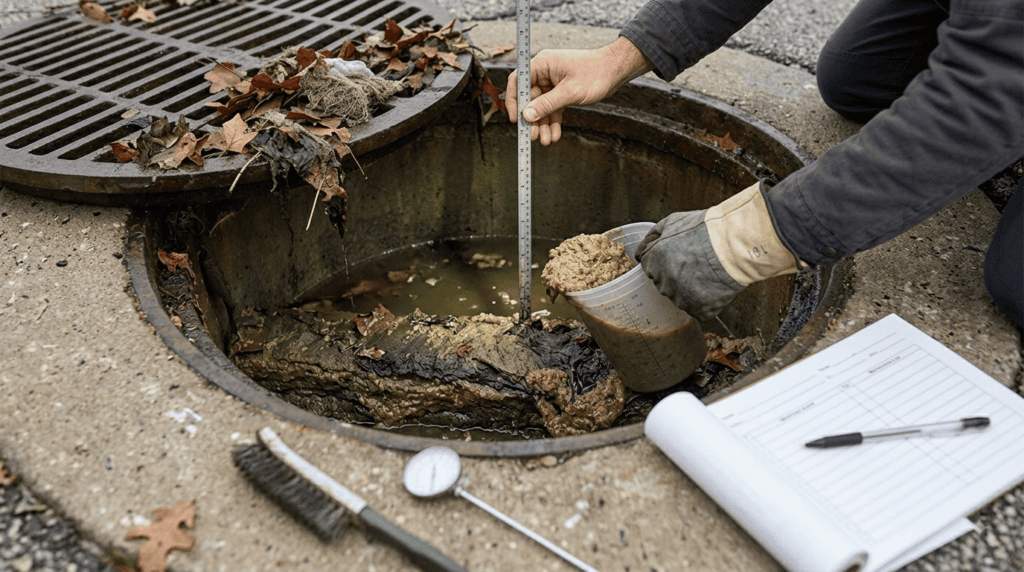
Leaves, sand, trash, and dirt collect inside a catch basin over time, gradually reducing the space available for water to settle and flow through properly.
Cracked or Damaged Structures
Age, ground shifting, and heavy vehicle traffic near a basin can crack the structure itself, allowing soil to enter and reducing the system’s overall capacity.
Blocked Grates
Litter, mulch, and organic debris often collect directly on top of a grate, preventing water from entering the basin at all, even when the structure underneath is perfectly functional.
Warning Signs Your Catch Basin Needs Attention
A few signs tell us a catch basin needs service before the next major storm arrives.
- Standing water pooling near the grate during light rain
- Visible debris piled on or around the grate opening.
- A musty or stagnant smell near the basin
- Slow drainage compared to how the area used to perform
- Water backing up onto pavement instead of entering the grate
If any of these sound familiar at your property, it is worth having a professional take a look soon.
How Often Should Catch Basins Be Inspected
Most commercial and residential properties benefit from an inspection at least once a year, ideally before hurricane season begins. Properties with heavy tree coverage or older infrastructure often need more frequent checks to stay ahead of buildup.
We help property owners build a maintenance schedule based on their specific site conditions rather than a one-size-fits-all calendar. That approach catches small blockages long before they turn into flooding events.
How Our Team Supports Local Stormwater Systems
Our technicians clear debris, sediment, and blockages from catch basins to keep water moving the way it should. We inspect the structure itself, not just the visible surface, to confirm the system is functioning properly.
Every visit is documented so property owners have a clear record of the work performed, which is useful for both maintenance planning and any future property assessments. You can learn more about our full process on our catch basin cleaning page.
Keep Your Stormwater System Working the Way It Should
Stormwater management starts with the smallest parts of the system, and a neglected catch basin can cause problems far beyond a single property. Staying ahead of maintenance protects your building, your pavement, and the community around you.
Our team has years of experience keeping South Florida properties protected through every rainy season. Whether you need a one-time cleaning or an ongoing maintenance plan, we are ready to help.
Visit our storm drain cleaning page to see how we keep water moving where it belongs, or contact us to schedule your inspection today. Your property, your community, and your peace of mind will thank you.
Frequently Asked Questions
Catch basins collect rainwater runoff, trap debris and sediment, and direct clean water into the broader storm drain system.
Most properties benefit from at least one inspection and cleaning per year, ideally scheduled before hurricane season begins.
Yes, blocked basins prevent water from draining properly, which increases pooling and raises the risk of property flooding.
Yes, they filter debris and sediment before water reaches canals and coastal areas, supporting overall water quality.
A catch basin collects and filters surface runoff, while a storm drain carries that water through the larger system