
How Can Businesses Benefit from Professional Grease Recycling Services?
Grease recycling is becoming a smart operational strategy for commercial kitchens and food service businesses across the USA. Grease recycling allows companies to convert used cooking oil and grease waste into reusable resources instead of sending it into sewer systems. Businesses that ignore grease recycling often face plumbing problems, rising maintenance costs, and compliance issues.
Restaurants, cafeterias, food processors, and hospitality facilities produce large amounts of grease daily. Without proper grease recycling and grease waste management, that waste clogs grease interceptor systems and disrupts commercial kitchen wastewater flow. The result is downtime, fines, and costly repairs.
Professional grease recycling services provide a structured, compliant solution. Instead of treating used oil as waste, businesses can treat it as value.
Why Smart Companies Are Turning Waste Grease Into Value
Modern businesses understand that waste management is no longer just about disposal. It is about efficiency, compliance, and sustainability.
Grease recycling transforms used cooking oil collection into a practical resource management process. Proper grease disposal helps prevent plumbing issues and unnecessary waste. When companies invest in commercial grease recycling, they reduce strain on plumbing systems and municipal infrastructure.
Key reasons businesses adopt grease recycling include:
- Reduced plumbing blockages
- Lower risk of sewer backups
- Improved plumbing maintenance compliance
- Stronger sustainability reputation
- Organized grease waste disposal
Instead of allowing grease to enter drains and damage grease interceptor systems, companies use a grease recycling service to remove and repurpose it responsibly.
Grease recycling helps businesses align operational efficiency with environmental responsibility.
The Business Advantages of Scheduled Grease Collection
A structured grease collection program prevents buildup before it becomes a problem. Scheduled used cooking oil collection ensures grease is removed consistently and safely.
Advantages of routine grease recycling include:
- Predictable waste oil disposal service
- Cleaner storage areas
- Reduced pest attraction
- Lower emergency plumbing costs
- Better compliance documentation
Businesses that operate without a defined grease collection program often experience inconsistent waste removal. Over time, this affects grease trap plumbing layout performance and increases maintenance needs.
Establishing a reliable grease recycling schedule supports long term efficiency and cost control.
How Recycling Used Cooking Oil Improves Operational Efficiency
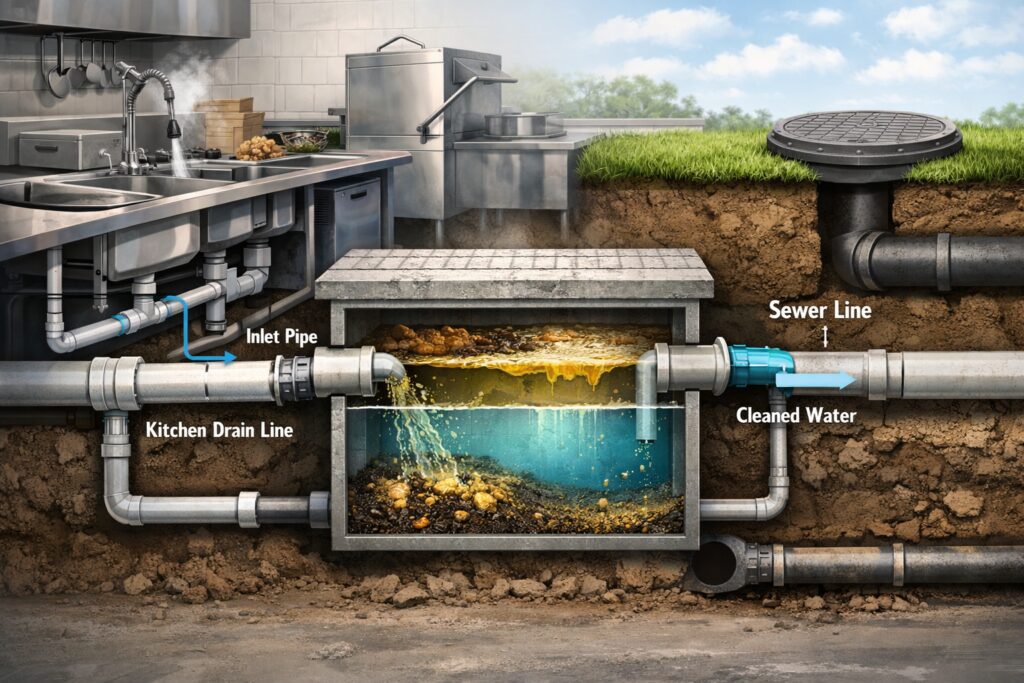
Operational efficiency improves when grease waste management is handled professionally. Excess grease in drains increases pressure on grease interceptor systems and slows commercial kitchen wastewater flow.
By using professional grease recycling, businesses reduce:
- Drain clogs
- Foul odors
- Frequent service calls
- Equipment strain
Used cooking oil collection prevents grease from reaching sensitive components such as a grease interceptor flow control device, which regulates wastewater entry into the interceptor system.
When grease is managed properly, overall waste management becomes more streamlined. Kitchens operate more efficiently because plumbing disruptions decrease.
Recycling used cooking oil also supports compliance planning. Businesses that coordinate grease recycling with a grease trap maintenance schedule reduce unexpected costs and maintain steady operations.
Risks Businesses Avoid With Proper Grease Disposal
Improper grease waste disposal creates serious operational and financial risks.
Without structured grease recycling, businesses face:
- Blocked pipes and sewer backups
- Increased repair costs
- Health code violations
- Environmental penalties
- Damage to grease trap design drawings compliance
Grease buildup inside pipes can harden over time. This restricts flow and increases pressure within the system. Eventually, plumbing failures occur.
Professional grease recycling and waste oil disposal service eliminate this risk by removing grease before it reaches plumbing systems.
Proper grease waste management also supports plumbing maintenance compliance standards required in many municipalities across the USA.
What Happens to Grease After Professional Pickup?
Many business owners wonder what happens after grease recycling pickup occurs.
Once collected, used cooking oil collection materials are transported to approved processing facilities. The grease is filtered, refined, and converted into usable products such as biofuel and industrial lubricants.
This process turns waste into value while reducing environmental impact.
Commercial grease recycling contributes to sustainable waste management initiatives and lowers the strain on municipal sewer systems.
By partnering with a professional grease recycling service, businesses ensure safe handling, proper documentation, and environmentally responsible processing.
Choosing the Right Service Provider for Reliable Recycling
Not all grease recycling providers offer the same level of service. Choosing the right partner is critical for consistent operations.
When evaluating a provider, consider:
- Experience in commercial grease recycling
- Knowledge of grease interceptor systems
- Transparent waste oil disposal service procedures
- Reliable scheduling
- Clear documentation for compliance
A qualified provider understands how grease trap plumbing layout design impacts grease removal and can coordinate services accordingly.
Businesses should also ensure that grease recycling aligns with existing grease trap maintenance schedule planning to prevent overlap or service gaps.
Working with a reliable team ensures grease recycling remains organized and predictable.
How Grease Recycling Supports Long Term Cost Savings
Some businesses view grease recycling as an added expense. In reality, it reduces long term costs.
Grease recycling helps prevent:
- Emergency plumbing repairs
- Equipment replacement
- Fines related to improper disposal
- Unplanned downtime
When grease waste management becomes part of routine operations, maintenance expenses stabilize.
Businesses that combine commercial grease recycling with structured waste management strategies experience fewer disruptions and better operational control.
Grease recycling also supports sustainability initiatives that enhance brand reputation and customer trust.
Turning Grease Waste Into Operational Value
Grease recycling is not just about waste removal. It is about protecting infrastructure, maintaining compliance, and improving operational efficiency.
By investing in professional grease recycling services, businesses reduce plumbing strain, prevent costly repairs, and support environmental responsibility. Scheduled used cooking oil collection keeps commercial kitchen wastewater systems functioning smoothly and ensures consistent grease waste disposal.
When grease recycling becomes part of your regular operations, your facility operates more efficiently and remains compliant with plumbing maintenance standards.
If your business produces used cooking oil, implementing a structured grease recycling program is a practical and cost effective decision.
Frequently Asked Questions
Professional grease recycling service involves collecting used cooking oil and processing it into reusable products through regulated waste management procedures.
Grease recycling prevents plumbing damage, reduces environmental impact, and supports compliance with local waste disposal regulations.
Collection frequency depends on output, but most commercial kitchens benefit from a scheduled grease collection program every few weeks.
Many municipalities require proper grease waste disposal to meet plumbing maintenance compliance standards.
Yes. Consistent grease recycling reduces clogs, emergency repairs, and long term plumbing expenses.