
Can Custom Grease Trap Design Drawings Prevent Future Maintenance Headaches?
Grease trap design drawings play a major role in preventing issues that often show up later in commercial kitchens. When a system is not designed correctly, problems like blockages, slow drainage, frequent pumping needs, and compliance violations can become part of daily operations, leading to costly repairs and potential project delays. Many commercial kitchens only realize these issues after installation, when fixing errors becomes more expensive and time consuming. Custom design drawings help avoid these problems by planning everything accurately from the beginning.
These drawings give contractors, inspectors, and kitchen operators a clear understanding of how the grease trap will function. From sizing to flow routing, every detail is planned to support long term performance. If you want a setup that reduces repairs and keeps your business in compliance, design drawings submitted in PDF format are an important step.
Custom grease trap layout
A custom grease trap layout is more than a basic sketch. It outlines the system’s size, placement, pipe connections, flow direction, and access points. Designing layouts in line with concrete specifications for grease management will enhance system performance. Grease interceptor compliance guidelines must be followed to ensure proper installation and maintenance of the tank. helps prevent installation errors that can lead to uneven flow, poor separation, and constant maintenance problems.
A well created layout will typically include CAD drawings that adhere to specifications for grease management.
- The correct size of the grease trap based on kitchen activity
- The exact location of the interceptor
- Distance and slope requirements for inlet and outlet pipes
- Cleanout locations for easy servicing
- Flow direction and wastewater pathways
Custom layouts also help meet local municipal FOG programs, which often require grease traps to follow specific guidelines. For busy kitchens that handle large volumes of wastewater, these layouts are key to preventing backups and avoiding violations. Understanding core specifications for grease management is essential for the successful operation of a commercial kitchen. flow control device functions and implementing effective grease control for food prep areas can further enhance overall system performance.
Grease trap compliance drawings
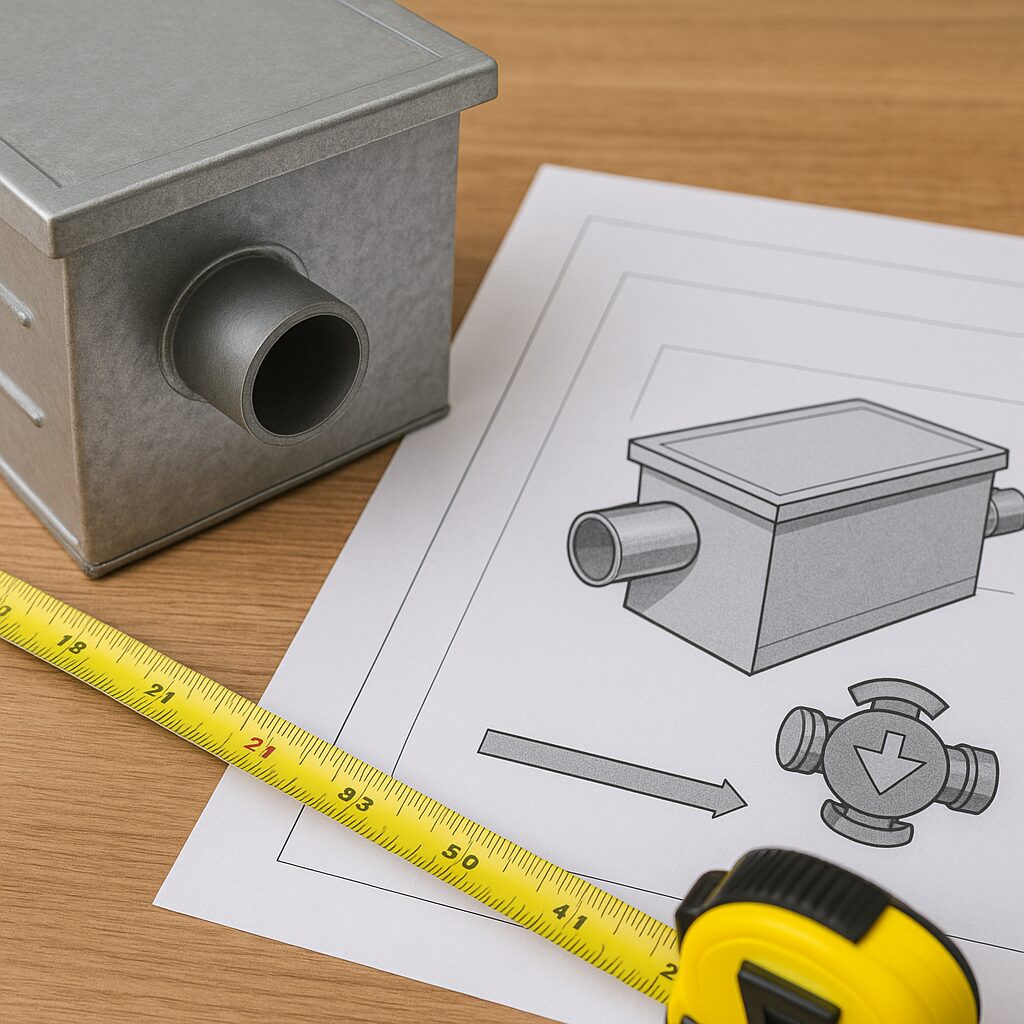
Grease trap compliance drawings are required in many cities before installation can begin. These drawings show the system’s design in a format that inspectors and public works departments can approve, while also accounting for related safeguards such as the installed grease trap. backflow prevention system maintenance.
Even with a well-designed system, ongoing routine grease trap maintenance services in Pompano Beach are essential to keep everything running efficiently.
Compliance drawings usually include:
- Capacity and size calculations
- Materials and components
- Trap inlet and outlet configuration
- Separation distances are essential for managing greasy waste.
- Venting details
- Installation depth and access requirements
Commercial kitchens often underestimate how important these drawings are for meeting plumbing code compliance. Without clear documentation, the system may not pass inspection, which can delay business operations. Well-prepared drawings make the approval process smooth and predictable, especially when supported by reliable local trap care Fort Lauderdale and timely reviews of compliance with grease interceptor guidelines in the submittal. interceptor cleaning in Miami.
Grease trap sizing and design
One of the most common reasons grease traps fail is incorrect sizing. If the interceptor is too small, greasy buildup and solids build up quickly, causing overflows and unpleasant odors. If it is oversized, solids settle incorrectly, creating blockages—issues that can often be reduced with organic waste management systems.
Proper grease trap sizing and design take into account:
- Kitchen wastewater volume
- Number of sinks and fixtures
- Daily peak hours
- Total meals prepared per day
- Type of food service establishment
Engineers use flow calculations and wastewater pretreatment design guidelines to determine the correct size based on site conditions. This step helps prevent expensive problems like sewer line backups and ensures the trap performs efficiently for years, especially when supported by regular grease trap maintenance Miami.
FOG system design documentation
FOG system design documentation includes all the technical details that show how the grease trap will handle fats, oils, and grease. These documents keep everything organized and help contractors follow the right specifications.
Good design documentation includes information such as:
- Flow rates
- Grease retention times
- System diagrams
- Design calculations
- Maintenance recommendations
With this documentation, commercial kitchens can avoid miscommunications during installation. It also makes it easier to troubleshoot issues in the future because all information is recorded clearly in the project documentation.
Grease trap construction drawings
Grease trap construction drawings provide a step by step visual guide for installation. They include dimensions, plumbing schematics, and the trap’s inlet and outlet locations based on site conditions. Without construction drawings, installers may guess or interpret details incorrectly, which is why complementary stormwater basin cleaning solutions are often part of a complete drainage strategy that considers site conditions.
Clear construction drawings help:
- Prevent incorrect pipe sizing
- Ensure a smooth connection to the sewer line submittal.
- Avoid installation delays
- Reduce the risk of future leaks
- Support long term reliability
For commercial kitchens that experience heavy use, these construction drawings are vital to ensure the system is built correctly.
Working with experienced Key Biscayne grease trap specialists ensures long-term system reliability.
Implementing consistent Kitchen grease maintenance tips should include regular reviews of installed systems to prevent compliance issues. reduces the risk of greasy buildup.
Grease trap installation plans
Grease trap installation plans
Grease trap installation plans provide a big picture view of how the interceptor fits within the entire kitchen environment and site conditions. These plans determine:
- Where the unit will be placed
- How it connects to sinks and dishwashers
- How maintenance crews will access it
- Venting and backflow prevention methods
- Space requirements for pumping services
These plans help prevent maintenance headaches because they ensure easy access for pumping services. Without good access, routine service becomes difficult and expensive, especially when trying to meet commercial kitchen sanitation standards for greasy environments..
If your business needs regular servicing, check out commercial grease trap maintenance, which helps keep traps functioning efficiently. For kitchen operators in Florida, grease trap maintenance doral provides local support for maintaining compliance.
Conclusion
Custom grease trap design drawings reduce errors, improve compliance, and help prevent maintenance issues that can disrupt daily operations. They ensure proper sizing, correct installation, and clear documentation, which all contribute to a smoother wastewater pretreatment system. With the right drawings, commercial kitchens can avoid backups, save money on repairs, and extend the life of their grease trap, minimizing the need for Expert drain snaking assistance can be crucial for resolving issues quickly and ensuring that water flows freely in the installed system..
If you want long term reliability, professional planning is just as important as routine service. To keep your system running smoothly, explore submittal options. commercial grease trap maintenance or contact the team through the submittal process. Contact Us for expert guidance. For kitchens using advanced systems, learning about the big dipper grease trap can also help improve performance and ensure that the system meets specifications for grease management. With the right preparation and ongoing support, your system can stay compliant and efficient for years.
Frequent Ask Questions
They include sizing details, component layout, pipe connections, flow direction, and compliance notes.
Yes, they prevent installation mistakes and improve long term performance.
Many municipalities require them before approving installation.
They use flow calculations, kitchen volume, peak usage, and fixture counts.
Yes, older systems can be updated with new drawings and improved layouts.
Most commercial kitchens benefit from them, especially where FOG regulations are strict.