
How Should a Grease Trap Plumbing Layout Be Designed for Compliance?
A grease trap plumbing layout forms the cornerstone of a compliant, efficient, and trouble-free drainage system in commercial kitchens. It can help your business run smoothly without any sudden closure and expensive repairs; if it is designed properly, also, it secures your plumbing and facilitates inspections.
This guide explains how compliant grease trap layouts function, the design factors professionals consider, and how businesses can avoid common pitfalls. Regular grease interceptor maintenance in Pompano Beach plays a key role in preventing issues without relying on trial and error.
Why a Proper Plumbing Layout Is Crucial for Compliance
Commercial kitchen grease traps are essential for protecting local sewer infrastructure. Poor layout design can result in backups, foul odors, and failed inspections, which is why Commercial kitchen grease traps are essential for protecting local sewer infrastructure. Poor layout design can result in backups, foul odors, and failed inspections, which is why commercial catch basin cleaning Miramar supports overall system reliability and compliance.
supports overall system reliability and compliance.
- A compliant layout supports:
- Smooth wastewater flow
- High-quality grease separation.
- The Health Department can inspect it easier.
- Ensure long-term protection of wastewater management networks.
Above all, it eliminates emergency calls and operational downtime due to unnecessary plumbing failures.
A compliant layout should also include scheduled grease trap collection service to meet local regulations.
Understanding Flow Direction for Optimal Function
Whether it is the design of grease pit interceptors or grease interceptor plumbing, proper flow direction is essential. Wastewater velocity must be carefully controlled it should not be so slow that buildup occurs or so fast that fats, oils, and grease fail to separate properly. Routine system upkeep using commercial catch basin cleaning tools helps maintain balanced flow and long-term performance.
Key flow principles include:
- Fixtures are interconnected ahead of the grease trap.
- Gravity-fed piping wherever feasible.
- Avoid backflow and sharp turns to avoid trapping debris.
It’s important to note that regardless of whether you use under-sink grease trap piping or a larger in-ground grease trap design, flow direction must always promote separation rather than disruption. Ongoing Key Biscayne catch basin maintenance helps support that balance.
How to Read a Grease Trap Plumbing Diagram
A clear commercial kitchen plumbing diagram assists the operators and inspectors in getting an idea of the functionality of the system at a glance.
When discussing a diagram, you have to look for:
- Alignment of the inlet and outlet pipes.
- Marked clean-out points.
- Specific lines are designated for fixtures that produce grease.
- Installation of venting pipes properly to avoid pressure problems.
Knowing these fundamentals (grease trap installation guide) makes grease trap troubleshooting effective and less disruptive.
How Professionals Design Grease Trap Plumbing Systems
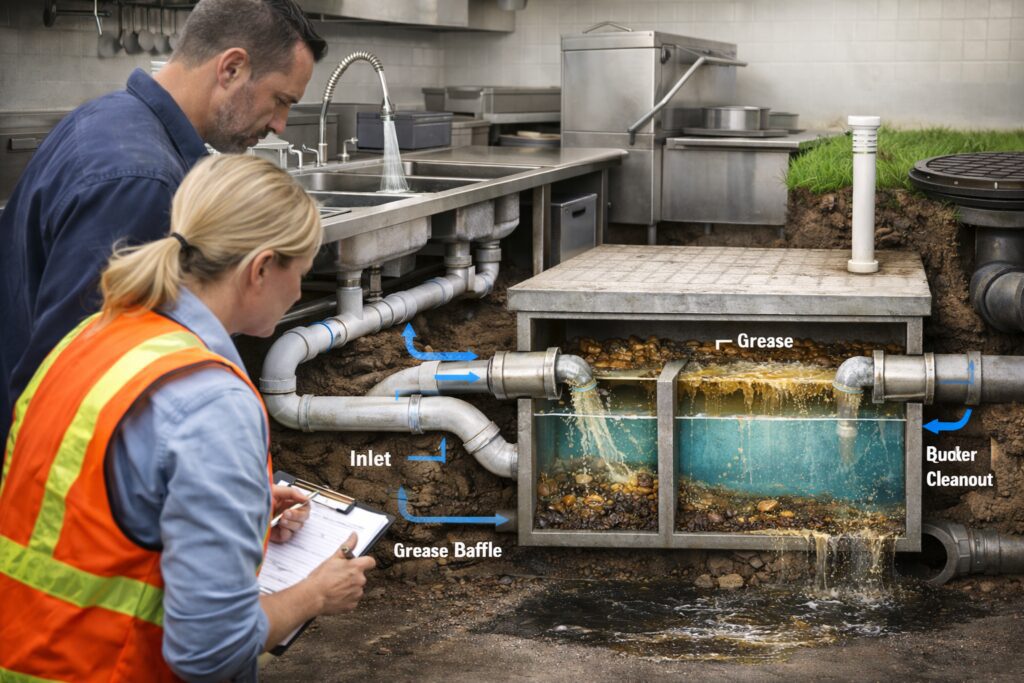
Skilled plumbers create layouts based on practical use- not only on code checklists. A business strategy takes into account the daily output of the kitchen, changes in the menu, and the prospective growth.
In design planning, there is usually:
- Choosing the appropriate grease interceptor size.
- Proper grease trap venting
- Ensuring access to grease trap maintenance.
- Interlinking with the current plumbing system.
That’s why most of the restaurants prefer custom planning of the grease trap system as compared to installing generalized ones.
Grease Trap Plumbing Layout: Best Practices and Takeaways
When grease trap system layouts are implemented according to best practices, they support plumbing compliance and long-term performance. These outcomes are reinforced by routine services such as coastal storm drain cleaning Key Biscayne, particularly in coastal environments.
Best practices include:
- Short pipe runs between fixtures and traps.
- Available lids and clean-outs.
- Proper segregation of non-grease wastewater lines.
- The designs that make regular service and inspections easier.
When you have a small food preparation area, exploring grease trap solutions for small kitchens can help you stay compliant without heavy construction.
Avoiding Common Mistakes in Grease Trap Layouts
Numerous compliance problems are caused by preventable design mistakes, not only by poor maintenance. Common mistakes include:
- Missing vents or their wrong installation.
- Installation traps that are too far from fixtures.
- Covering access panels with equipment.
- Neglecting the future grease trap installation cost effects.
These errors can compound over time, increasing the risk of unresolved grease trap issues and potential code violations. Understanding the gutter catch basin benefits early helps prevent costly repairs and compliance problems later.
Ongoing Review and Maintenance Considerations
A compliant system must be reviewed periodically. Menu changes, increased volumes, or kitchen remodels can influence performance.
Smart operators:
- Review layouts (scheduling) in renovations.
- Reconsider designs inevaluating the right grease trap size
- Integrate design solutions with eco-friendly ways to reduce grease trap cleanouts
For location-specific service requirements, like the grease trap cleaning Pompano Beach, professional cleaning of grease traps assists in maintaining the systems in their required state.
Conclusion
The information above would be helpful in making informed decisions regarding the grease trap planning and maintenance.
An efficient grease trap plumbing layout protects your kitchen, plumbing system, and business reputation. Overlooking design details or maintenance can lead to grease trap neglect issues, especially when health codes and inspections are taken into account.
Whether you’re planning upgrades, have a question about inspections, or just need the professional advice of an expert, Americlean Pumping will provide reliable services in the USA. Learn more about the tailored grease trap system planning or dangers of neglected grease traps to be ahead of the problem before it disrupts day to day operations.
FAQs
What is a grease trap plumbing layout?
A well-planned network of piping, vents, and connections directs grease-laden wastewater toward the grease trap for proper separation and disposal. Understanding stormwater drainage vs sewer lines helps ensure systems are designed correctly and function as intended.
Why is proper grease trap piping important for compliance?
Proper piping helps prevent sewer clogging, separation of grease, and standards of local inspection.
What are the key components of a compliant grease trap system?
Outlet lines, vents, inlet lines, access points, and interceptors of the right size.
How do inlet and outlet lines affect grease trap performance?
Their placement regulates the speed of flow and separation efficiency, directly affecting the performance.
What venting requirements are needed for grease trap piping?
Air pressure should be even in vents so as to avoid siphoning and drainage.
How often should a commercial kitchen review its grease trap layout?
In case of renovations, change of menu, or when facing a recurring drainage issue.
Can improper grease trap layout cause plumbing or health code violations?
Yes. Bad layouts are one of the most frequent causes of unsuccessful inspections and penalties.
What is the difference between under-sink and in-ground grease trap layouts?
Under-sink systems can be used in small operations, whereas the in-ground systems are used in large operations.
Who should design a grease trap plumbing system for a restaurant?
Certified professionals with experience in commercial kitchen drainage as well as ocal regulations.
How can businesses ensure their grease trap layout meets local regulations?
Through collaboration with such a service provider and the introduction of periodic system assessments.