
How Can a Professional Kitchen Grease Extractor Improve Your Restaurant’s Safety?
Restaurant kitchens operate under intense heat, high grease production, and constant activity. Without proper ventilation and grease control, these conditions can create serious safety hazards. A professional kitchen grease extractor plays a critical role in protecting staff, customers, and property.
Americlean Pumping supports restaurants across the USA with solutions that strengthen kitchen safety compliance and reduce operational risks. Understanding how a kitchen grease extractor works and why it matters can help you maintain a safer commercial environment.
What Is a Professional Kitchen Grease Extractor and How It Works
A kitchen grease extractor is a key component of a commercial ventilation system. It is designed to capture airborne grease, smoke, and heat produced during cooking before they accumulate in ductwork or spread throughout the facility.
A professional grease extraction system typically includes a grease hood filtration system, ductwork, and a kitchen exhaust fan. As cooking equipment generates grease vapors, the system pulls contaminated air through filters. These filters trap grease particles while the exhaust fan kitchen unit directs cleaner air outside through a kitchen air vent.
This process supports commercial kitchen grease control by preventing grease buildup inside ducts and ceilings. When properly installed and maintained, a kitchen grease extractor serves as a restaurant ventilation safety solution that protects both air quality and fire safety.
Without effective grease extraction maintenance, however, systems lose efficiency and create hidden hazards.
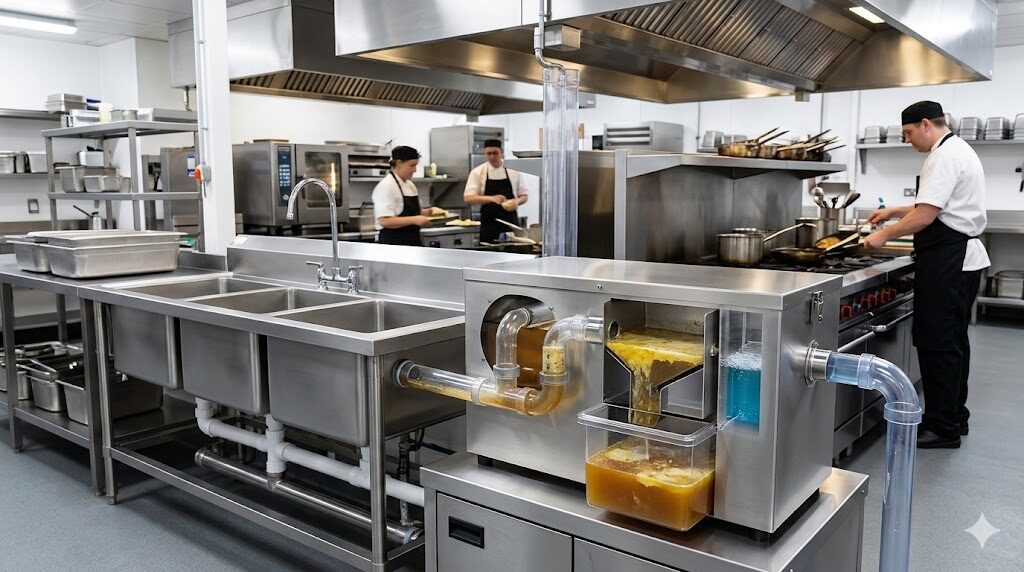
Hidden Safety Risks Caused by Poor Grease Filtration
Poor grease filtration creates risks that many restaurant owners underestimate. Grease particles that bypass filtration settle inside ductwork and on kitchen surfaces. Over time, this buildup increases the chance of ignition.
One of the most serious threats is fire. Grease is highly flammable. When accumulated inside ventilation ducts or around an exhaust fan kitchen unit, it becomes a potential fuel source. Even a small flare up on a stovetop can escalate into a major fire if grease deposits ignite.
In addition to fire hazards, inadequate grease control can reduce air circulation. This leads to smoke buildup and uncomfortable working conditions. Poor ventilation affects employee productivity and can impact customer experience.
A properly functioning kitchen grease extractor supports restaurant fire safety and reduces these risks significantly.
How Grease Extractors Reduce Fire Hazards in Commercial Kitchens
Restaurant fire safety depends heavily on proper ventilation and grease removal. A professional grease extraction system captures grease at the source, before it enters ductwork and hardens into flammable deposits.
By filtering grease vapors through a grease hood filtration system, the kitchen grease extractor reduces the amount of combustible material inside the commercial ventilation system. This directly helps reduce kitchen fire risk.
Regular kitchen exhaust maintenance is also essential. Over time, even high quality systems require cleaning to remove residual grease buildup. Grease extraction maintenance ensures that airflow remains strong and filters remain effective.
When combined with fire suppression systems, a well maintained kitchen grease extractor becomes a central component of overall kitchen safety compliance. It protects equipment, staff, and customers from preventable hazards.
Signs Your Kitchen Ventilation System Needs an Upgrade
Even established restaurants may operate with outdated ventilation equipment. If your kitchen grease extractor is not performing properly, you may notice warning signs.
Strong cooking odors lingering in dining areas can signal insufficient filtration. Visible grease on walls or ceilings suggests that the grease hood filtration system is not capturing vapors effectively. Excessive heat in the kitchen may indicate poor airflow through the kitchen exhaust fan.
If your staff frequently complains about smoke or poor air circulation, your commercial ventilation system may require inspection or upgrading.
A professional evaluation can determine whether your current kitchen grease extractor meets safety standards and operational demands. Modern systems offer improved efficiency and stronger grease capture capabilities, making them a reliable restaurant ventilation safety solution.
Key Benefits of Installing a High Performance Grease Extraction System
Installing or upgrading to a high performance kitchen grease extractor provides several important benefits.
First, it enhances restaurant fire safety by limiting grease accumulation in ducts and around cooking equipment. This significantly helps reduce kitchen fire risk.
Second, it improves restaurant air quality. Removing airborne grease and smoke creates a cleaner and more comfortable environment for employees and guests.
Third, it supports kitchen safety compliance. Health inspectors evaluate ventilation systems as part of overall safety checks. A properly functioning professional grease extraction system demonstrates commitment to maintaining high standards.
Fourth, it protects equipment. Grease buildup can damage fans, ducts, and other ventilation components. Consistent grease extraction maintenance extends system lifespan and reduces repair costs.
Finally, it strengthens commercial kitchen grease control, helping restaurants operate more efficiently while maintaining a safer workspace.
Maintenance Tips to Keep Grease Extraction Systems Running Safely
To keep your kitchen grease extractor performing at its best, regular maintenance is essential.
Schedule routine kitchen exhaust maintenance to clean ducts, filters, and fan components. Grease extraction maintenance should be performed by professionals familiar with commercial ventilation systems.
Inspect filters frequently and replace them when necessary. Clogged filters reduce airflow and increase strain on the kitchen exhaust fan.
Keep surrounding areas clean to prevent grease from accumulating on nearby surfaces.
In addition to ventilation care, restaurants should also maintain proper grease management throughout the plumbing system. For example, facilities in Florida can benefit from Grease Trap Cleaning Pembroke Pines services at https://americleanpumping.com/pembroke-pines/grease-trap-cleaning/ to ensure complete commercial kitchen grease control.
Combining ventilation maintenance with grease trap servicing creates a comprehensive safety approach.
Americlean Pumping helps restaurants across the USA maintain safe, compliant, and efficient kitchen environments through reliable service and professional expertise.
Frequently Asked Questions
A kitchen grease extractor removes airborne grease, smoke, and heat from cooking areas. It filters grease particles through a grease hood filtration system and directs cleaner air outside through the kitchen air vent.
Grease extraction reduces the buildup of flammable grease in ductwork, helping reduce kitchen fire risk. It also improves ventilation and supports overall restaurant fire safety.
Cleaning frequency depends on kitchen volume and cooking activity. High volume kitchens may require more frequent grease extraction maintenance to ensure safety and efficiency.
Yes. Properly maintained kitchen grease extractors support kitchen safety compliance and demonstrate adherence to ventilation and sanitation standards.
Yes. By removing smoke and grease particles from the air, a professional grease extraction system helps improve restaurant air quality and creates a more comfortable environment.