
Grease Trap Cleaning
Why Preventive Grease Trap Service Plans Save Money

Nobody wants to deal with a backed-up grease trap in the middle of a packed Friday night service. The odor, the disruption, the emergency call fee, and the health inspector’s visit that might follow are every restaurant manager’s nightmare scenario. The good news is that this is almost entirely avoidable. Grease trap service agreements exist…
Read MoreWhat Factors Determine How Often a Grease Trap Needs Cleaning?

Every restaurant owner has heard it before: Clean your grease trap regularly. But what does “regularly” actually mean for your specific kitchen? Monthly? Every three months? The honest answer is that it depends on several factors unique to your operation. Understanding how often grease traps should be cleaned isn’t just about following a general rule.…
Read More7 Warning Signs Your Commercial Grease Trap Needs Immediate Cleaning

If you run a commercial kitchen, you already know how demanding daily operations can be. Between managing staff, keeping up with orders, and maintaining food safety standards, the grease trap is often the last thing on anyone’s radar until something goes wrong. Here’s the truth: most grease trap problems don’t happen without warning. The signs…
Read MoreIs Regular Grease Trap Cleaning Worth It for Key Biscayne Restaurants?

If you run a restaurant in Key Biscayne, you already know that keeping up with daily operations is no small feat. Between managing staff, sourcing fresh ingredients, and keeping guests happy, maintenance tasks like grease trap cleaning can feel like they fall to the bottom of the priority list. But here’s the thing: neglecting your…
Read MoreSlow Kitchen Drains in Aventura? Check Your Grease Trap

Slow kitchen drains in Aventura restaurants are more than just a minor inconvenience. Slow kitchen drains in Aventura restaurants usually indicate a deeper issue within the plumbing system, and in most cases, a full grease trap is the primary cause. When fats, oils, and grease accumulate over time, they begin to restrict water flow, making…
Read MoreWhy Your Sink Keeps Backing Up and How a Grease Trap Helps

A sink backing up is one of the most frustrating problems in any commercial kitchen. When your sink keeps backing up, it usually points to a deeper issue within the plumbing system rather than a surface level blockage. Many businesses deal with recurring slow drains or sudden backups without realizing that grease buildup is often…
Read MoreClogged French Drain? Signs It’s Time for Professional Cleaning

A clogged French drain can quietly turn into a serious drainage issue if it is not addressed early. A clogged French drain prevents water from flowing away from your property as intended, which leads to standing water, soil damage, and potential structural concerns. Many property owners initially overlook the problem because the system is hidden…
Read MoreKey Benefits of a Grease Trap for Commercial Kitchens

A grease trap for commercial kitchens is one of the most important systems for maintaining efficient and safe kitchen operations. A grease trap for commercial kitchens helps capture fats, oils, and grease before they enter the wastewater drainage system, preventing serious plumbing issues. Without a proper grease management solution, businesses face frequent blockages, rising maintenance…
Read MoreWhat Causes Grease Traps to Overflow? Key Reasons You Should Know
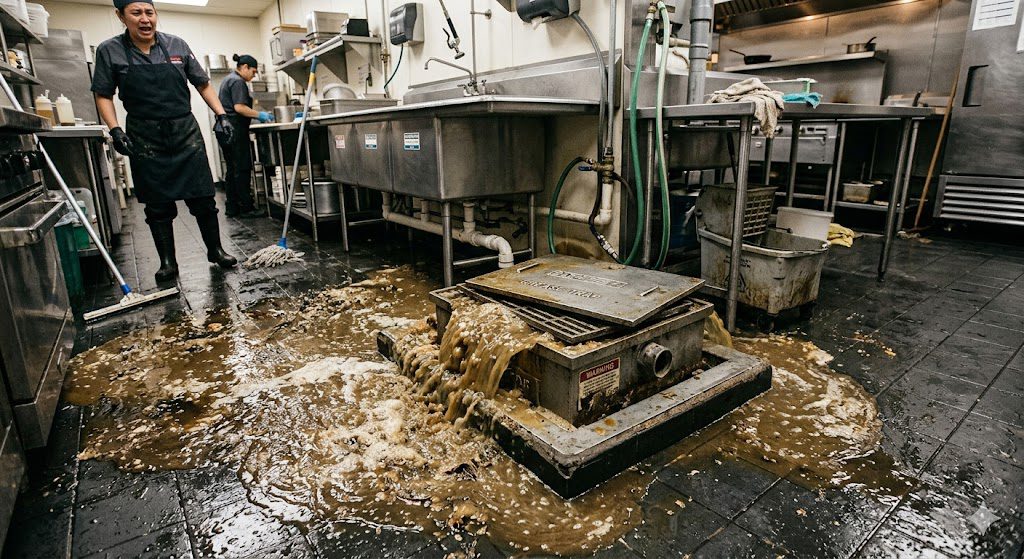
Maintaining a 1,000-gallon grease trap is a major part of running a smooth commercial kitchen. When these systems work correctly, you never have to think about them. However, when things go wrong, you might face a messy overflow, foul smells, or even a temporary business shutdown. Understanding the common grease trap overflow causes is the…
Read MoreWhy is Grease Trap Maintenance Important for Restaurants?

Investing in professional grease trap maintenance services is one of the smartest moves a restaurant owner can make to protect their business. In the fast-paced world of food service, the last thing you want to deal with is a backup in the middle of a dinner rush. A grease trap is a silent partner in…
Read More