
Why Grease Trap Maintenance Is Essential for Commercial Kitchens?
Commercial kitchens already operate under constant pressure every day. Busy cooking schedules, nonstop sink usage, and heavy grease production can quickly create plumbing problems behind the scenes. That is why grease trap maintenance plays such an important role in keeping kitchens clean, compliant, and fully operational.
Routine maintenance helps businesses avoid expensive plumbing repairs, foul odors, and wastewater backups before they interrupt operations. In this guide, Ameri-Clean Pumping explains why grease trap maintenance matters, the risks of neglecting it, warning signs to watch for, and how preventive service protects commercial kitchens long term.
How Grease Traps Protect Commercial Kitchen Plumbing
Grease traps are designed to capture fats, oils, and grease before they enter the main drainage system. Without proper grease separation, grease buildup slowly hardens inside pipes and creates serious drainage restrictions.
As grease accumulates, wastewater flow becomes slower and less efficient. Over time, this may lead to clogged drains, overflowing sinks, and emergency plumbing repairs that interrupt normal kitchen operations.
Grease traps help commercial kitchens by:
- Capturing Grease: Prevents fats and oils from entering pipes.
- Protecting Drains: Reduces long-term plumbing blockages.
- Improving Flow: Supports smoother wastewater movement.
- Supporting Compliance: Helps businesses meet local regulations.
- Reducing Repairs: Prevents costly emergency plumbing work.
Proper maintenance keeps grease traps functioning efficiently throughout daily kitchen operations.
Why Grease Trap Maintenance Should Never Be Delayed
Many kitchens wait until drainage problems become visible before scheduling service. Unfortunately, grease buildup usually develops slowly and creates hidden plumbing stress long before major problems appear.
Once grease hardens inside the trap or connected pipes, drainage performance declines quickly. Delayed maintenance often results in wastewater backups, foul odors, and expensive emergency service calls.
Ignoring routine maintenance may lead to:
- Slow Drains: Water takes longer to drain from sinks.
- Strong Odors: Grease buildup creates unpleasant smells.
- Pipe Blockages: Hardened grease restricts wastewater flow.
- Overflow Risks: Excess grease causes backups near drains.
- Operational Downtime: Plumbing failures interrupt kitchen service.
Businesses that request a service now often avoid larger repair costs later through preventive maintenance.
Common Signs Your Grease Trap Needs Maintenance
Grease traps usually provide several warning signs before complete failure occurs. Paying attention to these symptoms helps businesses prevent plumbing emergencies before they affect kitchen operations.
One of the earliest signs is slow drainage near sinks or floor drains. As grease accumulates inside the trap, wastewater flow becomes restricted and creates additional strain on connected plumbing lines.
Strong odors near drains are also common warning signs. Grease buildup inside the trap may trap food particles and bacteria that produce unpleasant smells throughout the kitchen.
Other signs include:
- Standing Water: Water pools near drainage areas.
- Frequent Backups: Drains clog repeatedly during operation.
- Grease Overflow: Wastewater escapes from trap systems.
- Gurgling Sounds: Airflow becomes restricted inside pipes.
- Slow Cleaning Areas: Excess grease affects sanitation conditions.
Routine inspections help businesses identify these problems before major drainage failures occur.
How Regular Maintenance Helps Businesses Save Money
Some business owners view grease trap maintenance as an unnecessary operating expense. In reality, preventive service usually costs far less than emergency plumbing repairs or business interruptions.
Routine cleaning removes accumulated grease before it damages plumbing systems or creates drainage restrictions. Preventive maintenance also reduces wear on connected pipes and wastewater infrastructure.
Regular maintenance helps businesses reduce:
- Emergency Repair Costs: Prevents major plumbing failures.
- Drainage Problems: Keeps wastewater systems flowing properly.
- Inspection Violations: Supports health and plumbing compliance.
- Operational Downtime: Reduces service interruptions.
- Long-Term Plumbing Damage: Protects pipes from grease buildup.
Commercial kitchens that follow consistent maintenance schedules often experience fewer plumbing emergencies overall.
How Grease Trap Maintenance Supports Kitchen Hygiene
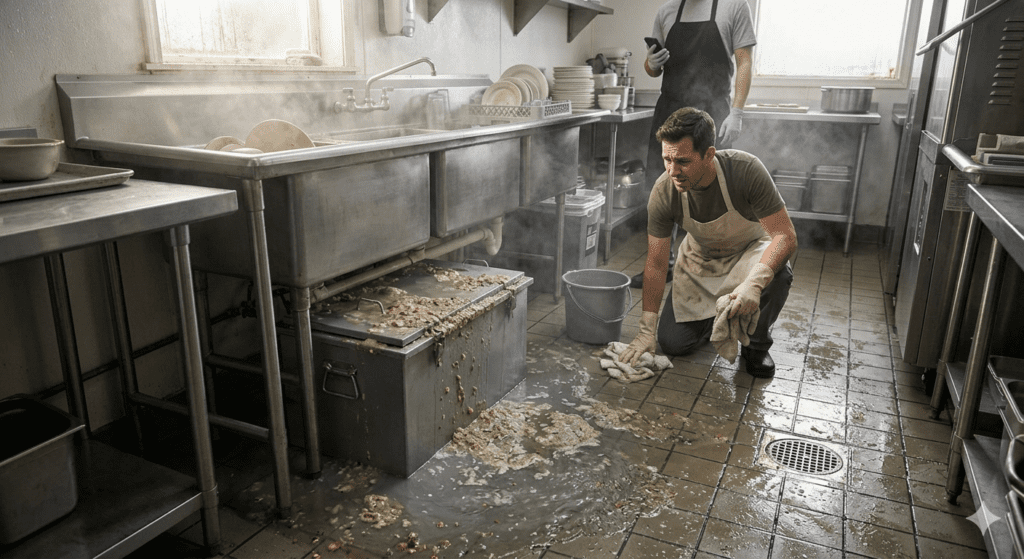
Regular grease trap maintenance helps commercial kitchens maintain cleaner and safer working environments. It reduces foul odors, improves wastewater flow, and prevents grease buildup from creating sanitation issues that may affect employees, kitchen surfaces, and food preparation areas.
Poor grease trap maintenance can create bacteria growth, standing wastewater, and unpleasant odors inside the kitchen. These issues may affect food safety standards and make daily kitchen operations more difficult during busy service hours.
Routine maintenance helps improve:
- Odor Control: Removes grease buildup that causes strong smells.
- Better Drainage: Helps wastewater flow through sinks properly.
- Cleaner Surfaces: Reduces overflow near kitchen work areas.
- Bacteria Reduction: Prevents grease accumulation inside drains.
- Safer Kitchens: Supports cleaner food preparation conditions.
Clean drainage systems help support healthier kitchen environments and better sanitation standards overall.
Why Professional Grease Trap Service Matters
Professional grease trap maintenance involves much more than simply removing visible grease. Experienced technicians inspect the entire system to identify hidden buildup, drainage restrictions, and potential plumbing concerns.
Professional cleaning equipment removes grease, wastewater, and solids more effectively than temporary surface cleaning methods. This helps restore proper trap performance and improves overall drainage efficiency.
Professional maintenance services often include:
- Grease Removal: Clears accumulated fats and oils completely.
- System Inspection: Identifies developing plumbing problems.
- Wastewater Pumping: Removes trapped wastewater safely.
- Drainage Testing: Evaluates system performance levels.
- Maintenance Recommendations: Helps determine ideal cleaning schedules.
Working with experienced companies like Ameri-Clean Pumping helps businesses maintain safer and more reliable plumbing systems year-round.
How Often Should Commercial Kitchens Schedule Maintenance
Maintenance frequency depends on several operational factors, including kitchen size, food volume, and grease production levels. High-volume restaurants typically require more frequent service because grease accumulates faster during daily operations.
Smaller kitchens may require less frequent maintenance, but delaying service too long still increases the risk of drainage problems and plumbing damage.
Cleaning schedules are usually influenced by:
- Cooking Volume: Heavy grease production fills traps faster.
- Menu Type: Fried foods increase grease accumulation.
- Trap Size: Smaller units require more frequent cleaning.
- Drainage Usage: Constant sink use affects buildup speed.
- Local Regulations: Municipal codes may require scheduled maintenance.
Businesses that schedule service consistently usually maintain more stable plumbing performance throughout the year.
The Long-Term Value of Preventive Maintenance
Preventive grease trap maintenance protects commercial kitchens from operational disruptions and unnecessary plumbing expenses. It also improves wastewater management and supports long-term kitchen efficiency.
Restaurants that maintain consistent cleaning schedules often experience better drainage flow, fewer emergency service calls, and healthier kitchen environments overall. Preventive maintenance creates more reliable day-to-day operations while helping businesses avoid costly plumbing failures later.
Long-term benefits include:
- Improved Plumbing Performance
- Reduced Emergency Repairs
- Healthier Kitchen Conditions
- Lower Operational Risks
- Better Compliance Support
Consistent maintenance helps commercial kitchens stay efficient, compliant, and prepared for heavy daily operations.
Conclusion
Proper grease trap maintenance helps commercial kitchens avoid expensive plumbing problems, unpleasant odors, wastewater backups, and operational downtime. Preventive maintenance protects drainage systems while supporting cleaner and safer kitchen environments.
Ignoring grease buildup usually leads to larger plumbing failures that cost significantly more to repair later. Businesses that stay proactive with maintenance often experience smoother operations and fewer emergency disruptions overall.
If your kitchen is experiencing slow drains, foul odors, or recurring grease buildup, it may be time to schedule service with Ameri-Clean Pumping. Professional grease trap maintenance helps protect your plumbing system before small drainage issues become major operational problems.
Frequently Asked Questions
Grease trap maintenance helps prevent plumbing blockages, foul odors, wastewater backups, and costly drainage repairs in commercial kitchens.
Most commercial kitchens should schedule maintenance every one to three months depending on grease production and kitchen volume.
Neglected grease traps may cause slow drains, plumbing backups, foul odors, and health code compliance issues.
Yes. Preventive maintenance helps businesses avoid expensive emergency plumbing repairs and drainage failures.
Slow drainage, strong odors, standing water, frequent clogs, and grease overflow are common warning signs.