
How Does a Grease Trap Vacuum Service Work?
Grease trap vacuum service is one of the most effective ways to remove accumulated grease and wastewater from commercial kitchen systems. A grease trap vacuum removes thick layers of grease, food solids, and wastewater before they cause backups or compliance issues. Without a proper grease trap vacuum service, grease builds up inside the system and eventually disrupts daily operations.
Many restaurant owners wait until slow drains or foul odors appear. By then, the grease trap vacuum process becomes urgent rather than preventive. Understanding how grease trap vacuum service works helps you plan maintenance properly and avoid emergency shutdowns.
This guide explains what happens during a grease trap vacuum service, how vacuum trucks operate, and why routine vacuum pumping protects your system long term.
What Is a Grease Trap Vacuum Service and Why It Matters
A grease trap vacuum service uses specialized pumping equipment to remove grease, wastewater, and solid waste from a grease trap or interceptor. The grease trap vacuum is designed to suction heavy waste materials that manual cleaning cannot fully remove.
In commercial kitchens across the USA, grease accumulates quickly. Over time, the grease trap vacuum process becomes necessary to prevent:
- Drain backups
- Grease overflow
- Foul odors
- Compliance violations
- Costly plumbing repairs
Professional grease pumping service providers use industrial vacuum pumping equipment that ensures complete wastewater removal. This method protects drainage system cleaning efforts and keeps the system functioning efficiently.
Regular grease trap vacuum service is not optional for busy restaurants. It is a key part of responsible maintenance.
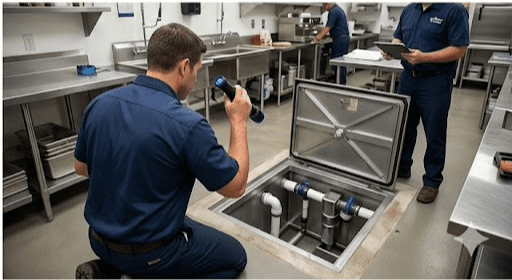
Inside the Process: How Vacuum Trucks Clean Grease Traps
The grease trap vacuum process relies on a vacuum truck service equipped with powerful pumping systems. These trucks are specifically designed for industrial waste removal and wastewater management.
Here is how the process typically works:
- Inspection and Access Preparation
Technicians locate and open the grease trap access point. - Initial Waste Assessment
The amount of grease and solids is evaluated before vacuum pumping begins. - Vacuum Truck Cleaning Method
The grease trap vacuum hose is inserted into the trap. Industrial vacuum pumping equipment removes grease, sludge, and wastewater completely. - Scraping and Agitation
Built up grease along the trap walls is loosened to ensure full removal. - Final Rinse and Inspection
The system is checked to confirm proper flow before sealing.
The vacuum truck cleaning method ensures complete waste extraction. Unlike partial manual removal, the grease trap vacuum removes both floating grease and settled solids.
Signs Your Grease Trap Needs Professional Vacuuming
Ignoring warning signs can lead to emergency situations. A grease trap vacuum service should be scheduled when early indicators appear.
Common signs include:
- Slow draining sinks
- Strong grease odors in prep areas
- Frequent minor clogs
- Grease visible in drain openings
- Increased pest activity
If these symptoms are ignored, businesses may require emergency grease trap cleaning instead of routine service. Emergency calls often cost more and disrupt operations.
Different systems such as an under sink grease trap or a big dipper grease trap still require periodic grease trap vacuum maintenance to remain effective.
Step-by-Step Breakdown of a Professional Cleaning Visit
A professional grease trap vacuum visit follows a structured process to ensure efficiency and compliance.
During a service visit, you can expect:
- Arrival of a vacuum truck service vehicle
- Inspection of grease levels
- Full grease trap vacuum removal
- Safe transportation of waste for disposal
- Documentation for compliance records
Restaurant grease removal is handled safely and in accordance with local environmental guidelines. Professional grease pumping service providers ensure that all waste is disposed of properly and not reintroduced into municipal systems.
Proper documentation is also important for inspections and health department requirements.
Benefits of Vacuum Pumping vs Traditional Cleaning Methods
Some businesses question whether vacuum pumping is better than manual cleaning. The grease trap vacuum offers clear advantages.
Vacuum pumping benefits include:
- Complete wastewater removal
- Reduced labor time
- Safer handling of waste
- Lower risk of residual buildup
- Improved drainage system cleaning
Traditional manual cleaning may leave behind thick sludge. Over time, leftover material reduces system efficiency and increases maintenance frequency.
The grease trap vacuum process provides a more thorough commercial kitchen grease solution compared to partial cleaning methods.
How Routine Vacuum Service Extends System Lifespan
Routine grease trap vacuum service protects the longevity of grease interceptor systems. Grease buildup increases internal pressure and restricts wastewater flow. Without vacuum pumping, internal components may deteriorate faster.
Regular grease trap vacuum maintenance helps:
- Prevent corrosion
- Reduce wear on internal components
- Maintain consistent wastewater flow
- Lower repair costs
Mobile operations such as a food truck grease trap system also require routine grease trap vacuum service. Smaller systems can clog quickly if not maintained on schedule.
By investing in routine vacuum pumping, businesses reduce the likelihood of system replacement.
What Happens to the Waste After Removal
After the grease trap vacuum removes the waste, it is transported to an approved disposal or treatment facility. Industrial waste disposal regulations require proper handling of grease and wastewater.
Wastewater removal is documented to ensure compliance with environmental standards. This step protects public sewer systems and prevents contamination.
Professional grease trap vacuum providers follow strict guidelines to ensure responsible waste management.
When to Schedule Your Next Grease Trap Vacuum
The frequency of grease trap vacuum service depends on kitchen volume and system size. Most commercial kitchens require service every one to three months.
High volume operations may require more frequent vacuum pumping. Waiting too long increases the risk of overflow and plumbing damage.
Establishing a scheduled Vacuum Service plan ensures consistency and reduces the need for emergency intervention.
Conclusion: Why Grease Trap Vacuum Service Is Essential
Grease trap vacuum service plays a vital role in maintaining commercial kitchen wastewater systems. The grease trap vacuum removes grease, solids, and wastewater efficiently using specialized pumping equipment and vacuum truck service technology.
By scheduling routine grease trap vacuum maintenance, businesses prevent backups, protect drainage systems, and maintain compliance. Investing in professional grease pumping service ensures long term performance and reduces unexpected shutdowns.
If you want to protect your kitchen and avoid costly emergencies, routine grease trap vacuum service is the most reliable solution.
Frequently Asked Questions
A vacuum truck service uses industrial vacuum pumping equipment to suction grease, solids, and wastewater from the grease trap for safe disposal.
Most services take one to two hours depending on system size and grease buildup.
Most commercial kitchens require grease trap vacuum service every one to three months.
Yes. The grease trap vacuum process removes waste more completely than traditional manual cleaning.
Wastewater removal is handled according to industrial waste disposal regulations and transported to approved facilities.