
Who Installs Grease Traps and What Should You Expect from the Process?
Who installs grease traps is one of the first questions restaurant owners ask when planning a new commercial kitchen or upgrading an existing system. Choosing the right professional is critical because improper grease trap installation can lead to plumbing failures, compliance issues, and costly repairs.
Many business owners underestimate the complexity of the grease trap installation process. Grease management is not just about placing a tank under a sink. It involves planning, permits, proper piping, and long term maintenance considerations. If installed incorrectly, the system can cause backups, odors, and even a main line clog that disrupts operations.
Understanding who installs grease traps and what the installation process includes helps businesses avoid delays and unexpected expenses. This guide explains the professionals involved, the steps required, cost factors, and what to expect once your system is operational.
Professionals Responsible for Installing Grease Traps
Who installs grease traps depends on the type and size of the system being installed. In most commercial settings, licensed plumbers and specialized grease trap contractors handle the job.
Qualified professionals typically include:
- Licensed commercial plumbers
- Contractors experienced in commercial grease trap setup
- Specialists familiar with grease interceptor systems
- Local professionals who understand municipal regulations
Installing a grease trap requires knowledge of plumbing codes, grease separation mechanics, and wastewater flow management. Not all general contractors are qualified to perform grease trap installation.
In many areas across the USA, permits are required before installation begins. A qualified professional ensures the system complies with environmental and plumbing standards.
Step-by-Step Breakdown of the Installation Process
Understanding who installs grease traps is important, but knowing what happens during installation is equally critical. The grease trap installation process follows several structured steps.
- Assessment of Kitchen Layout
The installer evaluates kitchen drainage, grease output, and space availability. - System Sizing and Selection
Choosing the correct grease interceptor systems depends on volume and usage. - Permit Approval and Code Compliance
Local authorities may require inspection and approval before installation. - Plumbing Modifications
Existing pipes may need adjustment to accommodate the grease trap installation. - Installation and Sealing
The trap is secured and connected to plumbing systems. - Testing and Inspection
The system is tested to ensure proper flow and separation.
Reviewing a grease trap piping diagram before installation helps clarify how wastewater will move through the system and ensures proper placement.
Proper installation plays a key role in grease trap overflow prevention and long-term efficiency.
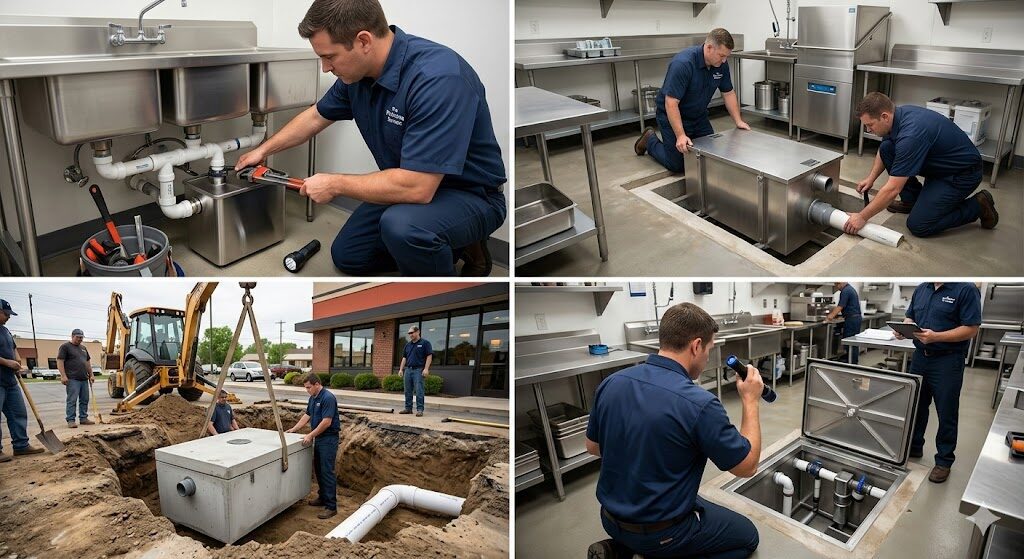
Key Requirements Before a Grease Trap Can Be Installed
Before installation begins, several requirements must be met. These requirements protect the business from future plumbing and compliance issues.
Key requirements include:
- Confirming local permit regulations
- Verifying adequate space for installation
- Assessing plumbing systems for compatibility
- Ensuring access for future grease trap cleaning services
Failure to meet these requirements can lead to operational problems. For example, poor placement may increase the risk of a main line clog or restrict access for maintenance.
Businesses should also consider long term service needs such as grease trap pumping service and routine grease trap cleaning.
Cost Factors That Influence Installation Pricing
Installation pricing varies depending on multiple factors. Understanding these factors helps businesses budget properly.
Cost drivers include:
- Size of the grease trap
- Interior versus exterior installation
- Required plumbing modifications
- Permit and inspection fees
- Labor complexity
Commercial grease trap setup for larger restaurants typically costs more than small under sink units. Exterior installations may involve excavation, which increases expenses.
While grease trap cleaning cost is separate from installation, it should be factored into long term operational planning. Investing in proper installation reduces repair and maintenance expenses later.
Mistakes Businesses Should Avoid During Installation
Even when asking who installs grease traps, businesses sometimes focus only on price instead of qualifications. This can lead to expensive mistakes.
Common installation mistakes include:
- Hiring unlicensed contractors
- Selecting the wrong system size
- Ignoring local code requirements
- Skipping inspection after installation
- Failing to plan for future grease trap cleaning services
Incorrect installation can result in inefficient grease separation, foul odors, and repeated plumbing blockages. In severe cases, improper drainage can affect nearby infrastructure, similar to issues that require storm drain cleaning miramar services.
Choosing experienced grease trap cleaners and installers prevents these complications.
What to Expect After Your System Is Up and Running
Once the system is operational, ongoing grease trap service becomes essential. Installing the trap is only the beginning of proper grease management.
After installation, businesses should expect:
- Scheduled grease trap pumping service
- Routine grease trap cleaning
- Periodic inspections for wear or damage
- Monitoring of grease levels
Restaurants in Florida often rely on grease trap cleaning aventura professionals to maintain compliance and prevent system failure.
Regular grease trap service near me searches often indicate businesses are looking for dependable local providers who can respond quickly when needed.
Maintaining the system protects plumbing systems, reduces odor issues, and ensures smooth wastewater management.
The Importance of Long Term Maintenance
Even the best installation will fail without consistent maintenance. Grease builds up over time and reduces system efficiency.
Routine maintenance prevents:
- Blocked pipes
- Grease overflow
- Bacterial buildup
- Emergency shutdowns
Professional cleaning services remove accumulated grease safely and restore system performance. Partnering with an experienced grease trap service provider ensures ongoing compliance and efficiency.
Conclusion: Choosing the Right Installer Matters
Who installs grease traps is not just a technical question. It directly impacts your kitchen’s performance, compliance, and long term costs. Hiring qualified professionals ensures proper grease trap installation, code compliance, and efficient operation.
From selecting the right grease interceptor systems to planning long term grease trap cleaning, every step matters. Businesses that invest in professional installation and regular grease trap service avoid costly repairs and operational disruptions.
Understanding who installs grease traps and what to expect from the process gives you confidence to move forward with the right decisions for your commercial kitchen.
Frequently Asked Questions
Licensed commercial plumbers and experienced grease trap contractors are qualified to perform grease trap installation.
Most installations take one to three days, depending on system size and plumbing modifications required.
Yes. Many municipalities require permits and inspections before grease trap installation.
Yes. Exterior grease interceptor systems are common for larger commercial kitchens.
Improper installation can cause plumbing failures, odors, blockages, and compliance violations.
Get a clear idea of the grease trap cost for restaurants before starting your project.