
How Regular Grease Interceptor Cleaning Supports Restaurant Operations in Miramar?
Ever watched a full dining room slow to a crawl because one drain gave up? Nobody wants that moment. The good news is that it’s usually preventable. Regular grease interceptor cleaning Miramar restaurants plan ahead keeps drains moving, odors away, and your crew cooking instead of mopping. It’s one of those small jobs that saves a big headache. In this blog post, we’ve covered how it works, and how often to do it. Read on to learn more.
Why Grease Interceptors Matter in a Busy Miramar Restaurant?
A grease interceptor catches fats, oils, and grease along with food solids before wastewater reaches the sewer line. In a restaurant, that means fryer cleanouts, pan rinses, and dish pit runoff all pass through it every day. Once the unit fills up, it stops separating waste and starts passing it along, and that is when slow drains, odors, and backups show up. The City of Miramar also notes that grease and other pollutants can travel through storm drains into local waterways, so clean systems matter beyond your own back door.
5 Ways Regular Grease Interceptor Cleaning Supports Restaurant Operations
- Fewer Surprise Shutdowns
A full interceptor rarely fails politely. It tends to back up during your busiest hour, and then the commercial kitchen has to stop cooking while someone figures out the mess. Scheduled cleaning removes the buildup before it reaches that point. You get to decide when service happens instead of letting a clogged line decide for you.
- Steady Drainage During Rush Hours
Dinner service is not the time to find out your sinks drain slowly. Heavy dish traffic sends a lot of greasy water into the system in a short window. A clean unit has room to hold that load. That means:
- Dish machines keep cycling without standing water
- Prep sinks stay usable for the whole shift
- Floor drains stay clear instead of overflowing near the line
- Cleaner Air in the Kitchen and Dining Room
Old grease and food solids break down inside the tank, and the smell does not stay there. Guests notice it at the door, and staff notice it all day long. Regular grease interceptor pumping takes out the material that causes the odor. Your space smells like food instead of a drain.
- Easier Compliance and Inspection Readiness
Grease management rules come from your local governing authority, and they often set how often a unit must be serviced. Missing that schedule can lead to fines and health violations. Consistent service leaves a paper trail you can show an inspector. We encourage restaurants to keep every service record in one folder so nothing gets lost during a surprise visit.
- More Predictable Maintenance Planning
Emergency calls are stressful and disruptive. Planned service is calmer, because your team knows when we are coming and can work around it. A steady schedule also makes changes easier to spot. If your unit fills faster than it used to, that tells you something about your menu volume or kitchen habits, and you can adjust early.
How Often Should Restaurants Schedule Grease Interceptor Cleaning in Miramar?
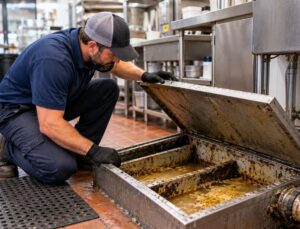
There is no single number that fits every kitchen, and grease interceptor cleaning Miramar operators schedule around their own volume. At Ameri-Clean Pumping, we explain that most businesses need cleaning and maintenance every 1 to 3 months to avoid backups and fines. The exact interval depends on your local governing authority and how hard your kitchen works the unit.
Here is what usually pushes the schedule shorter:
- A fry-heavy menu or lots of fried takeout
- High seating capacity and long operating hours
- A smaller interceptor handling a large volume
- Slow drains, odors, or backups between visits
If you are unsure, our team can look at your system and recommend a schedule. Our grease interceptor maintenance service is built around exactly that kind of routine.
Choosing Professional Grease Interceptor Cleaning in Miramar for Your Restaurant
A good provider of grease interceptor cleaning Miramar owners rely on should know your type of system, show up when promised, and be reachable when something goes wrong at night. Ameri-Clean Pumping offers 24-hour service for drainage problems that cannot wait. We also back our work with a satisfaction guarantee, so if something is not right, you can call us within 30 days of your last service. Ready to get on a schedule? Contact Ameri-Clean Pumping and we will take it from there.
FAQs
Most restaurants need service every 1 to 3 months, depending on local requirements, unit size, and kitchen volume. Your local governing authority sets the final rule.
Skipped service leads to clogs, odors, backups, and possible health violations or fines. A full interceptor can also force a kitchen to stop operating until it is cleared.
Both capture fats, oils, and grease before they reach the sewer. Interceptors typically handle larger volumes, and our grease trap cleaning FAQs cover the basics.
Most jobs finish within a few hours. The exact time depends on how much buildup is inside the unit.
Yes. Ameri-Clean Pumping offers 24-hour service, so overflows and backups can be addressed right away.