

Grease interceptor services Deerfield Beach help restaurants prevent hidden grease buildup from turning into a kitchen emergency. A buried interceptor can slowly fill with grease and food solids, and the first sign is often a slow drain, odor, or backup during a busy service.
Ameri-Clean Pumping helps local restaurants and commercial kitchens keep their interceptors clean and ready for daily use.
Complete Grease Interceptor Services for Deerfield Beach Businesses
A grease interceptor is the large tank, usually buried outside the building, that catches Fats, Oils & Grease (FOG) before wastewater reaches the sewer line. We handle the whole job for commercial kitchens/restaurants and other food-service properties. That means one crew handles pumping, cleaning, inspection, and waste removal. If you also run a smaller indoor unit, our grease trap cleaning team can service that too.


Signs Your Grease Interceptor May Need Professional Service
Watch for these common signs that your grease interceptor may need professional service:
- Slow floor drains: If water takes longer than usual to drain from sinks or floor drains, grease and solids may be building up in the interceptor or connected lines.
- Sour or unpleasant odors near the back door: A strong smell around the interceptor area can mean grease and food waste have been sitting in the tank too long.
- Sinks that gurgle after a busy service: Gurgling can indicate restricted flow or buildup in the drainage system.
- Searching for grease interceptor service near me because of a sudden smell or drainage problem
- A backup that could disrupt kitchen operations
Ameri-Clean Pumping provides 24-hour service for urgent drainage problems, helping you address a backup before it forces your kitchen to close for the day.
Grease Interceptor Pumping, Cleaning, and Maintenance
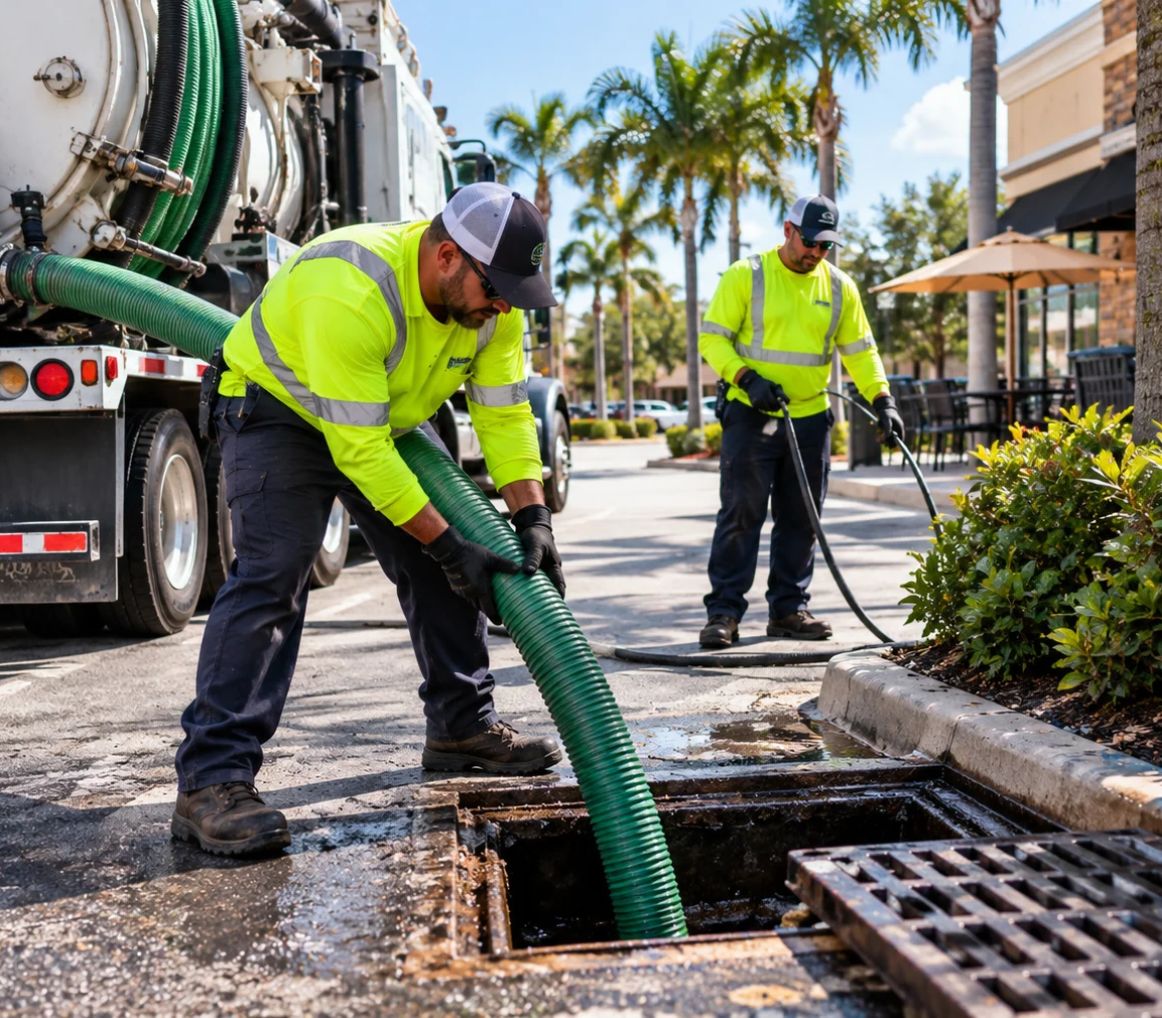
Every visit starts with emptying the tank. Our grease interceptor pumping service removes floating grease, water, and settled solids at the bottom. A grease interceptor cleaning service goes a step further. We scrape and pressure-wash the tank walls so old grease doesn't harden in place and cause the next clog. A typical visit includes:
- Pumping out grease, water, and solids
- Scraping and pressure washing the walls during grease interceptor cleaning
- Hauling the waste away
- Recording the service for your files
Grease interceptor maintenance on a set schedule is far easier to plan around than an emergency call. A routine grease interceptor service interval depends on kitchen volume, tank size, and local rules, so we set it with you instead of handing you a one-size number.
Managing FOG Buildup in Commercial Kitchens and Restaurants
Kitchen habits decide how fast a tank fills. Pouring fryer oil down a drain, rinsing pans without wiping, and scraping plates into the sink instead of the trash all send grease straight to the interceptor.
Small changes help. Wipe pans with a paper towel before washing them, send used fryer oil to a recycler, and scrape plates into the trash first. Even small amounts of grease can build up in the plumbing over time. Once it reaches municipal lines, it can contribute to blockages and drainage problems that may require storm drain cleaning.
Grease Interceptor Inspections and Proper Waste Disposal
An empty tank is the only time anyone can see what is going on inside it. During a grease interceptor inspection, we look at the baffles, lids, inlet and outlet pipes, and tank walls. If we find structural problems, we can provide an engineering analysis of your system.
What comes out of the tank has to go somewhere legal. Our team hauls away waste from grease interceptor pumping and handles grease waste disposal. We keep service records, so documentation is ready if an inspector asks. Local requirements on tank size and service frequency come from your local governing authority, and we can help you stay on top of them.


Why Deerfield Beach Businesses Choose Ameri-Clean Pumping
When owners compare grease interceptor services from Deerfield Beach providers, the deciding factor is usually simple: nobody wants to call about the same backup twice. We deliver professional grease interceptor service focused on fixing the cause, not just the clog.
- More than 20 years of experience with South Florida kitchens and drainage systems
- 24-hour service for urgent backups
- A satisfaction guarantee: call us within 30 days of your last service if you are not happy
- Written records for every visit
Our experienced team takes the time to understand each property’s needs and recommend the right service.
Schedule Grease Interceptor Services in Deerfield Beach
Tell us about your kitchen, your tank, and when it was last pumped. We will build a schedule that fits your volume and helps prevent unexpected backups. Regular service can also make it easier to plan maintenance around your busiest operating hours.
Property owners nearby can also visit our pages for grease interceptor services Plantation and grease interceptor services Sunrise.
Request a Service Now or Contact Ameri-Clean Pumping to get started.
Ameri-Clean Pumping Miami
Hours:
| Thursday | Open 24 hours |
| Friday | Open 24 hours |
| Saturday | Open 24 hours |
| Sunday | Open 24 hours |
| Monday | Open 24 hours |
| Tuesday | Open 24 hours |
| Wednesday | Open 24 hours |
Areas We Serve Around Deerfield Beach
We also bring our pumping and drainage expertise to nearby South Florida communities, including:
Frequently Asked Questions
What Services Are Included With Grease Interceptor Maintenance?
Grease interceptor maintenance typically includes pumping out grease, water, and solids, cleaning the tank walls, inspecting the components, and hauling the waste away for disposal. We also record each visit so you have service documentation on hand.
How Does a Commercial Grease Interceptor Work?
A commercial grease interceptor slows wastewater so grease can float and solids can sink. Cleaner water flows out the middle and on to the sewer line.
How Often Should a Grease Interceptor Be Pumped and Cleaned?
Many local rules call for outdoor units to be serviced at least every 90 days, and busy kitchens often need shorter intervals. A common rule of thumb is to pump once grease and solids reach about 25 percent of the liquid depth.
How Do You Know When a Grease Interceptor Needs Service?
Slow drains, foul odors, gurgling fixtures, and backups are the main warning signs. Visible grease buildup at the access lid is another.
What Size Grease Interceptor Does a Commercial Kitchen Need?
Size depends on fixtures, flow rate, seating capacity, and menu, and local plumbing code sets it. Your local governing authority can confirm what your kitchen requires. You can contact us for grease interceptor services Deerfield Beach.