
Why Regular Grease Trap Cleaning Is Essential for Commercial Kitchens
Running a commercial kitchen is stressful enough without dealing with slow drains, foul odors, or overflowing sinks during busy hours. Many restaurant owners know how quickly plumbing issues can interrupt operations, frustrate staff, and create sanitation concerns for both employees and customers.
The good news is that most grease-related plumbing problems are preventable. Regular Grease Trap Cleaning helps commercial kitchens maintain proper drainage, reduce repair costs, improve cleanliness, and avoid unexpected downtime that can affect business performance and customer satisfaction.
In this blog, you will learn how grease buildup affects kitchen operations, why regular maintenance matters, the warning signs of a clogged system, and how routine Grease Trap Cleaning helps restaurants avoid expensive plumbing emergencies and operational disruptions.
Why Commercial Kitchens Produce So Much Grease Buildup
Every commercial kitchen generates grease daily through cooking, dishwashing, and food preparation. Oils, fats, sauces, dairy products, and food scraps all enter the drainage system throughout the day. Without a grease trap system, these materials would move directly into the plumbing lines and create severe blockages over time.
Grease traps are designed to separate fats, oils, and grease from wastewater before they enter the municipal sewer system. While the system captures these materials effectively, the grease trap itself eventually fills up. Once the trap reaches capacity, grease starts bypassing the interceptor and moving into the drainage lines.
This is where routine Grease Trap Cleaning becomes critical. Cleaning removes accumulated grease before it impacts wastewater flow, plumbing performance, and overall kitchen sanitation.
How Neglected Grease Traps Affect Daily Kitchen Operations
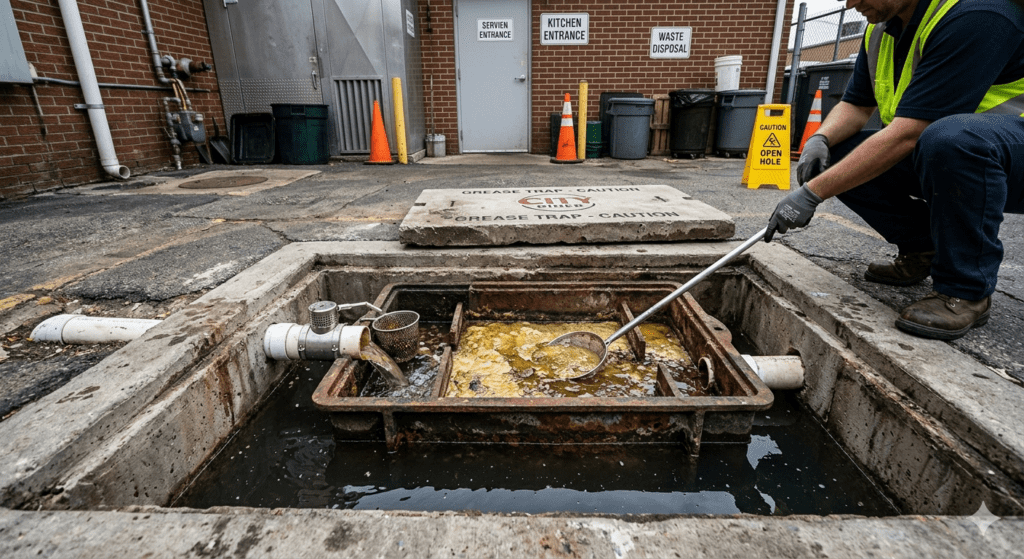
A clogged grease trap does not just affect one sink. It impacts the entire commercial kitchen plumbing system. As grease buildup increases, wastewater drains more slowly and pressure builds inside the pipes. During busy service hours, this can create backups that disrupt food preparation and cleaning stations.
Kitchen staff may begin noticing:
- Slow draining sinks
- Gurgling sounds from drains
- Strong odors near dishwashing areas
- Standing water around floor drains
- Frequent drain backups
These warning signs usually indicate the grease trap system is overdue for maintenance. Ignoring them often leads to emergency plumbing calls and temporary kitchen shutdowns.
Restaurants operate on tight schedules, and downtime directly affects revenue. Regular maintenance helps businesses avoid interruptions that damage productivity and customer experience.
The Hidden Costs of Delaying Grease Trap Cleaning
Some businesses postpone maintenance because they view it as an avoidable expense. In reality, delayed cleaning often creates much larger financial problems later. Grease buildup can damage pipes, reduce drainage efficiency, and strain the entire wastewater system.
Common costs associated with neglected grease traps include:
- Emergency plumbing repairs
- Sewer line cleaning
- Pipe replacement
- Health code violations
- Lost business during shutdowns
- Increased maintenance expenses
A preventive cleaning schedule is far more affordable than emergency restoration work. Businesses that schedule service consistently usually experience fewer plumbing failures and lower long-term repair costs.
Grease management is not only about cleanliness. It is about protecting operational stability and avoiding preventable expenses.
How Grease Trap Cleaning Supports Health and Safety Compliance
Health and sanitation standards are extremely important in food service environments. A poorly maintained grease trap can create serious hygiene concerns inside commercial kitchens. Overflowing grease, wastewater backups, and strong odors all increase the risk of sanitation violations during inspections.
Grease accumulation can also contribute to bacteria growth inside drains and surrounding areas. This affects kitchen cleanliness and creates unpleasant working conditions for employees.
Routine Grease Trap Cleaning supports compliance by helping businesses maintain:
- Cleaner kitchen environments
- Proper wastewater flow
- Reduced odor problems
- Lower contamination risks
- Safer food preparation conditions
Municipal regulations in many areas also require restaurants to maintain grease traps regularly to protect public sewer infrastructure. Businesses that fail to comply may face penalties or mandatory corrective action.
Why Professional Cleaning Is More Effective Than DIY Maintenance
Some restaurant owners attempt to clean grease traps internally to save money. Unfortunately, partial cleaning methods often leave hardened grease and sludge behind inside the system. This allows buildup to continue affecting drainage performance even after cleaning appears complete.
Professional grease trap technicians use specialized pumping equipment designed to remove all grease, wastewater, and debris safely. They also inspect the system for developing issues that may cause future problems.
A professional cleaning visit typically includes:
- Complete grease removal
- Wastewater pumping
- Scraping hardened grease buildup
- Drainage inspection
- System performance evaluation
Experienced service providers understand how commercial grease systems function under heavy kitchen usage. Their expertise helps businesses prevent recurring drainage issues before they become emergencies.
How Often Should Commercial Kitchens Schedule Cleaning?
There is no single cleaning schedule that works for every restaurant. The ideal frequency depends on several operational factors, including kitchen size, food volume, and cooking methods.
High-volume kitchens producing large amounts of grease may require monthly service, while smaller operations may need cleaning less frequently. Restaurants cooking fried foods or heavy oils typically generate grease faster than businesses with lighter menus.
Several factors influence cleaning frequency:
- Number of meals served daily
- Cooking methods used
- Size of the grease interceptor
- Local wastewater regulations
- Existing drainage performance
Professional inspections help determine the right maintenance schedule based on real usage patterns instead of assumptions.
Why Preventive Maintenance Extends Plumbing System Life
Grease buildup places continuous stress on the plumbing system. Over time, restricted flow increases internal pipe pressure and accelerates wear throughout the drainage network. Pipes exposed to constant grease accumulation often develop corrosion, blockages, and premature failure.
Routine maintenance improves wastewater movement and reduces long-term strain on the system. This extends the lifespan of both the grease interceptor and surrounding plumbing infrastructure.
Businesses that invest in preventive maintenance often experience:
- Improved drainage efficiency
- Lower repair costs
- Fewer plumbing emergencies
- Longer equipment lifespan
- Better kitchen productivity
Preventive service also helps reduce the likelihood of major disruptions during peak operating hours.
Signs Your Grease Trap Needs Immediate Attention
Commercial kitchens usually show clear warning signs when grease buildup becomes severe. Recognizing these symptoms early allows businesses to address problems before operations are affected.
Watch for these common indicators:
- Persistent drain odors
- Water backing up into sinks
- Slow draining floor drains
- Grease overflow around the trap
- Frequent plumbing service calls
- Wastewater pooling near kitchen drains
When these issues occur repeatedly, the grease trap system likely requires immediate cleaning or inspection.
Ignoring these warning signs rarely improves the situation. In most cases, buildup continues worsening until emergency repairs become unavoidable.
The Role of Grease Trap Cleaning in Environmental Responsibility
Grease management also plays an important role in protecting municipal sewer systems and local waterways. Excess fats, oils, and grease entering public wastewater systems contribute to large-scale sewer blockages and environmental contamination.
Proper Grease Trap Cleaning helps commercial kitchens reduce their environmental impact by ensuring grease waste is removed and disposed of responsibly.
Restaurants that maintain their systems regularly contribute to:
- Better wastewater management
- Reduced sewer overflow risks
- Cleaner public infrastructure
- Improved environmental compliance
Responsible grease management supports both business operations and broader community sanitation efforts.
Conclusion
Grease buildup is one of the most common causes of plumbing problems in commercial kitchens, but it is also one of the most preventable. Regular Grease Trap Cleaning helps restaurants avoid clogged drains, wastewater backups, foul odors, health code violations, and costly plumbing repairs before they disrupt operations.
Preventive maintenance protects the entire commercial kitchen plumbing system while improving sanitation, drainage efficiency, and long-term operational stability. Restaurants that stay proactive with grease management usually spend far less on emergency repairs and experience fewer disruptions during busy service hours.
If your kitchen is showing signs of slow drainage, grease buildup, or recurring plumbing issues, now is the right time to request a service now with Ameri-clean Pumping. Businesses looking to prevent costly emergencies and maintain smooth kitchen operations can also schedule service with experienced grease trap professionals before small issues become major problems.
Frequently Asked Questions:
Grease Trap Cleaning prevents fats, oils, and grease from clogging plumbing systems and causing drainage problems in commercial kitchens.
Most commercial kitchens require cleaning every one to three months depending on grease output and kitchen activity.
Neglected grease traps can overflow, block pipes, create foul odors, and lead to expensive plumbing repairs or health code violations.
Yes. Preventive maintenance helps businesses avoid emergency plumbing repairs, backups, and pipe damage caused by grease buildup.
Commercial kitchens should work with experienced providers like Ameri-clean Pumping for reliable grease trap cleaning and maintenance solutions.